
Reviewed · GHOST & DARK HISTORY WALKS
Private blood, ghosts and folklore Old Town 2h Stockholm tour
Stockholm’s Old Town looks polished in daylight, but this private walk turns its squares, church doors, palace area, and waterfront into places of executions, curses, restless souls, and folklore creatures. You will hear about the death of around 90 people during the Danish takeover, spirits tied to water, and old Swedish ways to guard a home from trolls and other beings.
I like the private format, since you can stop and ask about a grisly detail instead of keeping pace with a large group. I also like the unusual focus on Swedish folklore, especially the Tomte, Näcken, Skogsrået, and Myrling. The main caution is that the experience may feel less dramatic than its title suggests if you want a nonstop parade of bloody tales. One past guest found the stories too thin, while another praised the friendly, well-informed host.
In This Review
- Key points to know before booking
- Stortorget and the Old Town’s bloodiest stories
- Prästgatan and the lane known as Hell
- Doors, iron, trolls, and the Swedish Tomte
- Logårdstrappan and spirits beneath the water
- Kungsträdgården and creatures of the forest
- Saint Jacob’s Church and sacred weak points
- What the private format adds
- Is 90 minutes enough for the subject?
- Who should book this Stockholm walk?
- Should you book the Blood, Ghosts and Folklore walk?
- FAQ
- Where does the tour start?
- Where does the tour finish?
- How long does the tour last?
- Is this a private activity?
- What is included?
- What subjects are covered?
- Is the tour accessible by public transport?
- What is the cancellation policy?
Key points to know before booking
- Stortorget sets the dark tone: Learn about executions, the Stockholm Bloodbath, and the old magical use of body parts.
- The private guide controls the pace: Your group can ask questions and follow the stories that interest you most.
- Swedish folklore takes center stage: Hear about the Tomte, Näcken, bäckahästen, Skogsrået, and other beings.
- The route moves beyond Old Town: It finishes at Saint Jacob’s Church near Kungsträdgården, about a 10-minute walk from the start.
- The tour is short but specialized: Plan on about 90 minutes, despite the two-hour wording in the tour name.
- The price suits a small group best: At $188.16 per person, the private setup matters far more when several people share the cost.
Stortorget and the Old Town’s bloodiest stories
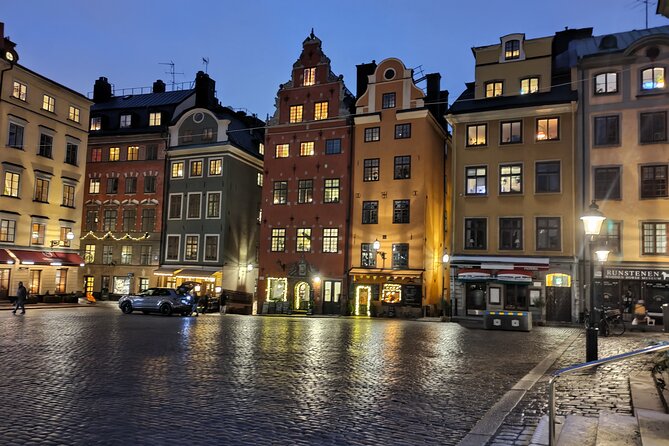
Meet your guide outside the Nobel Prize Museum at Stortorget, the Old Town’s best-known square. This is a useful starting point because the tour begins with concrete events before moving into supernatural belief.
The first story set concerns the executions of roughly 90 people connected with the Danish King Kristian’s seizure of Stockholm. You will also hear about the Stockholm Bloodbath, other killings, and the way death shaped local folklore. The material includes beliefs about using the blood of the dead in curses, taking parts from the gallows to brew certain mixtures, and assigning magical uses to other body parts.
That subject matter is clearly not for children who dislike violent stories. It is also not presented as a standard sightseeing account of Stockholm. I would book this section for the link between real punishment and old beliefs, rather than expecting a polished museum talk.
Stortorget can be a busy place, so the private format helps. Your guide can position the story around the square and respond if you want more context about the executions. If your guide moves quickly or leaves out stories you expected, ask directly about the Stockholm Bloodbath, Gustav III’s killing, the executioner, or other bloody events connected with the city. Those subjects are part of the wider material associated with this walk, but one past experience failed to bring enough of them into the conversation.
More ghost & dark history walks in Stockholm:
- Stockholm: Ghost Walk and Historical Tour
★ 4.7 · 2,206 reviews - The Original Stockholm Ghost Walk and Historical Tour – Gamla Stan
★ 4.5 · 1,165 reviews - Bloody Stockholm 2h – ghosts, horror and Dark Folklore Tour
★ 5.0 · 14 reviews
Prästgatan and the lane known as Hell
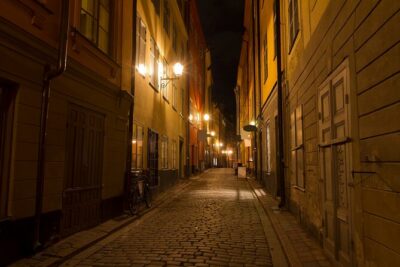
From Stortorget, the walk continues along Prästgatan. The focus here is a former part of the lane known as Hell, linked with the executionist who lived there.
This is one of the tour’s better examples of how a street name can carry old fears. You are not simply looking at attractive medieval buildings. You are hearing how people associated certain residents and places with death, punishment, and the darker work of the town.
The stop is brief, listed at about 10 minutes. That makes sense for a narrow street and a single theme, but it also means the guide needs to tell the story clearly. I would use this moment to ask how the executioner fit into Stockholm society and whether the name Hell referred to the street, its residents, or both. The supplied details do not promise a long treatment, so keep your expectations measured.
Doors, iron, trolls, and the Swedish Tomte
The next Old Town stop shifts from documented violence to household protection. At a house door, you will hear how iron was used to guard against vaesen, the beings of Swedish folklore.
The stories include elves arriving in mist, understood in part as souls that have not found rest, as well as the Swedish Tomte. You will also hear about protecting a doorway and a newborn child before baptism, a time when old beliefs held that the child lacked full protection from trolls and the Devil.
This is the kind of material that makes the walk more than a standard ghost tour. It gives you a glimpse of the practical side of folklore. People were not only telling stories about monsters in distant woods. They were considering what to put at the door, how to shield a baby, and how to keep unseen forces outside the home.
I particularly like this stop for families with older children and for anyone interested in folk customs. The account is not limited to haunted buildings. It shows how supernatural belief could shape everyday behavior. Still, the guide’s presentation will matter. These themes can be fascinating when tied to a real doorway and a clear explanation, but vague storytelling would make them feel like generic ghost lore.
Logårdstrappan and spirits beneath the water
At Logårdstrappan, the subject turns to water. You will hear about Näcken, the bäckahästen, the Sjörå, and the skepps-rå, among other beings associated with lakes, rivers, seas, or ships.
Näcken is a particularly useful name to remember. In Swedish folklore, water spirits were not harmless decorations. They could lure people toward the water and pull them into danger. The bäckahästen is described as the Swedish version of the Kelpie, while the Sjörå and skepps-rå connect the stories with the sea and with ships.
The setting by the water gives these tales a natural place to land. You can look out toward the water while hearing why people feared what might be waiting below the surface. The tour does not promise special access or a boat ride, so this remains a storytelling stop viewed from land.
If you prefer folklore with distinctive local names, this may be one of the most rewarding parts. If you want documented ghost sightings at every stop, it may feel less satisfying. The tour is about Swedish belief and warning stories as much as it is about ghosts.
A few more Stockholm trips to weigh up
- Stockholm: 2-Hour RIB Speed Boat Tour of the Archipelago
★ 4.9 · 396 reviews - Stockholm Speed Boat 2 Hour Archipelago Tour
★ 5.0 · 139 reviews - Södermalm: 2-Hour Sightseeing Tour
★ 4.0 · 46 reviews - Bloody Stockholm: ghosts, horror and dark folklore 2h
★ 4.8 · 12 reviews
Kungsträdgården and creatures of the forest
The walk continues toward Kungsträdgården, where the guide introduces more Swedish vaesen. The themes become particularly dark here, including the Skogsrået, also called the huldra, and the Myrling.
The Skogsrået or huldra is linked with the forest and with danger for those who cross its path. The Myrling is described as an undead living child. Alongside these figures, you will hear about creatures believed to suck blood and spread death.
This part should appeal to you if you enjoy folklore that is strange, unsettling, and culturally specific. These are not simply renamed versions of familiar vampires and fairies. Their roles reflect older fears about forests, childbirth, death, and the dangers beyond the town.
The stop lasts about 20 minutes, the longest listed portion of the walk. That gives the guide more room to explain several beings and compare their roles. I would expect the quality here to depend on how much detail your guide adds. A short tour can introduce many names, but it cannot give every creature a full legend.
Saint Jacob’s Church and sacred weak points
The final stop is outside Saint Jacob’s Church on Västra Trädgårdsgatan. The discussion covers the church door, weak points in the building, exorcism of a child at baptism, and ways a person might punish a worst enemy.
This is an unusual ending because it returns folklore to a religious setting. The church is treated not only as a place of worship, but as a structure with vulnerable points that needed protection. The baptism story brings back the concern about children lacking protection before the ceremony.
The material about punishing an enemy is another reminder that older magic was not always defensive. It could also be used against someone. That gives the tour a sharper edge than a simple collection of friendly Scandinavian household spirits.
The tour ends just outside the Old Town, on the north side beside Kungsträdgården. From there, it is about a 10-minute walk back to the starting point. This route design is practical if you plan to continue around the park or use nearby public transport, but it is worth noting that you do not finish exactly where you began.
What the private format adds
The most important feature is not the mobile ticket or the route. It is the fact that only your group takes part.
On a private walk, you can ask for more detail about a name such as Näcken, return to a subject that caught your attention, or ask the guide to explain how folklore differs from documented events. That matters here because the tour covers many subjects in a short time: executions, curses, ghosts, household protection, water beings, forest creatures, and church rituals.
The format also helps with navigation. Stockholm’s Old Town has compact lanes and several nearby sights, and the guide leads you from Stortorget through the Old Town and onward to Saint Jacob’s Church. You do not need to study the route before setting out.
The drawback is cost. At $188.16 per person, this is a serious spend for a walk of about 90 minutes. It becomes easier to justify if you are sharing the experience with family or friends and the private price is spread across the group. For one or two people, you should have a strong interest in Swedish folklore before booking.
Is 90 minutes enough for the subject?
The tour name suggests two hours, while the stated duration is about one hour and 30 minutes. The listed stop times add up to roughly 75 minutes, leaving time for walking between locations and for the guide to introduce the route.
That is enough for an entertaining introduction, not a full study of Stockholm’s dark past. You will receive short treatments at several locations instead of a long story at one site. This format suits you if you want a focused evening activity or a different way to see the Old Town between other plans.
It may disappoint you if you expect every famous murder, royal death, haunted palace story, and execution to receive detailed attention. One past guest felt the tour name promised more than the content delivered and specifically found the ghost stories too slight. That criticism is useful: ask your guide early about the subjects you most want to hear, rather than assuming the route will cover every gruesome legend.
Who should book this Stockholm walk?
I would recommend it most to adults, older children, and private groups who enjoy folklore, old punishments, and unsettling stories. It is also a good choice if you have already seen Stockholm’s main sights and want a different angle on familiar streets.
The walk is less suited to anyone seeking a major attraction, indoor displays, or a long, theatrical performance. All stops are outdoors, admission is free, and the guide provides the experience through walking and storytelling.
The practical details are friendly. Confirmation arrives at booking, mobile tickets are accepted, service animals are allowed, public transport is nearby, and most people can participate. The tour requires a minimum number of participants, though it remains a private activity for your own group once confirmed.
Free cancellation is available up to 24 hours before the start time. Inside that window, changes and refunds are not accepted. If the minimum number is not met and the activity is canceled, you are offered another date or experience, or a full refund.
Should you book the Blood, Ghosts and Folklore walk?
Book it if you want local folklore rather than a standard city tour, and if the private format is important to you. The strongest material is the mix of real punishment and old belief: the Stockholm Bloodbath, executions, cursed body parts, iron at the door, newborn protection, water spirits, and forest beings.
Think twice if you want a relentlessly gruesome ghost tour. The experience can be friendly and informative, but its success depends on how fully the guide develops the stories. At $188.16 per person, I would choose it for a small group with a real interest in Swedish supernatural traditions, then ask at the start to hear the bloodiest and most historically grounded tales.
FAQ
Where does the tour start?
The tour starts at the Nobel Prize Museum at Stortorget 2 in Stockholm’s Old Town.
Where does the tour finish?
It ends outside Saint Jacob’s Church at Västra Trädgårdsgatan 2A, near Kungsträdgården and just beyond the north side of the Old Town.
How long does the tour last?
The stated duration is approximately one hour and 30 minutes, although the tour name refers to two hours.
Is this a private activity?
Yes. Only your group participates in the tour.
What is included?
A guide is included. Admission tickets are not needed for the listed stops.
What subjects are covered?
The walk covers executions, the Stockholm Bloodbath, ghosts, curses, Swedish folklore, the Tomte, Näcken, bäckahästen, Sjörå, skepps-rå, Skogsrået, Myrling, trolls, church protection, and baptism-related beliefs.
Is the tour accessible by public transport?
Yes. The experience is near public transportation.
What is the cancellation policy?
You can cancel at least 24 hours before the start time for a full refund. Cancellations or changes made less than 24 hours before the start time are not accepted for a refund.
Just added around Stockholm
- World War II Stockholm Old Town Walking Tour and Army Museum★ 4.6 · 4 reviews
- Stockholm: Archipelago Guided Boat & Walking Tour of Vaxholm★ 3.1 · 23 reviews
- Stockholm: Underground Metro Art Ride with a Local Guide★ 4.6 · 39 reviews
- Vaxholm & Stockholm Archipelago: Guided Excursion, Day Trip★ 4.8 · 41 reviews
- Wolf and Wildlife Tracking in Sweden★ 5.0 · 9 reviews
- Scandinavian Art, Architecture and Design Tour in Stockholm★ 4.5 · 11 reviews
- Private Tour: Swedish History Day Trip to World Heritage Candidate Markim-Orkesta from Stockholm★ 5.0 · 8 reviews
- Walking Tour of Stockholm’s City Center★ 4.5 · 26 reviews
Ghost & Dark History Walks, compared.
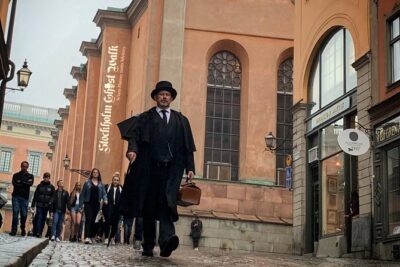
The Original Stockholm Ghost Walk and Historical Tour – Gamla Stan
Read our review →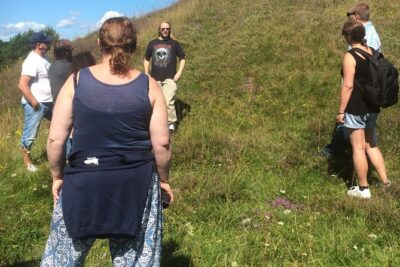
Bloody Stockholm 2h – ghosts, horror and Dark Folklore Tour
Read our review →
Bloody Stockholm: ghosts, horror and dark folklore 2h
Read our review →
Ghosts of Stockholm: A Guided Tour of Horror and Dark Folklore
Read our review →
Stockholm Ghost Hunt: Self-Guided Tour and Puzzle Adventure
Read our review →Browse the lists this tour appears in