
Reviewed · 2-DAY EXPERIENCES
2-Day Small-Group Basic Skills Survival Course in Södermanland
The best part of this two-day survival course is its practical focus. You do not simply hear about survival theory. You learn how to make a fire, build a shelter, find water, read a map, and use the Swedish forest around you. Instructor William teaches both the reasons behind each skill and the hands-on steps needed to use it.
I like the small group limit of eight, which gives you a better chance to practice instead of watching from the back. I also like that meals are part of the experience, including fire-cooked food, breakfast, lunch, and dinner. The main consideration is that two days can only provide an introduction. You will gain useful basics, but not the experience needed to handle every serious wilderness emergency alone.
In This Review
- Key points
- From Stockholm to the Södermanland forest
- Learning the survival priorities first
- Building fire, shelter, and a workable camp
- Finding food and reading plants with care
- Collecting water and understanding the forest
- Compass work, maps, and wildlife tracking
- A beginner-friendly course with a strong guide
- What is included for the $480.71 price
- Who should book this Swedish survival course
- Booking details worth checking before you go
- Should you book the two-day course?
- FAQ
- Where does the survival course begin?
- What time does the course start?
- How long does the experience last?
- What is included in the price?
- Are camping gear and backpacks included?
- How many people can join the course?
- Can I cancel for a refund?
Key points
- Fire, shelter, food, and water: The course focuses on the four practical needs you must prioritize in a survival situation.
- William’s patient teaching: The guide combines theory with demonstrations and practice, making the course suitable for beginners.
- Sleeping in the Swedish forest: You spend the night outdoors and learn simple camp techniques that make a rough situation more manageable.
- Foraging and plant awareness: You receive an introduction to edible, toxic, and medicinal plants, with food preparation included.
- Navigation and wildlife skills: Map reading, compass work, animal tracking, fishing, and wildlife safety are all included.
- Meals and transport included: Private transportation, breakfast, lunch, dinner, and needed gear are covered in the $480.71 price.
From Stockholm to the Södermanland forest
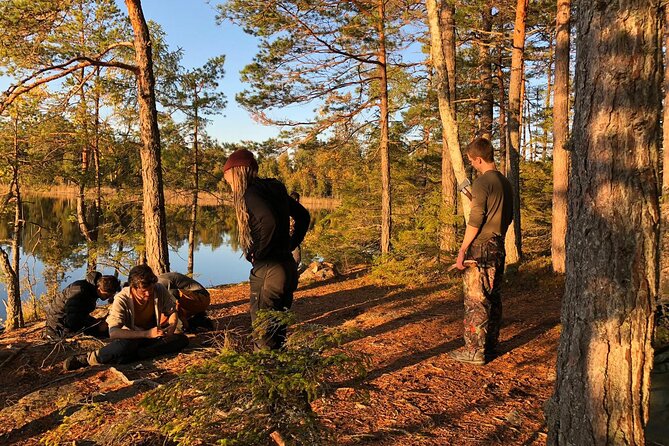
The course begins at 9:00 a.m. at True Nature Sweden AB, 62 Tideliusgatan in Stockholm. From there, private transportation takes you into the wilderness of Södermanland, where the course is taught outdoors rather than in a classroom.
That change of setting matters. Survival skills make more sense when you are standing beside the wood you need to burn, looking for water in real terrain, or deciding where a shelter should go. The forest becomes your workshop, pantry, navigation exercise, and overnight camp.
You should expect a full two-day experience rather than a sightseeing outing with a survival theme. The focus is on learning, practice, and camp life. The course ends back at the Stockholm meeting point, so you do not need to arrange a separate return from the forest.
The group can include no more than eight people. That is a useful size for practical teaching. You can ask questions, handle equipment, and take part in tasks without being lost in a crowd. The course also has minimum group requirements: at least three participants from early October through late April, and at least five from early May through late September. If the minimum is not reached, you are offered another date or experience, or a full refund.
A few more Stockholm trips to weigh up
- 2-Day Small-Group Stockholm Archipelago Kayak Tour
★ 5.0 · 25 reviews - 2-Day Kayak Tour in the Stockholm Archipelago
★ 5.0 · 13 reviews - 2-Day Small-Group Stockholm Hiking Tours
★ 5.0 · 6 reviews
Learning the survival priorities first
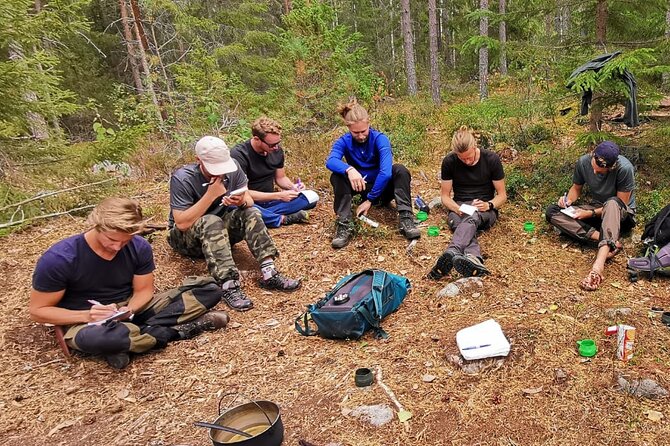
A good survival course should teach you what to do first, not simply give you a long list of tricks. This course centers on three survival fundamentals and the basic needs that must be prioritized when conditions become difficult.
The program covers fire, shelter, food, and water. Those subjects overlap, but each one gives you a different lesson in decision-making. A fire can provide warmth, cooking, light, and a sense of security. A shelter protects you from exposure. Water is essential, but finding it is only part of the task because collection and safe use matter too. Food is important, yet it usually comes after immediate protection and hydration.
I find this order useful because it moves the course beyond bushcraft entertainment. You are not only learning how to perform a clever technique. You are learning how to choose the right task when time, energy, and materials are limited.
The course also addresses survival in a group, including leadership. That adds a human side often missed in basic outdoor classes. A group needs communication, clear decisions, and someone willing to organize the next step. You get to think about how people cooperate when tired, cold, uncertain, or under pressure.
Building fire, shelter, and a workable camp
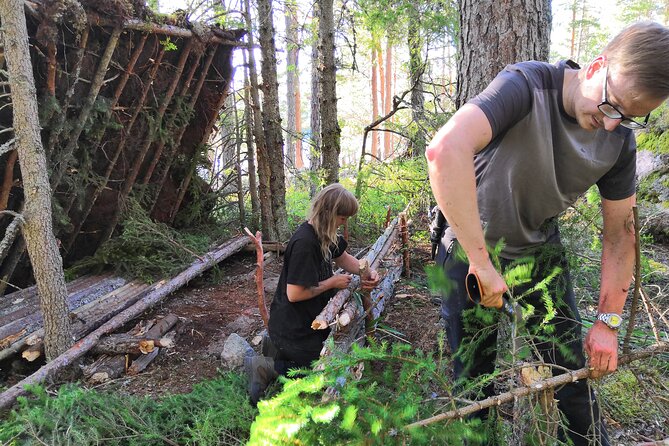
Fire-making is one of the central skills. You learn how to build a fire and what materials can be used. The practical value goes beyond producing flames. Fire lets you cook, stay warm, and make camp life more comfortable, which is why it is one of the first skills many beginners want to practice.
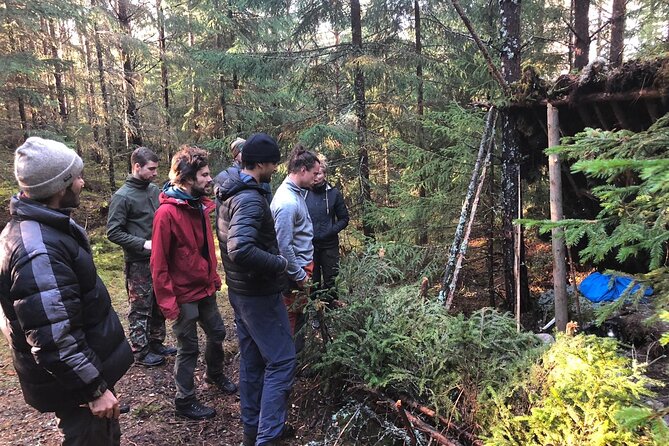
The course also covers shelter construction. You learn how to make a basic shelter from available materials and how to think about its purpose. A shelter does not need to be elaborate to be useful. It needs to help protect you and give you a more secure place to rest.
Sleeping in the forest is an important part of the course. It turns shelter building from a demonstration into a real camp problem. You have to consider where you are staying and how simple camp tricks can make the night easier. The available information does not promise a particular shelter style or sleeping arrangement, so you should not expect hotel-level comfort. This is an outdoor course, and some rough edges are part of the point.
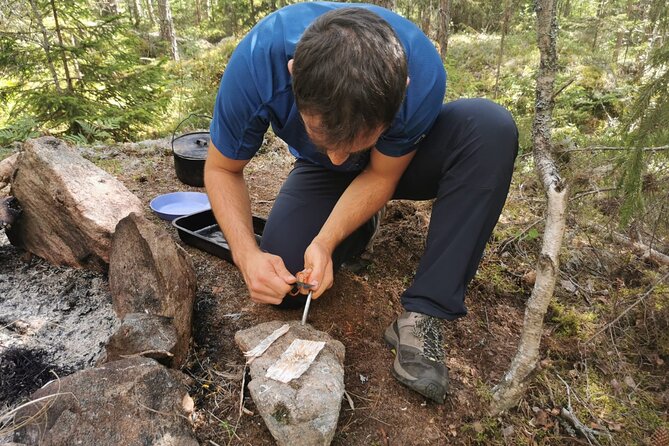
The camp setting also creates one of the most enjoyable parts of the experience: cooking over the fire. Meals are included, and the course covers how to prepare food in a wilderness setting. The food is not treated as an afterthought. It becomes another way to practice using the fire and managing camp.
Finding food and reading plants with care
Foraging is included, with an introduction to edible, toxic, and medicinal plants. This can change the way you look at a forest. Instead of seeing only trees and undergrowth, you begin to notice what may be useful, what should be avoided, and why accurate identification matters.
The word introduction is important here. Two days cannot turn you into an expert forager. Plant identification has real risks, especially when edible and poisonous species look similar. You should treat the course as a foundation in awareness and method, not a license to eat any plant you find later.
The food section also includes finding food, where to look, and how to prepare it. Trapping and fishing are part of the program as well. These subjects add variety, but they should be viewed as basic instruction rather than a promise that you will collect a full meal through trapping or fishing during the course.
I like the way these activities connect survival with observation. The goal is not simply to carry a large supply of equipment. It is to notice what the forest offers and use resources with care. That approach also supports the course’s wider message of seeing nature differently while keeping a respectful relationship with it.
Same city, a completely different kind of day:
- Stockholm: City Archipelago Sightseeing Cruise with Guide
★ 4.3 · 10,798 reviews - Stockholm: Skansen Open-Air Museum Admission Ticket
★ 4.5 · 3,427 reviews - Stockholm: Archipelago Boat Tour
★ 4.4 · 3,110 reviews - Stockholm: Highlights Boat Tour
★ 4.3 · 2,542 reviews
Collecting water and understanding the forest
Water receives its own attention. You learn where to look for it and how to collect it. That is useful because many people understand that water is essential but have never thought through the practical steps of locating and gathering it outdoors.
The details provided do not specify a particular purification method, so you should ask the operator what treatment techniques are taught before booking if this is a major reason for your visit. The course clearly covers finding and collecting water, but the listing does not promise every water-safety method.
Plant study and water collection also encourage a more careful reading of the forest. You learn to pay attention to signs, terrain, and natural resources rather than moving through the woods on autopilot. That change in attention is one of the strongest reasons to take a course like this.
Compass work, maps, and wildlife tracking
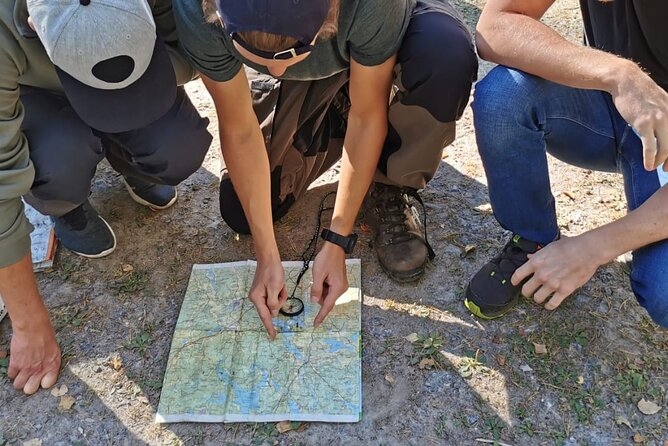
Navigation is another major part of the two days. You learn orientation and map reading, and the practical feedback makes clear that compass use is included. This is a good match for anyone who has handled a compass before but never felt confident using one outside.
Map reading is not glamorous, but it is one of the most useful skills in the course. If you become lost, staying calm and understanding your position can prevent a bad situation from getting worse. You learn to think about direction, distance, and the terrain around you instead of walking at random.
Wildlife tracking adds a second way to read the forest. The course covers how to track animals and discusses their dangers. That does not mean you should expect close encounters with wildlife. The value is in learning to notice signs and understand how to continue safely when animals may be nearby.
These lessons also reinforce the need for judgment. Survival is not about proving that you are tougher than the forest. It is about seeing enough, planning enough, and conserving enough energy to make sensible choices.
A beginner-friendly course with a strong guide
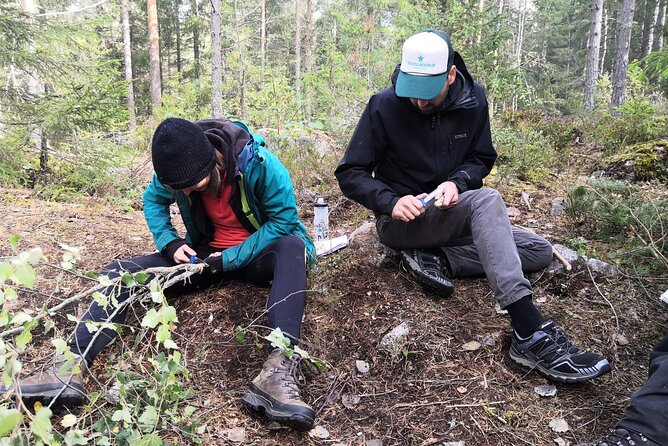
William is the instructor named in the available course information, and his teaching style is a major reason this experience suits first-timers. The course combines practical demonstrations with theory, then gives you time to try the skills yourself.
That balance is important. A guide can build an impressive fire in front of you, but you will not remember much if you never handle the materials. The strongest part of this course appears to be the chance to move from explanation to practice while the lesson is fresh.
The tone is also less macho than you might expect from a survival course. One account specifically describes concern about an overly hard-edged group, followed by an enjoyable weekend with people seeking a new experience. That makes this a better choice for beginners, families, and mixed groups than the title might suggest.
A mother and daughter completed the course as beginners and learned compass use, fire-making, foraging, and shelter building. That is useful context if you are wondering about fitness or prior outdoor experience. The course is active and takes place in the forest, but it is presented as a basic skills course rather than an extreme endurance test.
William is also described as patient and willing to explain each step. That matters when a fire will not catch or a navigation exercise feels confusing. You want an instructor who can correct you without making the whole group feel foolish.
What is included for the $480.71 price
The price is $480.71 per person. At first glance, that is a serious amount for a two-day activity. The value depends on how you use the inclusions.
You receive private transportation, breakfast, lunch, dinner, and all needed gear. You are also paying for an instructor-led overnight course, not just transport to a forest and a few outdoor demonstrations. If you would otherwise need to arrange a rental car, meals, camping equipment, and a guide separately, the package becomes easier to justify.
The meals are especially helpful. You do not need to plan two days of food while also preparing for outdoor instruction, and cooking is part of the learning rather than a separate chore. The course also includes camping gear, according to the listed inclusions, but it separately notes camping gear rental at 450 kr per person and backpack rental at 100 kr per person as optional costs. Because those details may depend on what you bring or what equipment is needed, confirm exactly what is supplied for your booking.
Alcoholic beverages are not included. Travel insurance is also your responsibility. Those are small points, but they belong in your budget.
The course carries a 5 out of 5 rating from 11 ratings and a 100 percent recommendation rate. The most consistent praise centers on William, the practical lessons, the friendly group atmosphere, the quality of the food, and the feeling of self-sufficiency gained in a short time. Some participants wanted to return for a longer course, which is also a fair hint about the limits of the two-day format: it gives you a strong start, not full independence in every wilderness condition.
Who should book this Swedish survival course

I would choose this course if you want a structured introduction to outdoor survival and prefer learning by doing. It is a good fit for solo visitors who want a small group, couples, parent and adult child combinations, and friends looking for something more useful than a standard city excursion.
It also suits people who are curious about camping but do not yet feel ready to plan a wilderness trip alone. Private transportation removes one planning problem, while the included meals and gear reduce the amount of equipment you need to organize.
You should be comfortable spending two days outdoors and sleeping in the forest. The course is not presented as a luxury camping stay. If you want soft beds, a fixed schedule, and indoor comfort, this is the wrong choice.
You should also keep your expectations realistic. You will learn basic fire, shelter, food, water, plant, wildlife, fishing, trapping, navigation, and group skills. You will not become a professional survival instructor in 48 hours. The course gives you a safer starting point and a new way to read nature.
Booking details worth checking before you go
Confirmation is provided at booking, and most people can participate. The maximum group size is eight, but seasonal minimums apply. From early October through late April, at least three people are required. From early May through late September, at least five are required.
The meeting point is True Nature Sweden AB, Tideliusgatan 62, Stockholm, and the start time is 9:00 a.m. The activity returns to this meeting point after the two days.
Free cancellation is available up to 24 hours before the local start time for a full refund. Cancellations or changes made less than 24 hours in advance are not accepted for a refund. If the minimum group is not reached and the course is canceled, you are offered another option or a full refund.
Should you book the two-day course?
Book it if you want practical skills, an overnight forest experience, and a patient instructor who welcomes beginners. The combination of small-group teaching, included meals, private transport, and hands-on practice gives the price real value for someone starting from scratch.
Think twice if you want a full survival qualification, a highly demanding expedition, or detailed training in every emergency situation. This is a basic course, but it seems to make good use of its short format. For a first step into Swedish wilderness skills, I would choose it for the fire-making, shelter work, navigation practice, and the chance to leave with more confidence than you brought.
FAQ
Where does the survival course begin?
The course begins at True Nature Sweden AB, Tideliusgatan 62, 118 69 Stockholm, Sweden.
What time does the course start?
The listed start time is 9:00 a.m.
How long does the experience last?
The course lasts approximately two days and includes an overnight stay in the forest.
What is included in the price?
The price includes breakfast, lunch, dinner, private transportation, and all needed gear.
Are camping gear and backpacks included?
The course lists all needed gear as included, but it also lists optional camping gear rental at 450 kr per person and backpack rental at 100 kr per person. Confirm the exact equipment arrangements when booking.
How many people can join the course?
The maximum group size is eight participants. The course requires at least three participants from early October through late April, and at least five from early May through late September.
Can I cancel for a refund?
Yes. You can cancel at least 24 hours before the experience start time for a full refund. Cancellations or changes made less than 24 hours before the start are not accepted for a refund.
Just added around Stockholm
- World War II Stockholm Old Town Walking Tour and Army Museum★ 4.6 · 4 reviews
- Stockholm: Archipelago Guided Boat & Walking Tour of Vaxholm★ 3.1 · 23 reviews
- Stockholm: Underground Metro Art Ride with a Local Guide★ 4.6 · 39 reviews
- Vaxholm & Stockholm Archipelago: Guided Excursion, Day Trip★ 4.8 · 41 reviews
- Wolf and Wildlife Tracking in Sweden★ 5.0 · 9 reviews
- Scandinavian Art, Architecture and Design Tour in Stockholm★ 4.5 · 11 reviews
- Private Tour: Swedish History Day Trip to World Heritage Candidate Markim-Orkesta from Stockholm★ 5.0 · 8 reviews
- Walking Tour of Stockholm’s City Center★ 4.5 · 26 reviews
2-Day Experiences, compared.
2-Day Small-Group Stockholm Archipelago Kayak Tour
Read our review →
2-day kayaking adventure around Vaxholm in Stockholm Archipelago – self guided
Read our review →Browse the lists this tour appears in