
Reviewed · WALKING TOURS
Discover Kiruna: A Walk Through History and Nature
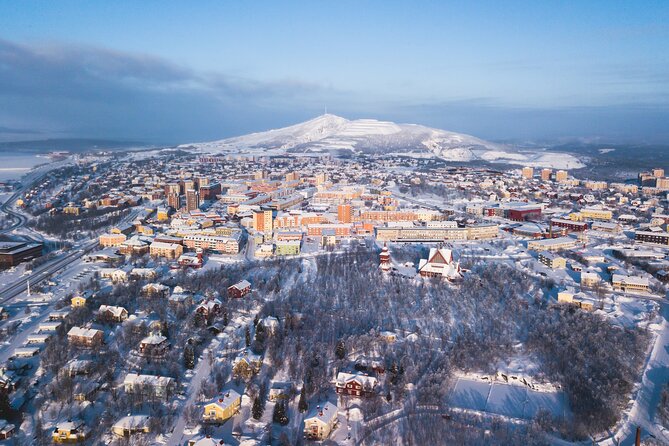
Kiruna’s story is written in iron ore, timber, stone, and snow. This private two-hour walk links the town’s mining roots with its older spiritual past, taking you from the LKAB Visitor Centre to the Monument of Ancient Iron Miners, the Stone Circle, and Kiruna Church.
I like the clear route and the small-group format. You get four focused stops, and your own group can ask questions without the rhythm of a large coach tour. I also like the contrast between industrial Kiruna and its quiet sacred places. The main drawback is the price: at $290.89 per person, this is a costly two-hour outing, especially since admission is free at every stop.
In This Review
- Key Points to Know Before You Book
- From Iron Ore to a Wooden Church
- The Monument of Ancient Iron Miners
- The Stone Circle and Kiruna’s Older Past
- Kiruna Church, a Memorable Final Stop
- What the Two-Hour Schedule Really Feels Like
- Private Touring and Group Value
- Who Will Get the Most From This Tour
- Meeting Points and Simple Planning Tips
- How the Tour’s Mixed Feedback Should Guide You
- Should You Book Discover Kiruna?
- FAQ
- Where does the tour begin?
- Where does the tour end?
- How long does the experience last?
- What places are included?
- Is this a private tour?
- How much does the tour cost?
- Are admission tickets included?
- Can I cancel or change my booking?
Key Points to Know Before You Book
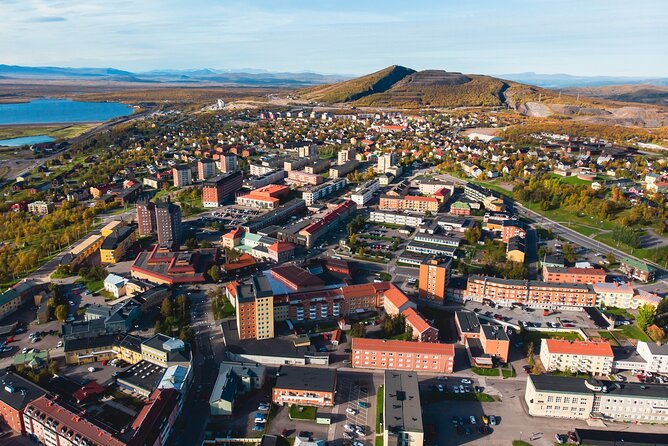
- Kiruna’s mining story comes first: Begin at LKAB’s Visitor Centre, where displays explain how iron mining shaped the town.
- The tour honors generations of miners: Spend about 40 minutes at the mine area and its Monument of Ancient Iron Miners.
- The Stone Circle adds mystery: This 30-minute stop connects Kiruna with ancient rituals and local legend.
- Kiruna Church is the grand finish: See the Gothic Revival wooden church and its striking altar.
- Private means personal: Only your group takes part, with group discounts available.
- Every listed admission is free: The price pays for the guided experience, not entry tickets.
From Iron Ore to a Wooden Church

Kiruna is not an old European town in the usual sense. Its modern identity grew around mining, and the first part of this tour makes that plain. You begin at LKAB’s Visitor Centre on Malmvägen 9B, where the story is told through interactive exhibits.
The displays focus on the mining industry’s role in Kiruna’s growth. You can expect a compact introduction to the machinery, methods, and work that made this northern settlement important. The visit lasts about 20 minutes, so it is not a full mine expedition. It is a starting point that gives the rest of the walk some context.
That distinction matters. If you are hoping to descend underground, this experience may leave you wanting more. The tour takes you to the Visitor Centre and mine area, but the supplied details do not promise an underground mine visit. For a short town tour, though, the opening stop helps you understand why Kiruna exists in its present form.
I find this a sensible way to begin. Instead of walking past industrial sites with no explanation, you get a framework for reading the town. Kiruna’s northern setting can feel remote, and the mining story explains how people, work, and infrastructure came together here.
A few more Kiruna trips to weigh up
- Stockholm: Ghost Walk and Historical Tour
★ 4.7 · 2,206 reviews - The Original Stockholm Ghost Walk and Historical Tour – Gamla Stan
★ 4.5 · 1,165 reviews - Stockholm: Old Town Historical Walking Tour
★ 4.9 · 344 reviews
The Monument of Ancient Iron Miners
The second stop lasts about 40 minutes and centers on the Monument of Ancient Iron Miners near Kiruna Mine. This is the longest stop, and rightly so. The monument gives a human face to an industry that can otherwise seem like a story about machines and ore.
You can expect a solemn pause here rather than a conventional sightseeing stop. The sculpture honors generations of iron miners who worked beneath the ground and helped shape the area. Your guide can connect the memorial with the broader mining culture that you began exploring at the Visitor Centre.
This stop is useful for anyone who wants more than a quick look at Kiruna’s postcard sights. Mining is not simply an economic footnote here. It has affected the town’s character, its work life, and its sense of place. The memorial asks you to think about the people behind that development.
The wording of the tour information refers to both the Kiruna Mine and the Monument of Ancient Iron Miners. I would treat this as one connected mining-focused section rather than expect a separate, fully guided mine tour. The available details do not promise access to working areas or underground passages.
The Stone Circle and Kiruna’s Older Past

After the mining stops, the tone changes. The Stone Circle receives about 30 minutes and brings you to a site linked with ancient ritual and local legend.
The information provided does not give a precise date, construction story, or archaeological explanation for the stones. That means you should not book this stop expecting a full scholarly excavation report. Its appeal is the atmosphere and the chance to consider a much older layer of Kiruna’s past.
I like the way this stop breaks up the industrial theme. The tour is not only about LKAB and iron ore. The stones offer a quieter pause and a sense of connection to stories that reach beyond the modern town.
Keep your expectations measured. Descriptions of ancient sites can sound grander than the actual visit, and a stone circle may be modest in size. Its value depends heavily on the guide’s explanation and your own interest in legend, ritual, and place. Since this is a private activity, you have a better chance to ask what is known, what is traditional lore, and what remains uncertain.
That private format is especially useful here. At a crowded attraction, you might get a quick photograph and move on. With your own group, you can spend the full 30 minutes discussing the site if it catches your attention.
Kiruna Church, a Memorable Final Stop
The tour ends at Kiruna Church on Finngatan 1. This is another 30-minute visit, and it provides a calm finish after the mining memorial and the Stone Circle.
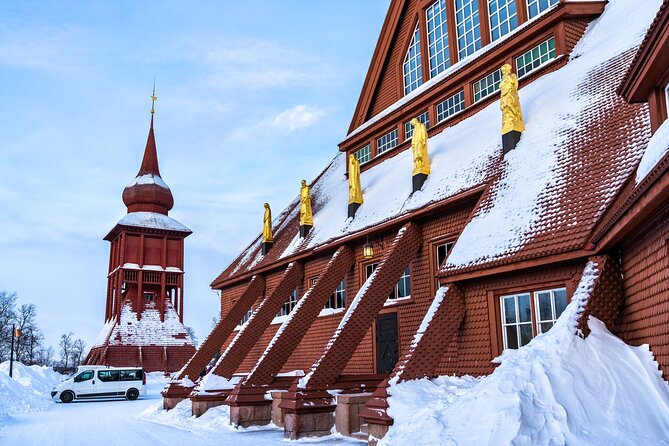
Kiruna Church is a wooden Gothic Revival building with a distinctive design. The interior is known for its impressive altar, which brings together religious meaning and visual art. You can expect time to sit quietly, look closely at the timberwork, and take in the building’s unusual form.
One especially useful detail is that the church is described as the largest wooden building in Sweden. That gives the stop real weight. It is not simply a pretty church to photograph. It is a major piece of Swedish architecture and a strong symbol of Kiruna’s identity.
The church also adds an important sense of continuity. The mine represents work and industry. The Stone Circle suggests ancient belief and ritual. The church brings those themes into a more recent religious setting. Together, the four stops create a broader picture of Kiruna than a standard town walk focused only on shops and public buildings.
Because the church is the final stop, you can plan your next activity from there. The tour does not return you to the Visitor Centre, so keep the endpoint in mind when arranging lunch, transport, or another Kiruna visit.
Same city, a completely different kind of day:
- Kiruna Northern Lights Tour with Photographer
★ 5.0 · 735 reviews - Kiruna: Northern Lights Tour with Photos
★ 4.9 · 333 reviews - Northern Lights Tour from Kiruna to Abisko with Dinner
★ 5.0 · 311 reviews - Sit Down Husky Ride Dog Sled Tour in Kiruna
★ 5.0 · 216 reviews
What the Two-Hour Schedule Really Feels Like
The stated duration is approximately two hours, divided into four stops:
- LKAB’s Visitor Centre: about 20 minutes
- Monument of Ancient Iron Miners and mine area: about 40 minutes
- Stone Circle: about 30 minutes
- Kiruna Church: about 30 minutes
The stop times add up to two hours. Any movement between locations is therefore part of the practical flow of the walk, though no exact walking distances are supplied. Wear shoes suitable for the conditions, particularly if you visit in winter. That is common-sense advice for northern Sweden rather than a claim about a specific route surface.
The pace should suit you if you prefer several short visits instead of one long museum session. You will not spend half a day at any one site. Instead, you get a brisk introduction to four different parts of Kiruna.
This format works best when you want orientation early in your stay. The first stop gives you a useful base, and the final church visit leaves you near another part of town. If you already know Kiruna well, the tour may feel too brief. If the town is new to you, the structure helps you get your bearings fast.
A winter visit can make the setting especially striking. Snowy Kiruna was singled out as a memorable part of the experience, with the church and town taking on a clear winter character. Still, the tour is not advertised as a special aurora, snowmobile, or wilderness outing. Book it for culture and history, not for a separate Arctic nature program.
Private Touring and Group Value

This is a private activity, so only your group takes part. That is the strongest practical feature of the format. You can ask questions about mining, the stone site, the church, or the town’s changing identity without trying to catch a guide’s words over a bus group.
The private setup can also make the tour more flexible in tone. A family may want a simple introduction. A history-minded group may want to linger over the mine memorial. Someone interested in architecture may prefer more time at Kiruna Church. The tour still has a planned route, but a private group usually makes conversation easier.
There are group discounts, which may improve the value if several people book together. The advertised price is $290.89 per person, so the total can rise quickly for a larger party. You should check the final price for your group before paying, especially since the standard rate is high for a two-hour activity.
The price is easier to justify if you place a high value on a dedicated guide and a private setting. It is harder to justify if you mainly want to see the church and public memorials on your own. All four stops list free admission, so you are not paying for costly entrance tickets.
I would compare this with the cost of a private local guide, not with the price of a self-guided walk. The tour’s main product is interpretation: someone organizes the route and explains why these places matter. If you want the lowest-cost way to see Kiruna, this is not it. If you want a compact introduction for your own group, it may be worth considering.
Who Will Get the Most From This Tour
I would recommend this experience to first-time visitors who want a quick introduction to Kiruna’s identity. It suits people who enjoy town history, architecture, memorials, and unusual cultural sites more than those seeking outdoor adventure.
It also fits families and mixed-interest groups. The mining displays may appeal to one person, the Stone Circle to another, and the church to someone else. Because the tour has four different themes, it avoids putting all its weight on a single attraction.
The tour may also work well early in a Kiruna visit. After two hours, you should have a better sense of the town’s industrial background, its older cultural layers, and its important church. You can then decide which subject deserves a longer visit.
I would hesitate to book it for a group that wants an underground mine tour, a long wilderness walk, or a broad Sami cultural program. The supplied details do not promise those elements. The focus is specifically on four cultural and historical stops.
The tour information says most people can participate, and it is near public transportation. Still, exact walking distances, route surfaces, and mobility arrangements are not provided. If you have specific access needs, ask the operator before booking rather than assuming the route will suit you.
Meeting Points and Simple Planning Tips
You meet at LKAB’s Visitor Centre, Malmvägen 9B, 981 30 Kiruna. The experience ends at Kiruna Church, Finngatan 1, 981 31 Kiruna. Since the start and finish are different, do not plan on collecting something from the starting point immediately afterward.
A mobile ticket is available, and confirmation is provided when you book. The tour is near public transportation, which helps if you are staying elsewhere in Kiruna. No private transfer is listed, so do not assume transportation between the stops is included.
The activity can be booked in advance, and it is typically reserved about 34 days before the date. That figure is useful as a planning signal, though it does not guarantee that every date sells out. If your schedule is fixed, arrange it well ahead of time.
The cancellation rule is strict. The experience is non-refundable and cannot be changed for any reason. If weather, illness, or a change in plans could affect your day, consider that risk before paying.
How the Tour’s Mixed Feedback Should Guide You
The strongest positive points are the chance to understand Kiruna as a city and the contrast between familiar landmarks and less obvious sites. The winter setting, Kiruna Church, and the church’s status as Sweden’s largest wooden building were especially memorable elements.
That praise points to the tour’s real strength: it gives you a connected story. You see more than one attractive building. You see how mining, memorial culture, ancient stones, and religious architecture fit into Kiruna’s identity.
At the same time, the rating is 4 from three reviews, so the sample is small. One of the supplied comments concerns a hotel stay rather than this tour, and it should not influence your judgment of the walking experience. The useful lesson is simply to focus on what this activity actually promises: a private, two-hour route through four sites.
The high price remains the main concern. Free admission at every stop means the cost rests on the guide, the private format, and the convenience of the organized route. That can be good value for a couple or small group that wants personal attention, but poor value for someone happy to explore independently.
Should You Book Discover Kiruna?
Book this tour if you want a short, private introduction to Kiruna that connects the mine with the town’s cultural and religious landmarks. The route has a good mix, the church makes a strong final stop, and the private format gives you room to ask questions.
Skip it if you want underground mine access, a longer nature outing, or a lower-cost way to sightsee. With no admission fees included in the price, $290.89 per person is a serious commitment for two hours.
For a first visit, I see this as an orientation tour with substance. It is not a full account of northern Sweden, but it can help you understand why Kiruna looks and feels the way it does.
FAQ
Where does the tour begin?
The tour begins at LKAB’s Visitor Centre, Malmvägen 9B, 981 30 Kiruna, Sweden.
Where does the tour end?
The tour ends at Kiruna Church, Finngatan 1, 981 31 Kiruna, Sweden.
How long does the experience last?
The tour lasts approximately two hours.
What places are included?
The route includes LKAB’s Visitor Centre, the Kiruna Mine area and Monument of Ancient Iron Miners, the Stone Circle, and Kiruna Church.
Is this a private tour?
Yes. Only your group takes part in the activity.
How much does the tour cost?
The listed price is $290.89 per person. Group discounts are available.
Are admission tickets included?
Admission is listed as free at each of the four stops.
Can I cancel or change my booking?
No. The experience is non-refundable and cannot be changed for any reason.
Just added around Kiruna
- Wilderness Tour with Snowmobile & Ice Fishing★ 4.9 · 28 reviews
- Half day Wildlife and Nature Photography★ 5.0 · 6 reviews
- Snowshoe up a Mountain★ 5.0 · 19 reviews
- Northern Light Photo tour★ 4.5 · 18 reviews
- Snowmobile Safari to Lapland viewpoint★ 5.0 · 7 reviews
- Snowshoe in a Winter Forest★ 5.0 · 40 reviews
- Guided Northern Lights Tour at Kiruna★ 3.5 · 28 reviews
- Arctic Adventure with Reindeer and Northern Lights Hunt 18:30 pm★ 4.5 · 20 reviews
Walking Tours, compared.
The Original Stockholm Ghost Walk and Historical Tour – Gamla Stan
Read our review →
Best of Stockholm Walking Tour-3 Hours, Small Group max 10 people
Read our review →
Old Town Guided Walking Tour (English / Deutsch)
Read our review →Browse the lists this tour appears in