
Reviewed · WALKING TOURS
Stockholm: Old Town Guided Walking Tour (English / Deutsch)
Gamla Stan is best understood on foot, one crooked lane at a time. This two-hour walk connects royal squares, medieval alleys, old churches, and small statues that are easy to miss when you explore alone. Historic images at each stop help you picture Stockholm before modern streets, cars, and polished shopfronts took over.
I like the tour’s relaxed pace and the way it mixes famous sights with lesser-known corners such as Mårten Trotzigs Gränd and the Iron Boy statue. I also like the useful finish: a mini Swedish fika and a WhatsApp list of local suggestions for restaurants, viewpoints, islands, and budget-friendly places.
The main consideration is that this is an outdoor walk with no interior visits included. You will pass the Royal Palace, Stockholm Cathedral, the Nobel Prize Museum, and other landmarks from outside, so plan separate admission visits if you want to go indoors.
In This Review
- Five useful things to know before you book
- Begin at Birger Jarl’s statue on Riddarholmen
- Riddarholmen brings medieval Stockholm into view
- Small lanes reveal the old town’s everyday side
- Västerlånggatan shows the polished face of Gamla Stan
- Svartmangatan and German Church explain the city’s connections
- Mårten Trotzigs Gränd is the tightest squeeze
- Prästgatan and Österlånggatan add more local texture
- Stortorget connects the Nobel Museum with Sweden’s public story
- Köpmangatan and the Iron Boy offer smaller discoveries
- The Royal Palace and Stockholm Cathedral close the story
- The route ends near Gustav III’s Obelisk
- Fika and local suggestions make the finish practical
- Is $29 a fair price for two hours?
- Who should take this Gamla Stan walk?
- Should you book it?
- FAQ
- How long does the Gamla Stan walking tour last?
- Where does the tour start?
- Which languages are available?
- Are entrance fees included?
- Is the tour suitable for wheelchair users?
- What should I bring?
Five useful things to know before you book
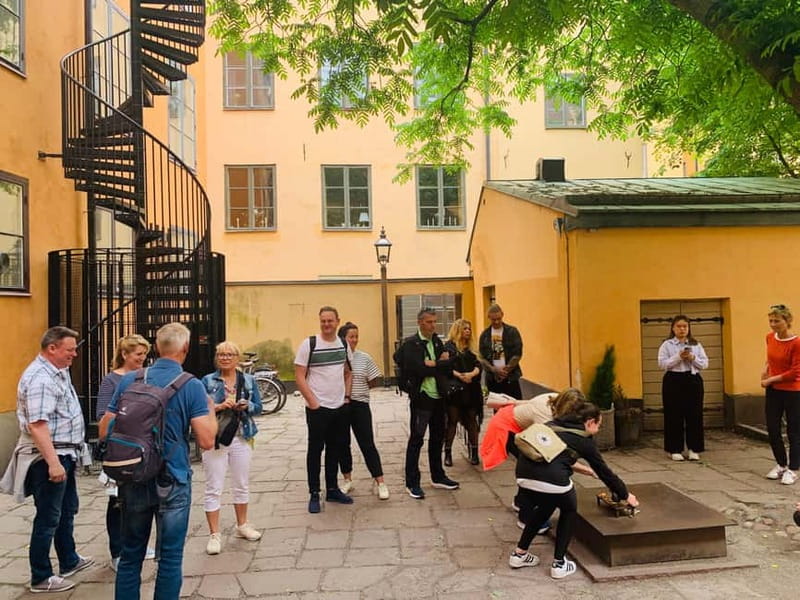
- You see the core of Gamla Stan in two hours: The route covers Riddarholmen, Stortorget, the Royal Palace, Stockholm Cathedral, and several old lanes.
- Old photographs make the past easier to picture: Your guide shows historic images at each stop rather than relying only on spoken explanation.
- The walk includes both famous sights and small details: Look for the Iron Boy, German Church, old street names, and Stockholm’s narrowest alley.
- The pace suits first-time visitors: The walk is designed as a gentle introduction, with short walks and photo stops rather than a strenuous city march.
- You get local suggestions after the tour: A WhatsApp message offers ideas for food, fika, viewpoints, archipelago islands, and lower-cost activities.
Begin at Birger Jarl’s statue on Riddarholmen
The tour starts at Birger Jarls Torg, beside Birger Jarl’s statue on Riddarholmen. This is a sensible meeting point because you are already at the edge of Stockholm’s oldest quarter, and the nearest subway station is Gamla Stan on the green and red lines.
Arrive a little early. The guide wears a visible vest, and the group is expected to start on time. If you are running late, contact the tour provider before the start so the group does not wait.
The opening section sets up the basic story of Stockholm and Gamla Stan. You will hear about the old town’s connection with Nordic history, its ties with neighboring countries, and the long rivalry with Denmark. That last subject is not just a throwaway joke. It gives the guide a way to explain why Sweden’s past is closely linked with the other Scandinavian kingdoms.
A few more Stockholm trips to weigh up
- Stockholm: Ghost Walk and Historical Tour
★ 4.7 · 2,206 reviews - Walking Tour of Stockholm Old Town
★ 5.0 · 1,175 reviews - The Original Stockholm Ghost Walk and Historical Tour – Gamla Stan
★ 4.5 · 1,165 reviews
Riddarholmen brings medieval Stockholm into view
The first major stop is Riddarholmen, a small island beside Gamla Stan. The tour pauses here for photographs and a look at Riddarholmen Church, one of Stockholm’s most recognizable historic buildings.
You will not enter the church during this activity, but the exterior still gives you a strong sense of the old royal city. The church helps place Stockholm’s past in a wider setting, while the water and surrounding buildings make this one of the more attractive early stops.
From here, the route moves toward Gamla Stan through a series of compact lanes. The walks between stops are short, often around five to ten minutes. That makes the tour manageable, though the repeated cobblestones and uneven surfaces are worth considering if you have mobility concerns.
Small lanes reveal the old town’s everyday side
Several stops focus on streets that you could easily pass without a guide. Stora Gråmunkegränd and Ignatiigränd are photo stops, but they also help show how tightly packed Gamla Stan remains.
The guide explains how people lived in the old town, who occupied it, and how the district changed over time. You will also hear about the old German presence and the question of whether Gamla Stan functioned as a German colony during the Hanseatic period.
These details matter because the old town can otherwise feel like a pretty collection of buildings. The stories give the lanes a human scale. You begin to think about homes, trades, social divisions, and daily life rather than only church towers and painted facades.
Västerlånggatan shows the polished face of Gamla Stan
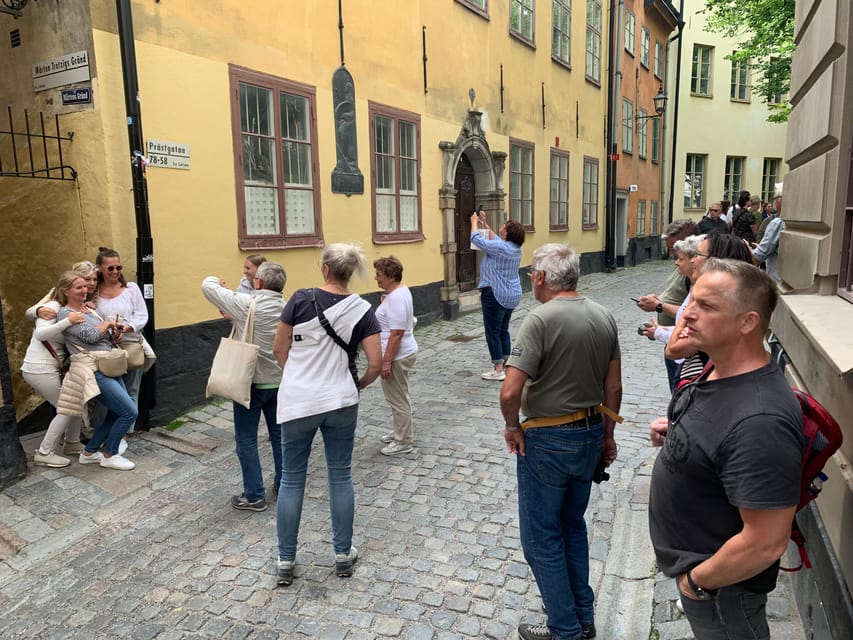
Västerlånggatan is one of the old town’s best-known streets. It is a natural place to discuss how Gamla Stan works today, with historic buildings serving modern shops, restaurants, and homes.
The walk does not treat the district as an outdoor museum. A useful question answered along the way is whether people still live in Gamla Stan. The answer is yes, and that point helps you read the neighborhood more accurately. It is an active part of Stockholm, not simply a preserved stage set for visitors.
The street can be busier than the smaller lanes, especially at popular times. The guide helps you move through it with a clear purpose, but you may want to return later if you prefer to browse shops or take photographs without keeping up with a group.
Same city, a completely different kind of day:
- Stockholm: City Archipelago Sightseeing Cruise with Guide
★ 4.3 · 10,798 reviews - Stockholm: Skansen Open-Air Museum Admission Ticket
★ 4.5 · 3,427 reviews - Stockholm: Archipelago Boat Tour
★ 4.4 · 3,110 reviews - Stockholm: Highlights Boat Tour
★ 4.3 · 2,542 reviews
Svartmangatan and German Church explain the city’s connections
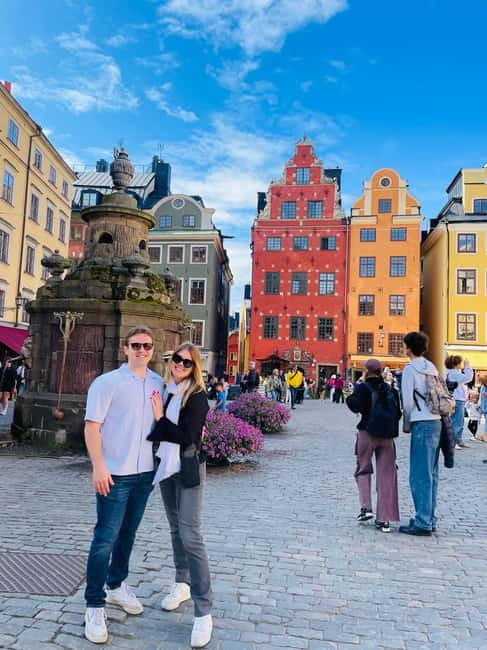
The route continues along Svartmangatan before reaching the German Church. This part of the walk explores Stockholm’s links with German merchants and the Hanseatic League.
The German Church is viewed from the outside. Its presence is a useful reminder that Stockholm was shaped by trade and migration, not only by Swedish kings. The tour’s questions about German influence, old neighborhoods, and historic social groups give the church more meaning than a quick photograph alone would provide.
The guide also covers darker parts of the past, including the Stockholm Blood Bath, the old executioner’s home, and names such as Hell Street and the Ghetto. These subjects may not sound cheerful, but they are important for understanding how the old town was organized and how power was used.
Mårten Trotzigs Gränd is the tightest squeeze
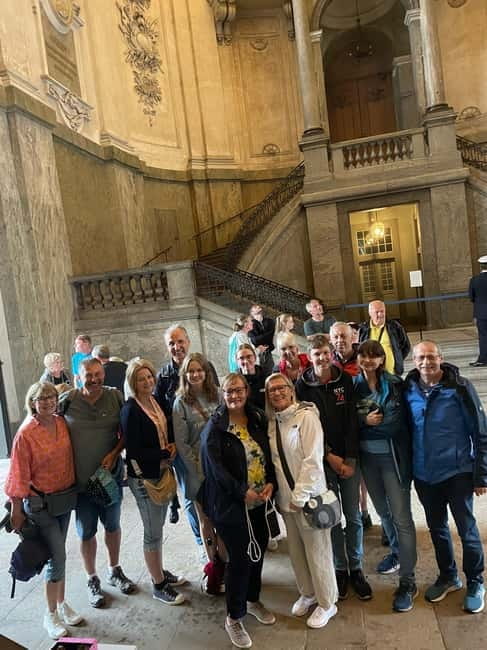
Mårten Trotzigs Gränd is one of the most memorable stops. This narrow passage is known as Stockholm’s narrowest alley, and it feels very different from the open squares and wider streets nearby.
It is a quick stop, but a good one for photographs and scale. The alley shows how little space was available inside the medieval town and why Gamla Stan’s street plan can feel so folded and irregular.
Take care with your footing here. Comfortable shoes are essential for the entire walk, and the narrow passage can be awkward if you are trying to photograph while others are moving through. The guide keeps the stop brief, which helps prevent the group from blocking the lane.
Prästgatan and Österlånggatan add more local texture
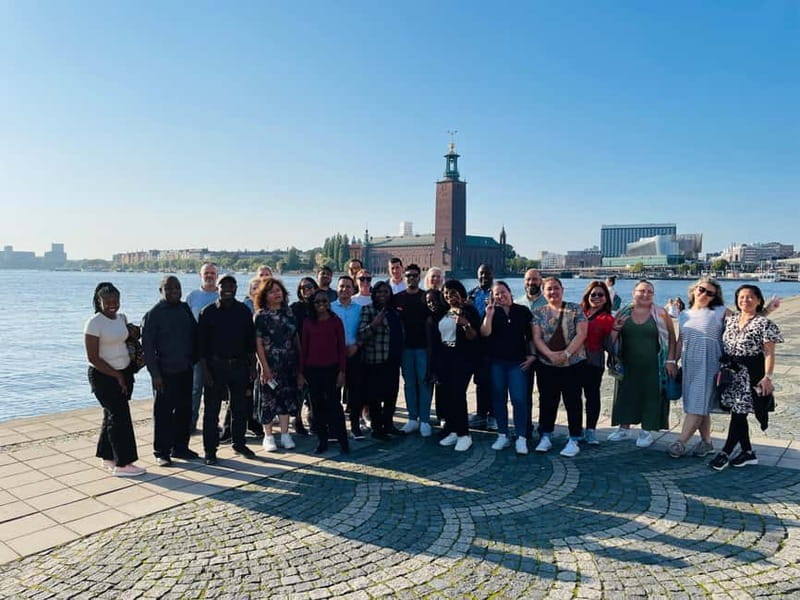
Prästgatan and Österlånggatan provide another look at the old town beyond its most famous postcard views. These streets are part of the route’s quieter rhythm, with short walks and pauses for photographs.
The guide uses historic pictures to show how scenes looked in earlier periods. This is one of the tour’s most useful features. An old image can make a street’s changes easier to understand than a long explanation, especially when you are standing in the same place.
You will also hear more about the people who lived in Gamla Stan and the way different groups occupied the district. The result is a fuller picture of old Stockholm, including its crowded conditions and hard edges.
Stortorget connects the Nobel Museum with Sweden’s public story
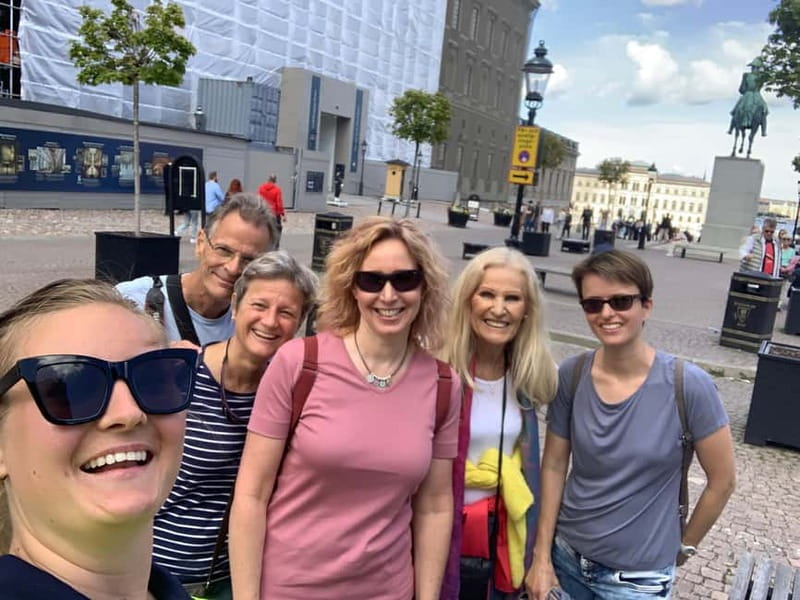
Stortorget is the visual center of many first visits to Gamla Stan. Its colorful buildings and compact shape make it one of Stockholm’s easiest squares to recognize.
The Nobel Prize Museum sits here, and the tour pauses outside. You will not receive an entrance ticket, so treat this as an orientation stop. If the museum interests you, you can return independently for an indoor visit.
Stortorget is also tied to the Stockholm Blood Bath, one of the major historical episodes covered during the walk. The square’s pleasant appearance can hide the severity of what happened there, which is exactly why a guide adds value. You get the setting and the political story together.
The square can be crowded and noisy. That may limit how clearly you hear every word, especially if the group is larger, but the guide’s use of visual material gives you something concrete to follow.
Köpmangatan and the Iron Boy offer smaller discoveries
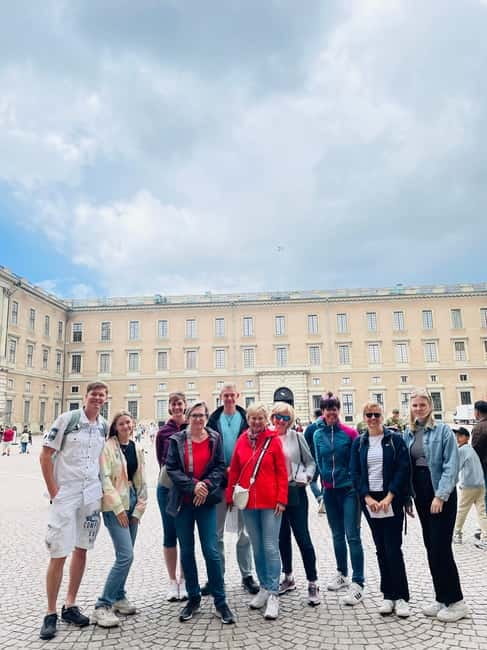
Köpmangatan leads the group toward one of the tour’s most charming details, the Iron Boy, also called the boy watching the moon. This tiny statue is easy to overlook without someone pointing it out.
I like stops such as this because they break up the grand royal narrative. You are not only hearing about kings, churches, and political crises. You are also noticing small public art and local details that give Gamla Stan its character.
The Iron Boy stop is short, so do not expect a long presentation. Its value is in knowing where to look and understanding why a very small statue has become a familiar part of the old town.
The Royal Palace and Stockholm Cathedral close the story
The Royal Palace is one of the final major stops. The guide explains its place in Stockholm’s political and royal history, while you view the building from the outside.
Stockholm Cathedral is nearby and adds a second important landmark to the closing section. Together, the palace and cathedral show how closely royal power and religion were tied in the old city.
The tour also tackles a memorable political question: why a French officer became Swedish king in the early 1800s. That story gives the final section a broader European angle and helps connect Stockholm to events beyond Sweden.
Again, no entrance fees are included because the tour passes these sights from the outside. That keeps the $29 price focused on guiding rather than admissions, but it also means you should budget extra time and money if you want to visit the palace or cathedral interiors.
The route ends near Gustav III’s Obelisk
The stated final stop is Gustav III’s Obelisk, near the palace area. The meeting information also describes the activity as ending back at the meeting point, so check the exact end point shown with your booking. Either way, you finish in a useful central part of Gamla Stan rather than far from public transport.
The walk covers many stops, but it does not feel like a forced march. Most pauses are around five minutes, with a few longer walks between sections. The pace is suitable for people who want a clear introduction without spending half a day on one subject.
Fika and local suggestions make the finish practical
At the final stop, you receive a mini fika, a Swedish sweet snack. It is a small inclusion, not a full café break, but it gives the tour a pleasant local finish.
Afterward, the guide sends a WhatsApp message to the phone number used for the booking. It includes suggestions for restaurants, fika places, viewpoints, archipelago islands, and budget-friendly options around Stockholm.
This may be the most useful part for a short stay. You can use the walking tour to get your bearings, then choose your next meal or outing with a list of ideas already in your phone. Make sure your smartphone is charged, both for the message and for keeping in touch if plans change.
Is $29 a fair price for two hours?
At $29 per person, the tour is reasonably priced if you want context rather than a simple walk through attractive streets. You are paying for a local guide, the visual material at each stop, a planned route through the old town, and the follow-up recommendations.
The value is strongest for a first visit. You see the major outside landmarks quickly, learn the basic story of Gamla Stan, and discover details you might miss on your own. The price is less appealing if you already know the old town well or mainly want to enter museums and historic buildings.
The tour has a rating of 4.7 from 284 reviews, and the most praised points are easy to understand. Sophie is singled out for using visual aids that make pre-modern Stockholm easier to picture. Andre is praised for a relaxed pace, friendliness, and helping with family photographs. Those details suggest that the human side of the tour matters as much as the route itself.
Small groups are available, which can make it easier to hear the guide and ask questions. Group size may affect the feel of the walk, so check the option offered for your date.
Who should take this Gamla Stan walk?
I would recommend it to first-time visitors, couples, families with older children, and anyone who wants a quick history lesson before exploring Stockholm independently. It is also useful early in a city break, since the final recommendations can shape the rest of your stay.
You will get the most from it if you enjoy stories about people, politics, trade, and old city life. The tour asks questions about Vikings, Danish rivalry, German merchants, royal succession, executions, and the Stockholm Blood Bath, so it offers more than a parade of buildings.
It may not suit wheelchair users, and the provider specifically lists it as unsuitable for wheelchair users. Cobblestones, narrow lanes, and the outdoor format also make comfortable shoes and weather-ready clothing important.
The tour is offered in English or German. Spanish and Swedish are also listed as possible languages for this tour program, but the activity details specifically confirm English and German, so verify the language before booking if you need another option.
Should you book it?
Book this tour if you want a compact, story-led introduction to Gamla Stan and do not need interior admissions included. The historic images, relaxed pace, small statues, narrow lanes, and practical follow-up tips give you more than an unguided stroll for a modest price.
Skip it if you already know Stockholm’s old town well, dislike walking on uneven streets, or want a museum-heavy experience. For most first-time visitors with two spare hours, it is a sensible way to understand the place before returning on your own for the Royal Palace, Stockholm Cathedral, or Nobel Prize Museum.
Free cancellation is available up to 24 hours before the start, and you can reserve now and pay later. Stockholm’s weather can change quickly, so bring suitable clothing, comfortable shoes, and a charged phone.
FAQ
How long does the Gamla Stan walking tour last?
The tour lasts two hours. Check availability for the starting times offered on your chosen date.
Where does the tour start?
The meeting point is Birger Jarls Torg on Riddarholmen, beside the Birger Jarl statue. The nearest subway station is Gamla Stan, served by the green and red lines.
Which languages are available?
The confirmed tour languages are English and German. The wider tour program also lists Spanish and Swedish, so check the available language for your selected booking.
Are entrance fees included?
No. The tour passes the sights from the outside, including the Royal Palace, Stockholm Cathedral, the Nobel Prize Museum, Riddarholmen Church, and the German Church.
Is the tour suitable for wheelchair users?
No. The activity is listed as not suitable for wheelchair users.
What should I bring?
Bring comfortable shoes, clothing suited to the weather, and a charged smartphone. The Scandinavian weather can change quickly, and the guide sends local recommendations by WhatsApp after the tour.
Just added around Stockholm
- World War II Stockholm Old Town Walking Tour and Army Museum★ 4.6 · 4 reviews
- Stockholm: Archipelago Guided Boat & Walking Tour of Vaxholm★ 3.1 · 23 reviews
- Stockholm: Underground Metro Art Ride with a Local Guide★ 4.6 · 39 reviews
- Vaxholm & Stockholm Archipelago: Guided Excursion, Day Trip★ 4.8 · 41 reviews
- Wolf and Wildlife Tracking in Sweden★ 5.0 · 9 reviews
- Scandinavian Art, Architecture and Design Tour in Stockholm★ 4.5 · 11 reviews
- Private Tour: Swedish History Day Trip to World Heritage Candidate Markim-Orkesta from Stockholm★ 5.0 · 8 reviews
- Walking Tour of Stockholm’s City Center★ 4.5 · 26 reviews
Walking Tours, compared.
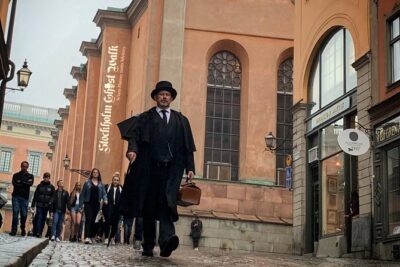
The Original Stockholm Ghost Walk and Historical Tour – Gamla Stan
Read our review →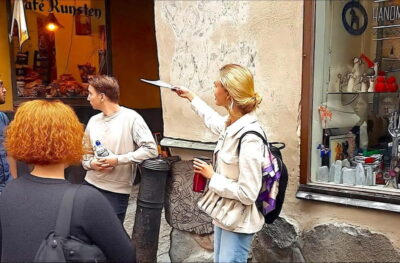
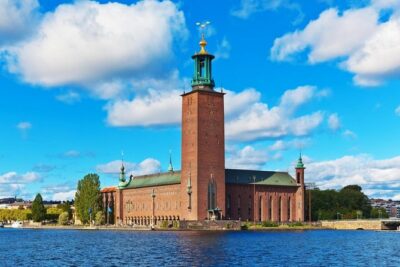
Best of Stockholm Walking Tour-3 Hours, Small Group max 10 people
Read our review →

Browse the lists this tour appears in