
Reviewed · STOCKHOLM TOURS
Stockholm: Underground Metro Art Ride with a Local
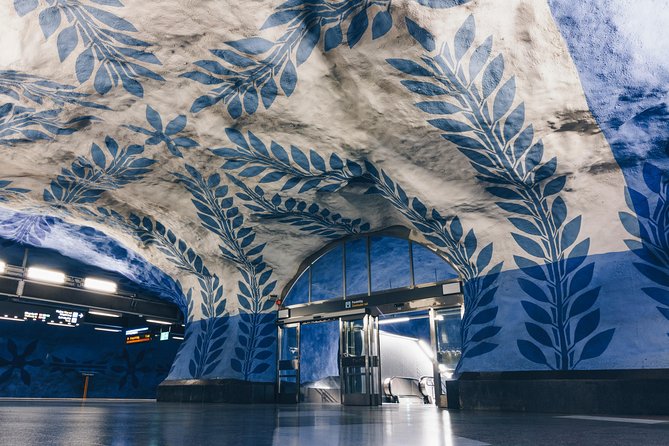
Stockholm’s metro is not just a way to get around. It is a long, public art show beneath the city, with rock walls, bold colors, sculpture, and political ideas built into the stations. This tour moves quickly between several of the best-known works, including art by Siri Derkert and an underground garden by Ulrik Samuelson.
I like the small group, limited to eight people, because it gives you room to ask questions and keep a comfortable pace. I also like that the subway ticket is included, and that guides such as Dan and Fayez have helped visitors understand both the artwork and how to use Stockholm’s metro for the rest of their stay.
The main drawback is value. At $131.12 per person for about 90 minutes, this is an expensive introduction to a public transport system you can explore on your own. The tour also involves stairs and a fair amount of walking, so it is not a good fit if knee or mobility problems make station changes difficult.
In This Review
- Key points before you book
- Why Stockholm’s metro makes a good art tour
- Starting at T-Centralen
- Per Olof Ultvedt, Signe Persson-Melin, and Anders Österlin
- Ulrik Samuelson’s underground garden
- Siri Derkert’s powerful station
- The Olympic Games tribute
- The four elements
- What the 90-minute schedule really means
- Small group, local perspective, and guide quality
- Is $131.12 a fair price?
- Walking, stairs, tickets, and other practical details
- Who will enjoy this metro art tour most?
- Should you book it?
- FAQ
- How long does the Stockholm underground art tour last?
- Where does the tour begin?
- Where does the tour end?
- How large is the group?
- Is the subway ticket included?
- What language is the tour offered in?
- Which artists and themes are included?
- Is the tour suitable for people with mobility problems?
- Can I cancel for a full refund?
Key points before you book
- You visit several metro stations in 90 minutes: The route begins at T-Centralen and ends at Tekniska högskolan.
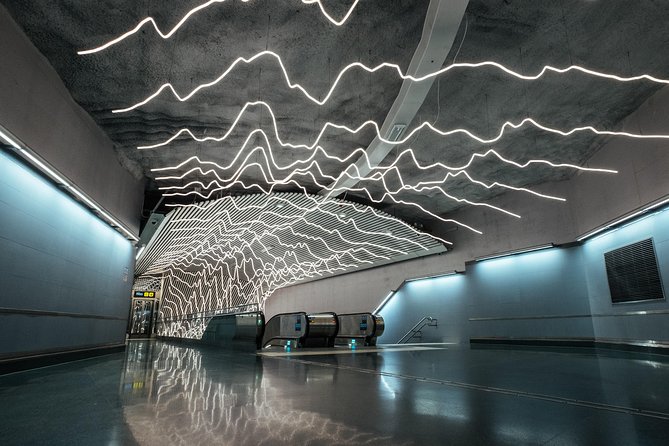
- The art is the main event: Expect works by Per Olof Ultvedt, Signe Persson-Melin, Anders Österlin, Ulrik Samuelson, and Siri Derkert.
- Groups stay small: No more than eight people join the local guide.
- Subway fare is included: You do not need to buy a separate ticket for the rides used during the tour.
- The pace can adapt: The route may respond to the group’s interests, walking speed, and weather conditions.
- Stairs matter: This is not recommended for people with impaired mobility, and a walking stick may help if your knees are troublesome.
Why Stockholm’s metro makes a good art tour
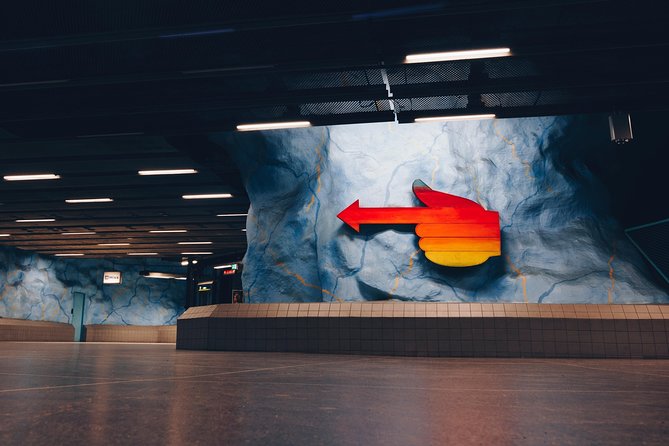
Stockholm’s underground system is unusual because art is part of the stations themselves, not something added in a separate gallery. You can find painted rock, sculptural work, decorative details, and large public installations while people go about their daily commute.
That setting gives the art a different feel. You are not walking through quiet rooms with labels beside every work. You are standing on a platform, watching trains arrive, and trying to see details that a hurried commuter might miss. A local guide helps you pause long enough to notice the ideas behind each station.
The 90-minute format is useful if you have limited time in Stockholm. You get a quick introduction to several parts of the metro rather than spending an hour at one station. The trade-off is that no single stop gets a very long look, and the exact route can change.
Other Stockholm days worth booking alongside this:
- Stockholm: City Archipelago Sightseeing Cruise with Guide
★ 4.3 · 10,798 reviews - Stockholm: Skansen Open-Air Museum Admission Ticket
★ 4.5 · 3,427 reviews - Stockholm: Archipelago Boat Tour
★ 4.4 · 3,110 reviews
Starting at T-Centralen
The meeting point is T-Centralen, at Stockholm, 111 20. This is a practical starting place because the station is central and well connected to the city’s transport network.
You should arrive ready to walk and change trains. The tour is not a simple talk in one location. You ride the metro between stations, pause for explanations, and continue through the system until the final stop at Tekniska högskolan, 114 28 Stockholm.
T-Centralen is also a sensible first lesson in Stockholm’s metro. You begin in a working transport hub, then learn how the art is spread through the network. If you have just arrived in the city, the tour can help you get your bearings fast and make later independent metro trips less intimidating.
The guide may point out details that are easy to miss when you are focused on finding the right platform. This is one reason the tour can be useful beyond the art itself. Fayez, one of the guides praised for his clear explanations, has helped people gain the confidence to use the metro during the rest of their visit.
Per Olof Ultvedt, Signe Persson-Melin, and Anders Österlin
One part of the route introduces work by Per Olof Ultvedt, Signe Persson-Melin, and Anders Österlin. The supplied details do not identify one exact station or explain which work belongs to each artist, so you should expect your guide to provide that context on the day.
This stop matters because it shows that Stockholm’s metro art is not the work of one artist or one style. Different artists brought different materials, shapes, and visual ideas into public spaces. You may find that the variety is more interesting than a route focused on one repeated design.
Look closely during this section. The point of a guided visit is not simply to photograph a wall and move on. Your guide can direct your attention to elements you might otherwise pass without seeing. Dan, another guide associated with the tour, has been praised for explaining the details and meaning behind several stations.
Still, the short schedule limits the time available for discussion. If a particular artist catches your interest, note the name and return independently after the tour if you want a slower look.
Ulrik Samuelson’s underground garden
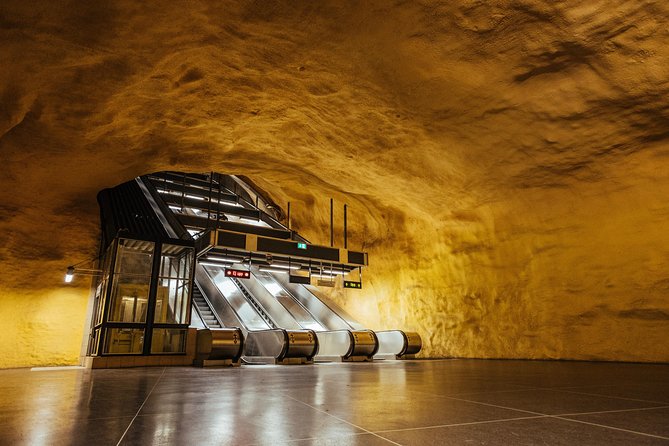
The underground garden by Ulrik Samuelson is one of the most memorable ideas on the route. Its appeal comes from the contrast between a metro station and a garden-like setting. Instead of treating the station as a purely practical space, the work changes how you read the area around you.
You may find this stop especially rewarding if you like public art that responds to its surroundings. A work in a museum can be viewed at leisure, but an installation in a station has to share space with trains, signs, commuters, and the ordinary noise of city life.
Photography can help you remember the broad impression, but it may not capture the scale or atmosphere of the station. One visitor specifically noted that photographs do not do the art justice. That is useful advice: take a few pictures, then put your phone away and look carefully.
The guide’s explanation is important here. Without context, an underground garden might simply look unusual. With a clear account of the artist’s choices, you can better understand why the station was treated as a place for imagination rather than just movement.
Same city, a completely different kind of day:
- Stockholm: Highlights Boat Tour
★ 4.3 · 2,542 reviews - Stockholm Pass: Save up to 50% – Includes Vasa Museum Ticket
★ 4.1 · 2,392 reviews - Stockholm: Ghost Walk and Historical Tour
★ 4.7 · 2,206 reviews - Walking Tour of Stockholm Old Town
★ 5.0 · 1,175 reviews
Siri Derkert’s powerful station
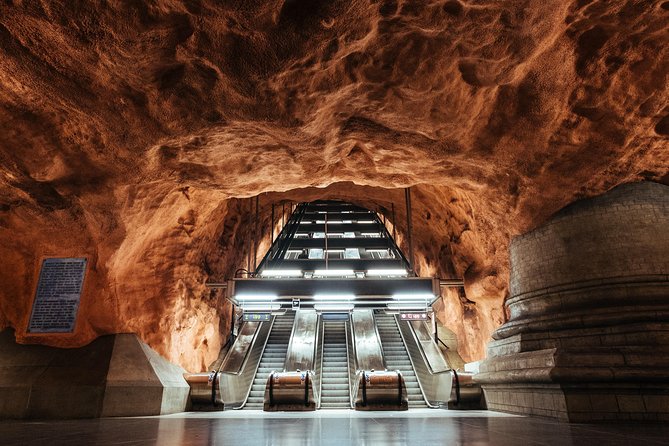
The tour also visits art by Siri Derkert, one of Sweden’s best-known artists. Her work gives the route a strong connection to Swedish modern art and public expression.
The supplied information does not specify the exact pieces or station details, so you should not expect a full museum-style lecture on Derkert’s career. Instead, this is a chance to see how an established artist worked within a public transport setting.
This stop may appeal most to people who already enjoy modern art, but you do not need a specialist background. A good guide can point out the forms, marks, and themes that make the work worth stopping for. The small group helps here, since you can ask a direct question rather than trying to hear an explanation in a large crowd.
One caution: guide quality can vary. Most of the positive comments about Dan and Fayez focus on their ability to explain the stations and answer questions. One unhappy visitor found the guide unable to answer several questions about the art. If you want detailed art scholarship, this may feel light. If you want a clear introduction while moving through the metro, it should be a better match.
The Olympic Games tribute
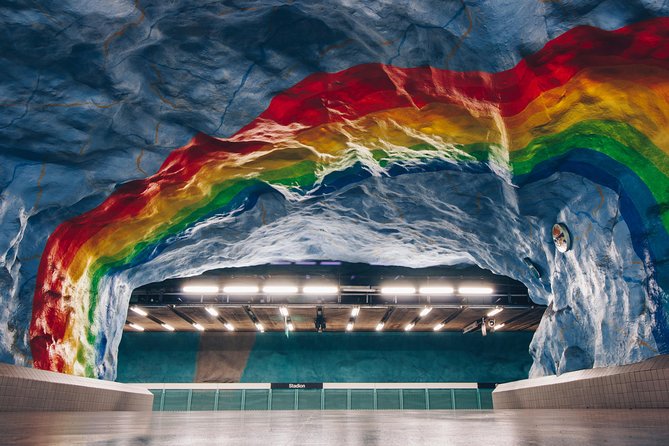
Another stop is a tribute to the Olympic Games. It adds a sporting theme to a route otherwise focused on artists, materials, and station design.
An Olympic homage works well in this setting because it gives the underground journey a wider civic connection. You are not only seeing decoration. You are seeing how public spaces can reflect shared events and national pride.
The exact artwork and station are not described in the available information, so keep your expectations flexible. The guide will determine how much time the group spends there, and the route may shift according to interests, pace, or weather conditions.
If Olympic history is a special interest for you, ask the guide about the work while you are there. The group size makes that possible. If the stop is not central to your interests, it still provides a change of mood from the more abstract art elsewhere on the route.
The four elements
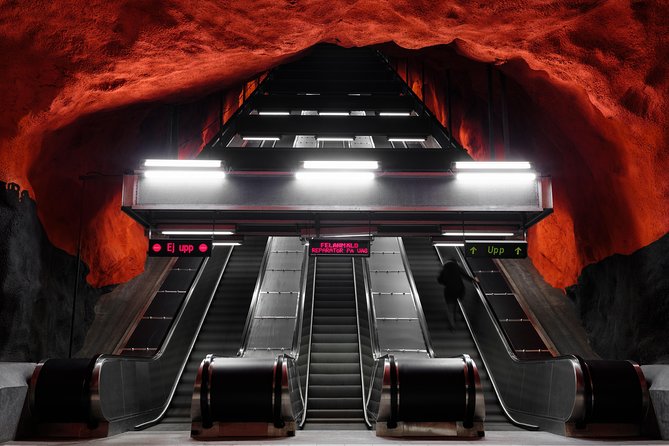
The itinerary also includes a station or artwork connected with the four elements. The phrase suggests a work designed around basic forces of nature, but no further details are supplied about the artist, materials, or exact station.
That uncertainty is worth keeping in mind when booking. The tour is an introduction to selected parts of Stockholm’s metro art, not a complete catalog with a fixed, fully documented route. The four elements stop is best approached as one piece of a larger visual journey.
The strength of the format is variety. In 90 minutes, you move from named artists to a garden theme, an Olympic reference, and elemental imagery. The weakness is that the tour can feel like a sampler. You will see several ideas, but you may want more time at the stations that catch your eye.
What the 90-minute schedule really means
Ninety minutes sounds generous until you include meeting the guide, walking through stations, waiting for trains, riding between stops, and gathering the group again. You will see a selection, not every major art station in Stockholm.
One visitor gave the practical advice to allow extra time for additional stations. I agree. Treat this tour as an orientation. Afterward, you can return to a few stations at your own pace if you want more photographs or a closer look.
The route ends at Tekniska högskolan. That fixed endpoint is useful because you can continue your day from there, but it is not the same place where you began. Plan your sightseeing with that in mind.
The itinerary can adapt to the group’s walking speed and interests. That flexibility is good for a small party with similar priorities. It also means the experience is not perfectly predictable. Stops may vary with weather, and you may spend more or less time at a given station.
Small group, local perspective, and guide quality
The maximum group size is eight people. This is one of the strongest features of the tour. You are less likely to get lost in a crowd, and the guide can respond to individual questions.
A local host leads the experience rather than a large commercial tour operation. That can make the conversation more personal and help connect the metro art with everyday Stockholm. The best version of this tour depends heavily on how well the guide explains what you are seeing.
Dan received especially strong praise for knowing the stations and explaining what each one represents. Fayez was praised for giving a useful introduction to the metro and helping people feel comfortable using it independently. Those details suggest that the tour can work for both art lovers and first-time metro users.
But you should keep the limits in mind. The provider uses independent local hosts, so the depth of explanation may not be identical each time. One booking also ended badly when the guide did not arrive despite calls and messages. That appears to be an isolated service failure, but it is still part of the risk to consider when paying a high price.
Is $131.12 a fair price?
At $131.12 per person, this is not a cheap way to ride Stockholm’s subway. The included subway ticket has some value, but it does not account for most of the price. You are mainly paying for the local host, the planned route, and the convenience of seeing several stations without doing the research yourself.
The price makes more sense if you have only a short stay, care about public art, and value personal explanation. A small group of eight is also more appealing than a large coach-style outing, especially in busy stations.
The price is harder to justify if you are comfortable using public transport and willing to explore on your own. Stockholm’s metro art is public, and the tour only covers a selection. You can save money by researching stations independently, though you will give up the guide’s commentary and organized route.
The overall rating is 4.3 out of 5 from 18 ratings, which points to a generally positive experience but not a flawless one. The strongest praise centers on the unusual art, clear station explanations, and confidence using the metro. The main complaints concern high cost, uneven guide knowledge, stairs, and one no-show.
Walking, stairs, tickets, and other practical details
Wear comfortable shoes. The tour includes station changes and several sets of steps, and one person specifically warned that the walk can be difficult for anyone with knee trouble. The activity is not recommended for people with impaired mobility.
Service animals are allowed, and the meeting point is near public transportation. Most people can take part, but you should be realistic about the physical demands before booking.
The subway ticket used during the tour is included. Personal expenses are not included. The supplied information also says entry tickets for transportation, museums, and monuments are excluded, although the tour description specifically lists the subway ticket as included. For this activity, plan on the included fare covering the metro rides used by the group, not any separate museums or attractions you visit afterward.
Confirmation arrives when you book. You can cancel for a full refund if you do so at least 24 hours before the start time. Cancellations or changes made inside that 24-hour window are not refunded or accepted.
Who will enjoy this metro art tour most?
I would recommend it first to an art-minded visitor who wants an efficient introduction rather than a full museum lecture. It also suits railway enthusiasts, since you learn how the metro works while seeing the stations as designed public spaces.
It is a good choice early in your stay. The route can teach you how to move around Stockholm, and the information may make later independent metro trips easier. You will also leave with a short list of stations worth revisiting.
Families and small groups may appreciate the limited size, though the stairs and walking need attention. People with mobility limitations should choose another activity unless they have confirmed that the route can meet their needs.
I would be cautious about booking if you expect a fixed, highly academic art tour. The itinerary can change, the guide is an independent local, and the 90-minute schedule leaves limited time for detailed questions at every stop.
Should you book it?
Book this tour if you want a compact, guided look at Stockholm’s unusual underground art and you value having a local explain what you are seeing. The small group, included metro fare, and strong experiences with guides such as Dan and Fayez make it more useful than simply riding around and taking pictures.
Skip it if $131.12 feels too high for a short public transport outing, or if you have trouble with stairs. Independent exploration will cost less and give you more time at each station.
If you do book, arrive ready to walk, wear supportive shoes, and plan extra time afterward for stations you want to revisit. That is the best way to turn a quick introduction into a fuller look at Stockholm’s underground art.
FAQ
How long does the Stockholm underground art tour last?
The tour lasts approximately 1 hour and 30 minutes.
Where does the tour begin?
It begins at T-Centralen, Stockholm, 111 20, Sweden.
Where does the tour end?
It ends at Tekniska högskolan, 114 28 Stockholm, Sweden.
How large is the group?
The group has a maximum of eight people.
Is the subway ticket included?
Yes. A subway ticket is included for the tour.
What language is the tour offered in?
The tour is offered in English.
Which artists and themes are included?
The route includes works by Per Olof Ultvedt, Signe Persson-Melin, Anders Österlin, Ulrik Samuelson, and Siri Derkert. It also includes an underground garden, an Olympic Games tribute, and art connected with the four elements.
Is the tour suitable for people with mobility problems?
The activity is not recommended for people with impaired mobility. It includes walking and several steps, which may be difficult if you have knee problems.
Can I cancel for a full refund?
Yes. You can cancel at least 24 hours before the experience start time for a full refund. Cancellations or changes made less than 24 hours before the start time are not refunded or accepted.
Just added around Stockholm
- World War II Stockholm Old Town Walking Tour and Army Museum★ 4.6 · 4 reviews
- Stockholm: Archipelago Guided Boat & Walking Tour of Vaxholm★ 3.1 · 23 reviews
- Stockholm: Underground Metro Art Ride with a Local Guide★ 4.6 · 39 reviews
- Vaxholm & Stockholm Archipelago: Guided Excursion, Day Trip★ 4.8 · 41 reviews
- Wolf and Wildlife Tracking in Sweden★ 5.0 · 9 reviews
- Scandinavian Art, Architecture and Design Tour in Stockholm★ 4.5 · 11 reviews
- Walking Tour of Stockholm’s City Center★ 4.5 · 26 reviews
- Private Tour: Swedish History Day Trip to World Heritage Candidate Markim-Orkesta from Stockholm★ 5.0 · 8 reviews
Stockholm Tours, compared.

City Archipelago Sightseeing Cruise with Guide
Read our review →



Stockholm Pass: Save up to 50% – Includes Vasa Museum Ticket
Read our review →


The Original Stockholm Ghost Walk and Historical Tour – Gamla Stan
Read our review →Browse the lists this tour appears in