
Reviewed · WALKING TOURS
Stockholm Old Town Private Walking Tour
Stockholm’s oldest quarter is best understood on foot, one crooked lane at a time. This private tour takes you through Gamla Stan, from the colorful Stortorget to the narrow Mårten Trotzigs gränd, while your guide explains the people, fires, royal power struggles, and strange legends behind the stones.
I like the private format, since your group can ask questions without keeping pace with strangers. I also like the strong mix of famous sights and small oddities, including Hell’s Alley, the tiny Iron Boy statue, and the story behind Stockholm’s narrowest alley.
The main drawback is price: $328.75 per person is a serious outlay for roughly two hours, especially since entry to the Royal Palace and Storkyrkan is not included. It makes the most sense for a small group that values a personal guide, not for someone seeking the cheapest introduction to Stockholm.
In This Review
- Key points at a glance
- Why Gamla Stan works so well with a private guide
- Stortorget and the Stockholm Bloodbath
- Prästgatan and the unsettling story of Hell’s Alley
- The Royal Palace and Storkyrkan
- Iron Boy and St. George meet in the same story
- Brända Tomten and the danger of fire
- Mårten Trotzigs gränd, only 90 centimeters wide
- The German Church and Stockholm’s international roots
- Riddarholmen and the final view
- What the guides add to the walk
- Price, timing, and practical value
- Who should book this Gamla Stan walk?
- Should you book it?
- FAQ
- How long does the Stockholm Old Town Private Walking Tour last?
- Where does the tour begin?
- Where does the tour end?
- Is this a private tour?
- What sights are included on the route?
- Are entrance tickets included?
- Can I choose the departure time?
- Is the tour suitable for people with limited mobility?
- Does the tour operate in bad weather?
- Can I cancel for a full refund?
Key points at a glance
- A private walk through medieval Gamla Stan: Your group gets its own professional guide, with no larger tour party sharing the experience.
- Stories beyond the postcard views: Expect the Stockholm Bloodbath, the Nobel Prize, Hell’s Alley, Old Town fires, and the tale of St. George and the Dragon.
- A useful first-day orientation: The route covers Stortorget, the Royal Palace, Storkyrkan, German Church, Riddarholmen, and a view of City Hall.
- Several guides have earned praise for lively storytelling: Sean, Kevin, Katrina, and George are named in the tour feedback, with particular praise for humor, clear English, and family-friendly explanations.
- A cobbled route in all weather: Comfortable shoes and suitable clothing matter, since much of the walk is on uneven Old Town paving.
- The finish gives you room to continue: The tour ends at Evert Taubes Terrass on Riddarholmen, a good place to keep sightseeing independently.
Why Gamla Stan works so well with a private guide
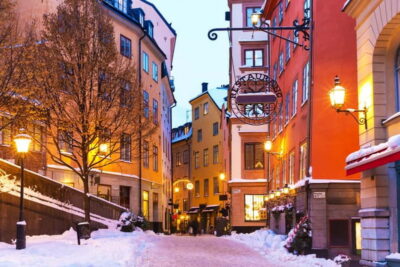
Gamla Stan was founded in the 13th century, and its streets still carry the compact shape of a medieval town. Brightly painted 17th and 18th-century buildings line narrow lanes, while churches, royal buildings, and small squares fill the gaps.
That sounds pleasant enough, but the real pleasure comes from knowing what you are looking at. Without context, Stortorget is a photogenic square and Mårten Trotzigs gränd is a narrow staircase-like lane. With a good guide, those places become clues to Stockholm’s past.
A private tour also gives you some control over the conversation. If you care about medieval politics, royal ceremonies, architecture, or local legends, you can ask for more. Families can pause for questions, and first-time visitors can use the guide to sort out the Old Town’s major sights before exploring alone.
The experience lasts about two hours, so this is an introduction rather than a full study of Stockholm. You will see many places, but most stops are brief. That pace is useful if your time is limited, though anyone hoping to tour the palace rooms or spend a long time inside the cathedral should plan a separate visit.
A few more Stockholm trips to weigh up
- Stockholm: Ghost Walk and Historical Tour
★ 4.7 · 2,206 reviews - Walking Tour of Stockholm Old Town
★ 5.0 · 1,175 reviews - The Original Stockholm Ghost Walk and Historical Tour – Gamla Stan
★ 4.5 · 1,165 reviews
Stortorget and the Stockholm Bloodbath
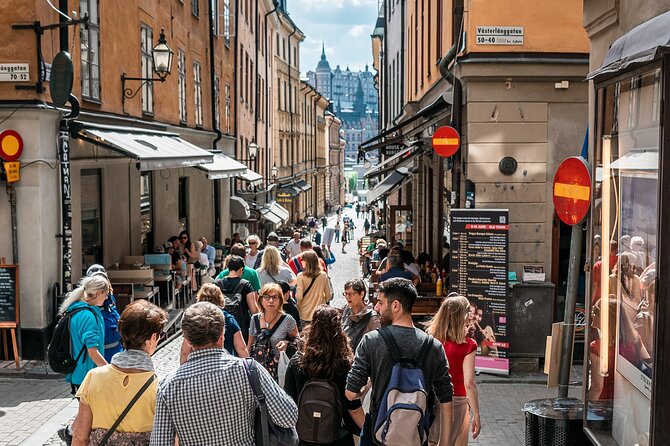
The tour begins at Stortorget, Gamla Stan’s main square. This is the classic Stockholm scene: a compact open space framed by colorful historic houses, with narrow lanes leading away in several directions.
Your guide uses the square to explain two very different parts of Swedish history. One is the Nobel Prize, whose connection to Stockholm gives the square a modern cultural link. The other is the Stockholm Bloodbath, a grim political event that helped shape Sweden’s relationship with Denmark.
You have about ten minutes here, enough to get your bearings and hear the main stories before moving into the surrounding lanes. That brief stop works well because Stortorget is also a place where you will want to look up, take photographs, and notice the changing colors and building fronts.
Do not expect a long architectural lecture at this point. The value is in connecting the buildings and square to events that are easy to miss if you simply walk through on your own.
Prästgatan and the unsettling story of Hell’s Alley
Prästgatan, or Priest Street, gives the tour a darker turn. Its northern section was once called Helvetsgränd, or Hell’s Alley. The name came from medieval beliefs about a desecrated resting place for the dead northwest of Storkyrkan.
You spend about ten minutes here. It is a good example of the tour’s approach: the guide does not only point out grand buildings, but also explains how old beliefs shaped street names and local memory.
The lane is close to the cathedral, so the stop also helps you understand how tightly packed Gamla Stan is. Major sights are often only a few steps apart, but each street can carry a different story.
This is a stop for atmosphere and explanation rather than a major monument. If you prefer a tour made up only of big landmarks, it may feel small. I think it earns its place because it makes the Old Town feel like a lived-in medieval place, not just a row of pretty facades.
The Royal Palace and Storkyrkan
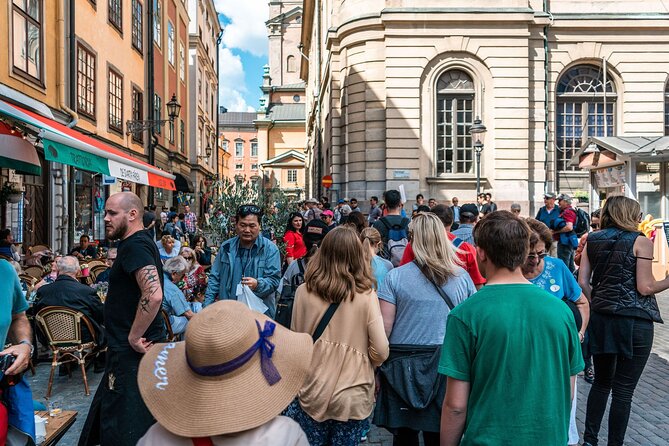
The Royal Palace is one of Europe’s largest royal residences and the official home and workplace of Sweden’s king and queen. The tour allows about ten minutes at the palace, enough for an exterior introduction and an explanation of its role in Sweden’s monarchy.
Admission to the palace is not included. That is important when comparing the price with a longer sightseeing visit. You should treat this part as an outside look and a chance to hear the guide’s context, then decide if you want to return for the interior on your own.
Nearby Storkyrkan, Stockholm Cathedral, is another major stop. It is one of Stockholm’s oldest buildings and contains the wooden St. George and the Dragon statue from the 1400s. Royal ceremonies, including the 2010 wedding of Crown Princess Victoria and Prince Daniel, have taken place here.
The cathedral also has a ten-minute slot, and admission is not included. The short visit means you should not expect a slow examination of the interior. Still, the cathedral matters because it links medieval worship, royal ceremony, art, and Swedish public life in one compact building.
If these interiors are high on your list, ask your guide how to return after the walk. The tour finishes in the Old Town area, leaving you free time to continue sightseeing.
Same city, a completely different kind of day:
- Stockholm: City Archipelago Sightseeing Cruise with Guide
★ 4.3 · 10,798 reviews - Stockholm: Skansen Open-Air Museum Admission Ticket
★ 4.5 · 3,427 reviews - Stockholm: Archipelago Boat Tour
★ 4.4 · 3,110 reviews - Stockholm: Highlights Boat Tour
★ 4.3 · 2,542 reviews
Iron Boy and St. George meet in the same story
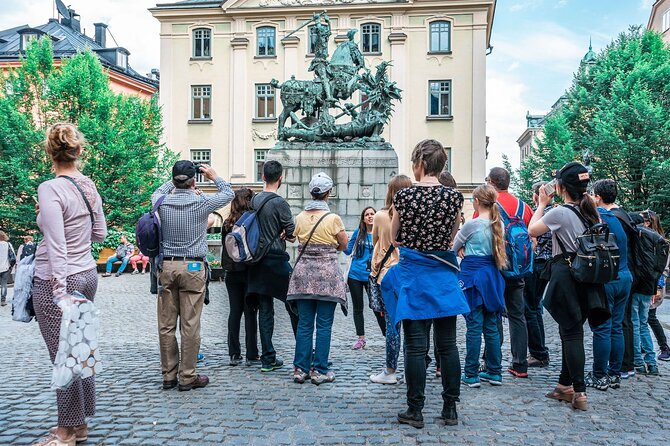
Järnpojken, known in English as Iron Boy or the Boy Looking at the Moon, is described as Sweden’s smallest statue. The stop lasts only about five minutes, but it is exactly the sort of detail that can slip past you without a guide.
The statue gives the route a lighter moment after the more serious stories of executions, warfare, and medieval religious beliefs. Its small scale also makes a useful point about Gamla Stan: not every worthwhile sight is grand or easy to spot.
The nearby St. George and the Dragon statue receives about ten minutes. It represents the struggle between Sweden, symbolized by St. George, and Denmark, symbolized by the dragon, in the late 1400s.
The outdoor sculpture is a bronze copy. The original, made of wood in the 1400s, is inside Storkyrkan. If you care about medieval art, this connection gives you a reason to include the cathedral interior in your independent plans, since the tour itself does not include admission.
Brända Tomten and the danger of fire
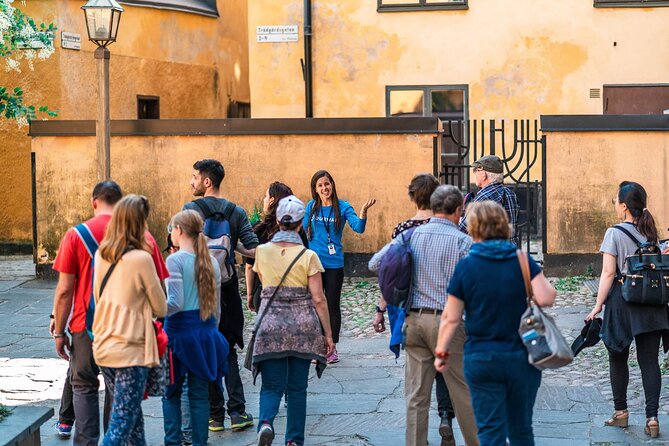
Brända Tomten translates as the burnt property. The small square recalls fires that damaged Stockholm’s Old Town and the old insurance rules connected to help from the fire department.
You spend about five minutes here. That may sound short, but the stop adds practical social history to the royal and religious subjects. It explains how residents dealt with risk in a dense town built with narrow lanes and closely packed buildings.
I appreciate stops like this because they show how ordinary people shaped the city. Palaces and churches tell only part of Stockholm’s story. Fires, insurance, street widths, and building practices tell you how life worked between the grand events.
Again, this is not a place where you will spend a long time. Its value depends on the guide making the story clear and tying it to the streets around you.
Mårten Trotzigs gränd, only 90 centimeters wide
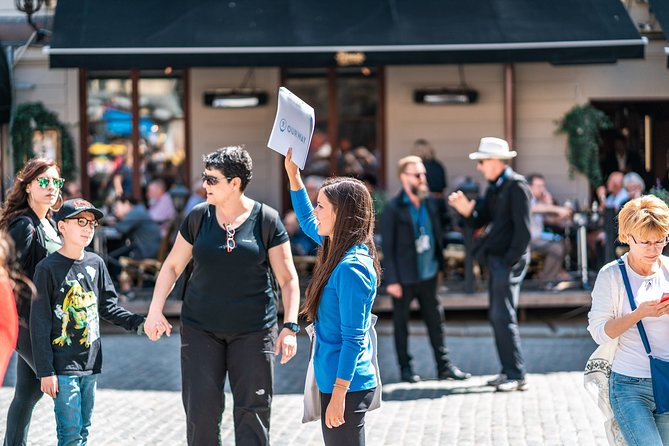
Mårten Trotzigs gränd is the narrowest alley in Stockholm. At its tightest point, it is only 90 centimeters wide, so expect a close look at the stone walls and a brief squeeze through the passage.
The tour makes an important correction to a common claim. Some guidebooks call it the narrowest alley in Europe, but an alley in Prague measures only 60 centimeters. Your guide gives you the accurate version instead of repeating the more dramatic story.
That small correction says something useful about the tour’s tone. The route includes legends and colorful tales, but it does not need to exaggerate them to make the Old Town interesting.
The stop lasts about ten minutes. Wear shoes with a firm grip, particularly in wet weather, and remember that much of the wider route also runs over cobblestones. The alley is a fun photo stop, but it is not a comfortable place for lingering if other people are passing through.
The German Church and Stockholm’s international roots
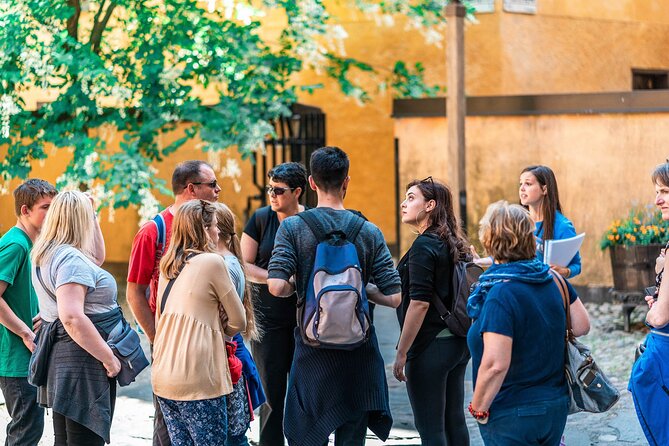
The German Church, or Iglesia Alemana, reflects Stockholm’s early international connections. When the city was founded in 1252, Birger Jarl invited Germans to help build it. The church itself was built during the 1600s.
The tour allows ten minutes here. This stop helps correct the idea that Stockholm developed in isolation. Trade, migration, construction, and religious communities all played a role in the city’s growth.
You may find the church’s exterior more memorable after hearing why the German community mattered. The point is not simply to collect another building, but to understand how different groups helped shape Gamla Stan.
As with several stops, the information provided describes the sight and the outside route but does not promise interior admission. If entering the church matters to you, confirm your plans separately.
Riddarholmen and the final view
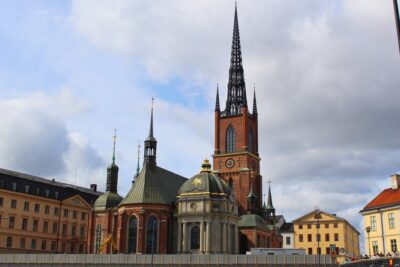
The route continues to Riddarholmen, or the Island of Nobility. This area includes Riddarholmen Church and Stockholm’s oldest preserved building, along with views toward Lake Mälaren and the western side of the city.
The tour lists Riddarholmen Church as a ten-minute stop and ends at Evert Taubes Terrass. The finish is one of the route’s practical strengths. Instead of ending back in the middle of a crowded square, it leaves you beside a scenic waterfront outlook where you can continue on your own.
The church is an important landmark connected with Swedish history and nobility. The route information does not include admission, so you should not assume an interior visit. The surrounding island and its views are still a worthwhile close to the walk.
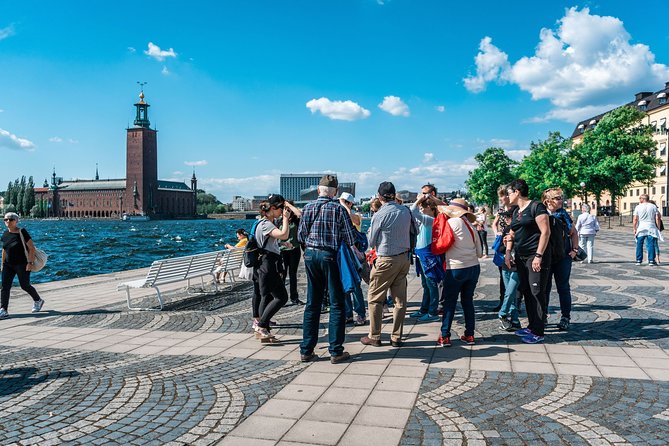
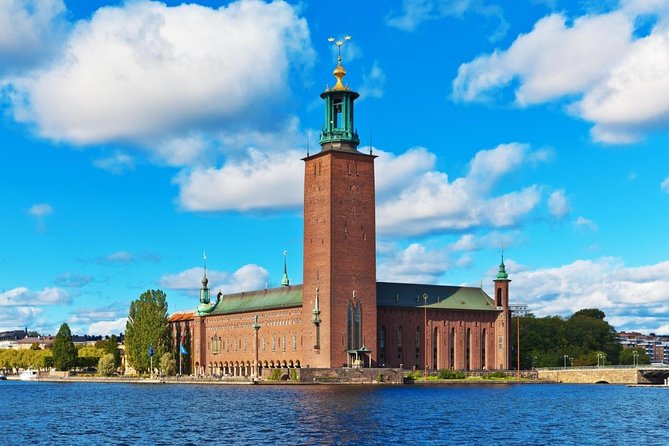
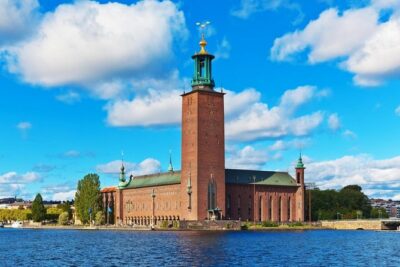
From the terrace, you also get a view of Stockholm City Hall, crowned by three golden crowns, the symbol of Sweden. City Hall is where the Nobel Banquet takes place each year on December 10. The stop lasts about five minutes, and admission is not included.
This final viewpoint adds a modern civic landmark to a walk otherwise centered on medieval and royal Stockholm. It also gives you a clear choice: end the experience here, or use the location as a starting point for more independent sightseeing.
What the guides add to the walk
The strongest praise attached to this tour focuses on the guides’ storytelling. Sean is described as offering interesting facts and well-chosen stopping points for a family. Kevin is praised for making history interactive, funny, educational, and lively.
Katrina is noted for making the past feel personal and for offering traditional Swedish food suggestions in the area. George receives particular praise for superb English and a strong command of local history.
Those details matter because a private walking tour rises or falls with its guide. The route itself is excellent, but Stortorget, the Royal Palace, and the cathedral are easy to find. You are paying for the explanation, the links between places, and the ability to ask questions.
Guide assignments can change, so you should not book expecting a particular person unless the provider confirms it. Still, the named guides give you a useful sense of the style to expect: lively, conversational, historically focused, and suitable for first-time visitors and families.
Price, timing, and practical value
At $328.75 per person, the stated price is high for a two-hour walk. Group discounts are available, but the amount is not specified, so check the final price for your party before booking.
The private format changes the value calculation. For one or two people, the cost may feel difficult to justify. For a larger group splitting the price, the personal attention and flexible conversation can make more sense, especially if you want a guide who can adjust the emphasis to your interests.
You can choose from departure times throughout the day. That helps you fit the walk around a train arrival, museum visit, meal, or evening plan. The meeting point is Stortorget 2, and the route ends at Evert Taubes Terrass on Riddarholmen.
The tour runs in all weather. Dress for the conditions and wear comfortable shoes, since the majority of the route uses cobblestones. Service animals are allowed, the tour is near public transportation, and most people can participate.
Free cancellation is available if you cancel at least 24 hours before the local start time. Changes or cancellations made less than 24 hours before the experience are not accepted for a refund.
Who should book this Gamla Stan walk?
I would recommend it most strongly to first-time visitors who want a clear introduction without joining a large group. History lovers will appreciate the range of subjects, from medieval religious beliefs and Swedish-Danish conflict to royal weddings, city fires, and the Nobel Banquet.
Families may also find the short stops and unusual details easier to enjoy than a long formal lecture. The Iron Boy, Hell’s Alley, and the narrow alley provide natural breaks between the larger historical subjects.
Returning visitors can make good use of the private format by asking for a particular focus. You might want more medieval history, more royal context, or more help choosing what to see after the tour. The route still covers the main sights, so it is not designed as an offbeat alternative to Gamla Stan.
I would think twice if you want extensive interior visits. The Royal Palace and Storkyrkan are both listed with admission not included, and the stop times are short. You should also reconsider if your main goal is the lowest possible price.
Should you book it?
Book this tour if you value a private guide, want history attached to the streets you see, and can share the cost with a group. The route covers the essential Gamla Stan sights, but its best moments are often the smaller stories: a street called Hell, a statue no bigger than a child, an alley narrower than advertised, and the insurance rules shaped by old fires.
Skip it if you prefer to wander alone with a guidebook or need a long visit inside the palace and cathedral. For everyone else, this is a focused two-hour orientation that can give the rest of your Stockholm stay a stronger sense of place.
FAQ
How long does the Stockholm Old Town Private Walking Tour last?
The tour lasts approximately two hours. The listed stops range from about five to ten minutes each, with walking time between them.
Where does the tour begin?
The tour begins at Stortorget 2 in Stockholm’s Gamla Stan. The meeting area is the Old Town’s main square.
Where does the tour end?
The walk ends at Evert Taubes Terrass on Riddarholmen. The finish offers views over Stockholm’s lakes and the western side of the city.
Is this a private tour?
Yes. Only your group participates in the private activity, and a professional guide is included.
What sights are included on the route?
The route includes Stortorget, Prästgatan 13, the Royal Palace, Storkyrkan, Järnpojken, the St. George and the Dragon statue, Brända Tomten, Mårten Trotzigs gränd, the German Church, Riddarholmen Church, and a view of Stockholm City Hall.
Are entrance tickets included?
Admission to the Royal Palace, Storkyrkan, and Stockholm City Hall is not included. The other listed stops have free admission.
Can I choose the departure time?
Yes. Departure times are available throughout the day, so you can choose a time that fits your schedule.
Is the tour suitable for people with limited mobility?
Most people can participate, but much of the walk takes place on cobblestones. You should consider the uneven surfaces when deciding if the route suits you.
Does the tour operate in bad weather?
Yes. The experience operates in all weather conditions. Dress comfortably and appropriately for the forecast.
Can I cancel for a full refund?
Yes, if you cancel at least 24 hours before the experience’s local start time. Cancellations made less than 24 hours before the start time are not refunded, and late changes are not accepted.
Just added around Stockholm
- World War II Stockholm Old Town Walking Tour and Army Museum★ 4.6 · 4 reviews
- Stockholm: Archipelago Guided Boat & Walking Tour of Vaxholm★ 3.1 · 23 reviews
- Stockholm: Underground Metro Art Ride with a Local Guide★ 4.6 · 39 reviews
- Vaxholm & Stockholm Archipelago: Guided Excursion, Day Trip★ 4.8 · 41 reviews
- Scandinavian Art, Architecture and Design Tour in Stockholm★ 4.5 · 11 reviews
- Wolf and Wildlife Tracking in Sweden★ 5.0 · 9 reviews
- Private Tour: Swedish History Day Trip to World Heritage Candidate Markim-Orkesta from Stockholm★ 5.0 · 8 reviews
- Walking Tour of Stockholm’s City Center★ 4.5 · 26 reviews
Walking Tours, compared.
The Original Stockholm Ghost Walk and Historical Tour – Gamla Stan
Read our review →
Best of Stockholm Walking Tour-3 Hours, Small Group max 10 people
Read our review →
Old Town Guided Walking Tour (English / Deutsch)
Read our review →Browse the lists this tour appears in