
Reviewed · HISTORICAL TOURS
Uppsala bloody history 1h- racial biology, 18th century plague, 19th century prostitution etc.
Uppsala’s polished university image gets a sharp reality check on this one-hour walking tour. You’ll hear about plague, poverty, prostitution, the gallows hill, Sweden’s racial biology institute, the slave trade, and the people who were sent to anatomical departments after death. It is a short route, but the subjects are heavy.
I like the unusual subject matter and the way the walk connects dark events to ordinary streets. I also like the small group limit of 20, which should make it easier to ask questions. The tour has earned a perfect 5.0 rating from four published ratings, and comments praise the guides’ clear answers, useful facts, and balance between serious material and lighter moments.
The main drawback is simple: one hour is not long for such a broad subject. You will get a brisk introduction rather than a full study of Uppsala’s past. Confirm the meeting point before you go, too, since the supplied information names Riddartorget as the start and the City Library as the end, while another description mentions gathering outside the library.
In This Review
- Key points about Uppsala’s darker walking tour
- Why this tour changes the way you see Uppsala
- Starting near Riddartorget and walking into the past
- Svartbäcksgatan and the poor side of Uppsala
- Linnéträdgården and the 19th-century red-light district
- Uppsala Cathedral and the punishment of dissent
- Gustavianum, racial biology, and the misuse of science
- Slave trade, phrenology, and the human body
- The guide’s role and the tone of the hour
- Is $36.58 good value for one hour?
- Who should book this Uppsala tour?
- Booking, cancellation, and practical details
- Should you book Uppsala Bloody History?
- FAQ
- Where does the tour start?
- Where does the tour end?
- How long is Uppsala Bloody History?
- What time does the tour begin?
- How much does the tour cost?
- Is Gustavianum admission included?
- How many people can join the tour?
- Can I cancel for a refund?
Key points about Uppsala’s darker walking tour
- A difficult side of Swedish history: The route covers the slave trade, plague, prostitution, persecution, racial biology, anatomy, and forced sterilization.
- A compact central-Uppsala walk: The tour connects Svartbäcksgatan, Linnéträdgården, Uppsala Cathedral, Gustavianum, and nearby historic squares.
- Small group format: A maximum of 20 people keeps this more personal than a large city tour.
- One-hour pace: Expect concentrated storytelling, short walks, and several stops rather than extended museum visits.
- Guide-led interpretation: Owe and Jonathan are associated with Sweden History Tours, though your actual guide may be different.
- Good value for curious visitors: At $36.58, the price buys a focused history lesson in the places where the stories unfolded.
Why this tour changes the way you see Uppsala
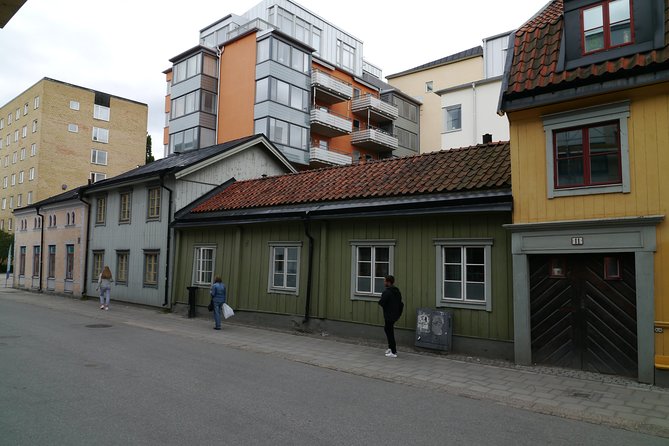
Uppsala is easy to read as a city of students, church towers, university buildings, and neat streets. This walk asks you to read the same city another way. The route brings attention to people who were poor, punished, excluded, exploited, studied, or forgotten.
That approach gives the tour more weight than a simple collection of spooky stories. The subjects are not just grisly curiosities. They include government policy, medical practice, social control, religious persecution, and the treatment of people considered outsiders or defective.
You should expect serious material. The tour touches on racial classification, forced sterilization, poverty, prostitution, executions, plague, and the use of human bodies for medical study. It is not designed as a light comedy walk, though the guide may include lighter facts and moments to keep the hour from becoming relentlessly bleak.
The short length helps if you want an introduction before visiting Uppsala’s major sights. It also limits how far the guide can go. You will hear the main ideas and local connections, but you should not expect a full lecture on every period or institution mentioned.
A few more Sweden trips to weigh up
- Stockholm: Ghost Walk and Historical Tour
★ 4.7 · 2,206 reviews - The Original Stockholm Ghost Walk and Historical Tour – Gamla Stan
★ 4.5 · 1,165 reviews - Stockholm: Old Town Historical Walking Tour
★ 4.9 · 344 reviews
Starting near Riddartorget and walking into the past
The stated start point is Riddartorget, also called Knights’ Square, on Biskopsgatan. The route ends at Uppsala City Library on Svartbäcksgatan. Another description places the collection outside the library’s main entrance, so I would check your confirmation carefully and contact Sweden History Tours if the two instructions remain unclear.
The advertised start time is 3:00 pm. Since this is a walking experience, arrive a little early. A mobile ticket is accepted, and confirmation is sent when you book. You do not need to budget for admission at most stops, since the important part is the outdoor storytelling.
The group can include up to 20 people. That is large enough to create a social feel, but still small enough for questions. One of the strongest comments about the tour specifically praises the guide’s ability to answer questions, so do not hesitate to ask when a subject catches your attention.
Wear comfortable shoes. The route is short, but it includes city walking and standing. A moderate level of physical fitness is required, and the tour is not built around sitting down for long periods.
Svartbäcksgatan and the poor side of Uppsala
The first major section focuses on Svartbäcksgatan and the poorer parts of Uppsala. This is where the tour begins to shift your attention away from grand institutions and toward daily life among people with fewer choices.
The guide discusses poor neighborhoods and the plague in Uppsala during the 18th century. The supplied route also refers to the plague years of 1709 to 1712. At St Erik’s Square, the subject gains a specific setting, linking disease to a recognizable place rather than leaving it as a distant date in a textbook.
I like this opening because it gives the tour a human scale. Plague history can become a list of numbers and medical terms. A street walk can instead make you think about crowded housing, fear, poverty, and the unequal burden carried by different parts of a city. The information provided does not promise a detailed medical account, so expect historical context rather than a technical explanation of the disease.
This section is listed as about 20 minutes, making it the longest named stop. That matters. The guide has more time here to explain how poverty and disease shaped Uppsala, before the route moves into questions of morality, crime, and social judgment.
Linnéträdgården and the 19th-century red-light district
Near Linnéträdgården, the walk enters the former red-light district. The guide points out streets connected with 19th-century brothels, alcohol problems, and poor neighborhoods.
This is one of the tour’s most distinctive features. You are not simply hearing that prostitution existed in the past. You are walking through the area where it was part of city life. The setting helps explain how poverty, alcohol, work, gender, and public morality overlapped.
Do not expect preserved brothels or a dramatic attraction. The value is in the guide’s explanation of what once happened in ordinary streets. Much of the physical evidence may be subtle, so this stop depends heavily on the storytelling.
I would pay close attention to the tone here. A good guide can discuss prostitution without turning people into entertainment. The description presents the subject as part of the city’s difficult social conditions, not as a scandalous side note. That makes the stop useful for anyone interested in how cities dealt with poverty and behavior they wanted to control or hide.
Same city, a completely different kind of day:
- Stockholm: City Archipelago Sightseeing Cruise with Guide
★ 4.3 · 10,798 reviews - Stockholm: Skansen Open-Air Museum Admission Ticket
★ 4.5 · 3,427 reviews - Stockholm: Archipelago Boat Tour
★ 4.4 · 3,110 reviews - Stockholm: Highlights Boat Tour
★ 4.3 · 2,542 reviews
Uppsala Cathedral and the punishment of dissent
At Uppsala Cathedral, the tour turns to the persecution of dissenting Christians and atheists during the 19th century. The cathedral provides a powerful setting for this part of the walk because it represents religious authority, while the story concerns people who did not fit accepted religious rules.
The stop is listed as about 10 minutes. That is enough to introduce the issue, but not enough to trace every law, case, or change in public opinion. Think of it as a compact explanation of how religious conformity could affect people’s lives.
This section also keeps the tour from becoming only a story about physical suffering. Social pressure and legal punishment can be just as revealing as plague or executions. You will see how ideas about belief, respectability, and citizenship could be used to exclude people.
The cathedral itself is free to visit as part of the outdoor stop. The tour does not promise an extended interior visit, so you should not assume that your ticket includes a guided cathedral tour.
Gustavianum, racial biology, and the misuse of science
Gustavianum, the Uppsala University Museum, is the most intellectually difficult stop. Here the guide discusses the Swedish Institute of Racial Biology, which operated from 1920 to 1958, along with the anatomical institution and 19th-century phrenologists.
The subject of racial biology requires careful handling. The tour presents it as part of Sweden’s history of classification and institutional power, not as an idea to admire. You will hear about what took place inside the institute and how supposedly scientific theories were used to judge human beings.
The anatomical section is equally troubling. The guide explains rules concerning which people could end up under the knife after death, linking anatomy to crime and punishment. The description also includes forced sterilizations in the 1940s. These subjects show how medical authority could be used against people with little power to object.
Gustavianum admission is not included. The walk discusses the museum and the institutions connected with it, but you should budget separately if you want to go inside afterward. The stop itself is listed as about 10 minutes, so the tour offers an introduction rather than a museum visit.
For many people, this will be the strongest part of the experience. It connects Uppsala to wider European arguments about race, science, criminality, and social control. It also explains why a country often viewed as mild and orderly still has a past marked by harmful policies.
Slave trade, phrenology, and the human body
The Gustavianum section also covers Sweden’s involvement in the 17th-century slave trade. That topic broadens the tour beyond local streets. Uppsala becomes a place from which you can consider Sweden’s connection to global systems of exploitation.
The material on 19th-century phrenologists adds another layer. Phrenology claimed that a person’s character could be read from the shape of the skull. The tour connects this kind of thinking to the wider history of attempts to rank, label, and control people.
These topics work well together because they show how authority can hide behind respectable language. Trade, medicine, science, and law may sound orderly, but their effects can be cruel. You will not get a full history of Sweden’s overseas involvement in one hour, but you will come away with questions worth pursuing.
The anatomical department’s rules and the forced sterilizations make this stop especially serious. If you prefer purely cheerful sightseeing, this tour is not a good match. If you want a more honest look at how institutions treated vulnerable people, it offers material rarely included in standard city walks.
The guide’s role and the tone of the hour
The guide makes or breaks a subject-heavy walk. The published comments describe a guide who answered questions well and mixed serious information with fun facts. One local participant also found the walk useful despite already knowing Uppsala, which suggests that the tour adds detail beyond the usual landmarks.
Sweden History Tours is associated with guides named Owe and Jonathan. Owe responds to one comment by describing this as one of the company’s more exciting Uppsala tours. Jonathan describes it as an important tour because it helps explain present-day social tensions. Your guide may be someone else, so treat those names as useful background rather than a guarantee.
The tone appears to balance darkness with lighter material. That balance matters. A nonstop parade of cruelty can become exhausting or theatrical. A guide who explains the facts plainly, then gives you room to think, is better suited to this subject.
The tour’s strongest appeal is its willingness to discuss matters often left out of polished city narratives. You are encouraged to look at the poor, the persecuted, the unusual, and the people pushed aside. That is more worthwhile than simply collecting shocking anecdotes.
Is $36.58 good value for one hour?
At $36.58 per person, this is not the cheapest way to spend an hour in Uppsala. You can walk many central streets for free. The price makes sense if you value a guide who connects scattered places to a clear theme.
The fee includes all listed taxes and fees. Admission to Gustavianum is not included, and gratuities are also not included. Since the tour is mainly outdoors, you are paying for interpretation rather than entry to a major attraction.
I see the value in the focus. Standard sightseeing tours often give you a broad outline of kings, churches, and university life. This experience concentrates on uncomfortable subjects that you may not find explained elsewhere. The small group limit also helps justify the cost, especially if your guide encourages questions.
The price is harder to justify if you want a long tour, extensive indoor access, or a large number of named historic sites. With a one-hour limit and several major themes, the walk moves quickly. Book it for the subject, not for the number of attractions covered.
Who should book this Uppsala tour?
I would choose this walk if you want to understand how social policy and public institutions affected real people. It suits adults, history students, and curious visitors who prefer difficult questions to a polished version of the past.
It is also a good fit for people who have already seen Uppsala’s main sights. Even a resident can learn something new from a route about the former red-light district, poor neighborhoods, racial biology, or anatomical rules.
The tour may not suit young children, people who dislike discussions of medical abuse, or anyone looking for a relaxed introduction to Uppsala. The description includes slavery, plague, executions, prostitution, persecution, racial classification, and forced sterilization. You should know the subject matter before booking.
The walking requirement is modest but real. Service animals are allowed, and a moderate level of physical fitness is expected. The information provided does not give details about step-free access, seating, or the exact walking distance, so ask the operator if those points matter to you.
Booking, cancellation, and practical details
The experience is normally booked 34 days in advance, which suggests that planning ahead is sensible, especially if your visit dates are fixed. The group limit is 20 people, and the start time is 3:00 pm.
You receive confirmation at booking, and the ticket is mobile. Free cancellation is available until 24 hours before the start time. Cancel later than that and you will not receive a refund. Changes made inside the 24-hour window are not accepted.
The tour requires a minimum number of participants. If the operator cancels because that number is not reached, you will be offered another date or experience, or receive a full refund.
Before setting out, verify whether you should meet at Riddartorget or outside the City Library. The listed end point is the City Library, so this may simply reflect two different descriptions of the gathering instructions. Still, it is worth settling before 3:00 pm.
Should you book Uppsala Bloody History?
Book this tour if you want a concise, serious walk that exposes the parts of Uppsala usually left out of postcard views. The former red-light district, the plague story, the cathedral’s dissenters, and Gustavianum’s links to racial biology and anatomy give you a more complicated picture of Sweden.
I would not book it expecting a complete history course or a long museum visit. One hour passes quickly, and Gustavianum admission costs extra. But at $36.58, the experience offers a focused way to ask hard questions and see familiar streets with sharper eyes.
For a thoughtful visitor who values local context, a small group, and a guide-led discussion, this is a worthwhile addition to an Uppsala stay. Bring comfortable shoes, arrive early, confirm the meeting point, and be ready for material that is disturbing but important.
FAQ
Where does the tour start?
The stated meeting point is Riddartorget, or Knights’ Square, on Biskopsgatan in Uppsala. Another description says to meet outside the main entrance of Uppsala City Library, so confirm the exact location with Sweden History Tours before the 3:00 pm start.
Where does the tour end?
The listed end point is Uppsala City Library at Svartbäcksgatan 17.
How long is Uppsala Bloody History?
The experience lasts approximately one hour.
What time does the tour begin?
The advertised start time is 3:00 pm.
How much does the tour cost?
The listed price is $36.58 per person.
Is Gustavianum admission included?
No. Admission to Gustavianum, Uppsala University Museum, is not included.
How many people can join the tour?
The activity accepts a maximum of 20 participants.
Can I cancel for a refund?
Yes. You can cancel at least 24 hours before the local start time for a full refund. Cancellations or changes made less than 24 hours before the tour are not refunded or accepted.
Just added around Sweden
- World War II Stockholm Old Town Walking Tour and Army Museum★ 4.6 · 4 reviews
- West Sweden: Sea Kayak Delight in Nature Reserves★ 5.0 · 6 reviews
- Wilderness Tour with Snowmobile & Ice Fishing★ 4.9 · 28 reviews
- Stockholm: Archipelago Guided Boat & Walking Tour of Vaxholm★ 3.1 · 23 reviews
- Vaxholm & Stockholm Archipelago: Guided Excursion, Day Trip★ 4.8 · 41 reviews
- Stockholm: Underground Metro Art Ride with a Local Guide★ 4.6 · 39 reviews
- Uppsala Must See 2h city walk – 2h tour of all big attractions!★ 5.0 · 4 reviews
- Self-Guided Audio Walking Tour Through Kurt Wallander’s Ystad★ 3.5 · 12 reviews
Historical Tours, compared.
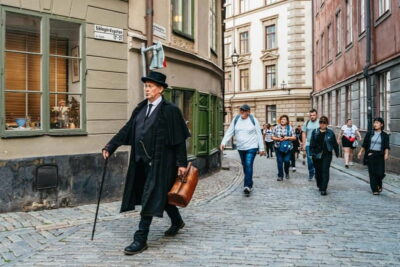
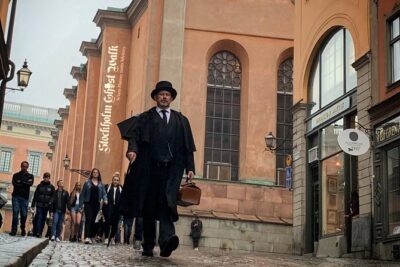
The Original Stockholm Ghost Walk and Historical Tour – Gamla Stan
Read our review →
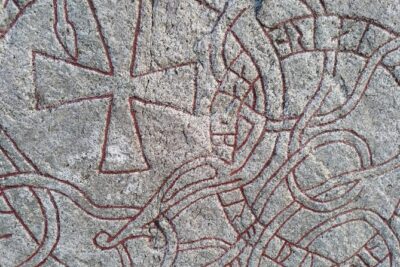
Viking History, Runes & Countryside 9h Tour to Sigtuna & Uppsala
Read our review →
Stockholm Viking History Full Day Tour to Sigtuna + Uppsala
Read our review →
Viking History and Swedish Countryside Tour to Sigtuna & Uppsala
Read our review →
Viking History Small Group Tour from Stockholm: Half Day Including Sigtuna
Read our review →
Stockholm Old Town Gamla Stan, Historic Walking Tour, Small group
Read our review →Browse the lists this tour appears in