
Reviewed · WALKING TOURS
Uppsala Must See 2h city walk – 2h tour of all big attractions!
Uppsala’s big story comes together quickly on this two-hour walk: Viking runestones sit close to Sweden’s largest cathedral, while the university, castle, river, and botanical garden reveal different chapters of the city. You get a useful first look at Uppsala without spending a full day on foot.
I like the way this tour connects famous sights with less comfortable parts of the past, including the murders at Uppsala Castle and the history of Sweden’s race biology institute. I also like the flexible pace. One guide even found a lost guest and adjusted the walk to suit that person’s needs.
The main consideration is price. At $110.15 per person for about two hours, this is not a cheap orientation walk. Its value depends on how much you want a guide to explain Uppsala’s complicated history and how many interiors happen to be open during your visit.
In This Review
- Key points at a glance
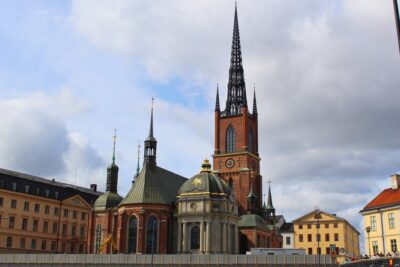
- Starting at Riddartorget with Uppsala’s cathedral
- Uppsala University and the Carolina Rediviva Library
- Dekanhuset and a difficult chapter from 1920 to 1958
- Botaniska Tradgarden and the castle’s murder stories
- Old square, Dombron, and the river
- Gustavianum’s anatomical theatre and Saint Erik’s spring
- What the two-hour format really gives you
- Price, group size, and physical demands
- The guide’s role and the strongest personal touch
- Who should book this Uppsala walk?
- Should you book the Must See 2h city walk?
- FAQ
- How long does the Uppsala city walk last?
- Where does the tour start?
- What time does the tour begin?
- Where does the tour end?
- Is the tour offered in English?
- Is the cathedral visit inside or outside?
- Can I enter Uppsala Castle during the tour?
- Are any indoor visits guaranteed?
- What is the cancellation policy?
Key points at a glance
- Viking runestones beside the cathedral: Start with visible evidence of Uppsala’s Viking-age past, not just a general introduction.
- A castle courtyard with a grim story: Hear about murders linked to Uppsala Castle, although the castle itself is closed to visitors.
- Flexible interior visits: The university building, Carolina Rediviva Library, and botanical garden can be visited inside or explored from outside depending on opening hours.
- A frank look at difficult history: Dekanhuset introduces the Swedish race biology institute and its work from 1920 to 1958.
- A compact route through central Uppsala: The walk links the cathedral, university quarter, river, old square, castle, museums, and Saint Erik’s spring.
- A small group format: The maximum group size is 20, which should allow more room for questions than a large city tour.
Starting at Riddartorget with Uppsala’s cathedral
You meet at Riddartorget, or Knights’ Square, on Biskopsgatan at 5:30 pm. This is a central starting point near the cathedral and university area, so the tour begins in the heart of Uppsala rather than at a distant transport stop.
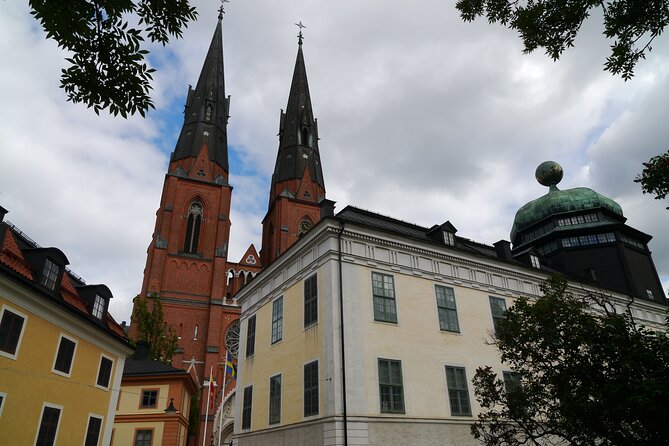
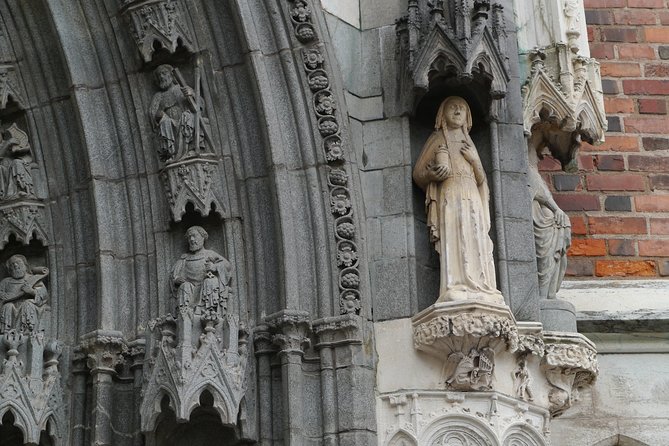
The cathedral is experienced from the outside. That matters because this is the city’s most commanding landmark, but the tour does not include an interior visit or a cathedral admission ticket. Your guide uses the building as a starting point for the city’s religious and political story, then quickly moves to something older.
Close to the cathedral are Viking-age runestones. You spend about 20 minutes here, with no admission fee. This is one of the strongest parts of the route because the stones provide a direct link to the people and beliefs of the Viking age. Instead of treating Viking history as a distant museum subject, you see its traces in the modern city.
I would pay close attention here and ask questions. The stop is short, and the runestones can be easy to treat as background decoration if you are rushing toward the cathedral. The guide’s explanations are what turn them into a useful introduction.
A few more Sweden trips to weigh up
- Stockholm: Ghost Walk and Historical Tour
★ 4.7 · 2,206 reviews - Walking Tour of Stockholm Old Town
★ 5.0 · 1,175 reviews - The Original Stockholm Ghost Walk and Historical Tour – Gamla Stan
★ 4.5 · 1,165 reviews
Uppsala University and the Carolina Rediviva Library
The walk continues to the Uppsala University Main Building, where you spend about 10 minutes. If the building is open, the guide takes you inside. Otherwise, you explore it from the outside.
That conditional wording is important. You should not book this tour expecting a guaranteed interior visit. Still, the building adds a different layer to Uppsala. The city is not only old stones and royal stories. It is also a major university center, and the university quarter gives the walk an academic character.
Next comes Carolina Rediviva University Library, with about 20 minutes set aside. If open, you enter to see the historical museum and the famous Silver Bible, a Gothic-language manuscript. If you are interested in books, religion, language, or northern European history, this could be the most rewarding indoor stop.
The Silver Bible gives the visit a clear focus. It is not simply a walk through a library lobby. You have a chance to see an important historic manuscript connected with the region’s religious past. The tour data does not promise a guaranteed entry, so opening hours may shape what you receive.
At both university stops, keep your expectations practical. The walk is designed to cover many sights in two hours, not to provide a long guided visit inside each building. You get context and a quick look, with extra time inside only when conditions allow.
Dekanhuset and a difficult chapter from 1920 to 1958
Dekanhuset brings the tour into one of its most serious subjects. You spend about 10 minutes learning about the Swedish race biology institute and its history from 1920 to 1958.
This stop is valuable because it avoids presenting Uppsala as a city of grand buildings and pleasant gardens only. The subject is disturbing, but it belongs in any honest account of the city’s modern past. You can expect a concise introduction rather than a long museum program, given the short stop.
For me, this is one of the details that gives the walk more substance. A city tour should help you understand not just what looks attractive, but also how institutions shaped people’s lives. Dekanhuset provides that balance.
The information provided does not specify an interior visit, so plan to hear the story as part of the walking route. If this subject is important to you, ask the guide for clarification about what can be seen at the site and how much time is available for questions.
Botaniska Tradgarden and the castle’s murder stories
The route reaches Botaniska Tradgarden, described as one of the world’s oldest botanical gardens. You spend about 10 minutes there with the guide if it is open.
This is a short stop, so you should not expect a full garden tour. Instead, the garden offers a change of pace after the cathedral, university buildings, and serious historical material. You get a chance to hear about local plant life and the garden’s role in Uppsala’s scientific tradition.
The garden visit depends on opening hours. If it is closed, the walk cannot offer the same experience, so this is another reason to treat the tour as a broad city introduction rather than a collection of guaranteed admissions.
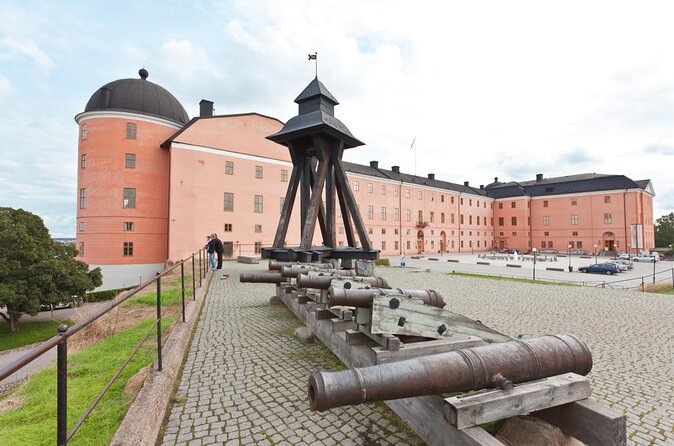
Uppsala Castle follows, with about 20 minutes in the courtyard. The castle is closed to visitors, and admission is not included. You can still see the courtyard and hear about the murders associated with the castle.
That story gives the stop an edge. Castles often get reduced to architecture and royal names, but the darker account helps you picture the building as a place where decisions had real consequences. The guide’s version should make the courtyard more meaningful than a quick photo stop.
Do not plan on going inside the castle during this experience. The courtyard is the limit described here, and you will need to make separate arrangements if you want an interior visit.
Same city, a completely different kind of day:
- Stockholm: City Archipelago Sightseeing Cruise with Guide
★ 4.3 · 10,798 reviews - Stockholm: Skansen Open-Air Museum Admission Ticket
★ 4.5 · 3,427 reviews - Stockholm: Archipelago Boat Tour
★ 4.4 · 3,110 reviews - Stockholm: Highlights Boat Tour
★ 4.3 · 2,542 reviews
Old square, Dombron, and the river
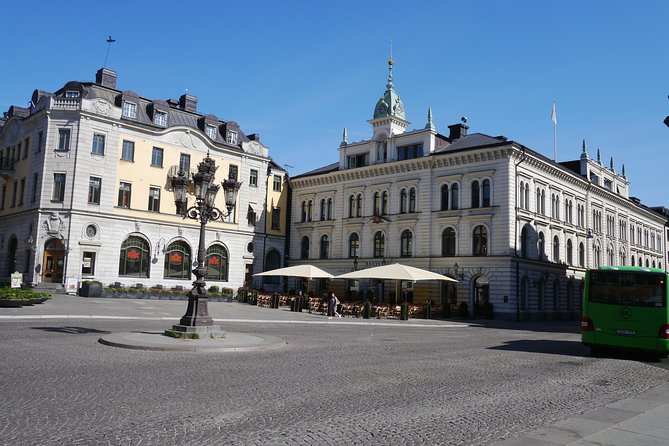
The walk then turns toward Uppsala’s old main square and Dombron, the bridge over the river. This stop lasts about five minutes, so it is brief, but it helps connect the city’s monuments with its daily commercial life.
You hear about the river and merchant Uppsala. That context matters because the city did not grow only around churches, universities, and royal buildings. Water routes, trade, and movement helped shape its center.
A five-minute stop is enough for orientation but not for a long explanation. I would use this part of the walk to notice how the older square, bridge, and river fit together. It is also a useful transition from the castle and university district toward the museums and cathedral area.
The route also passes the old mill where Upplandsmuseet is located. The museum itself is not listed as an included visit, so think of this as an exterior sight and a quick reference point. The old mill setting adds another practical reminder of how the river supported work as well as trade.
Gustavianum’s anatomical theatre and Saint Erik’s spring
The group walks by Museum Gustavianum, spending about 10 minutes outside. The focus is the anatomical theatre, viewed from the exterior. Admission is not included.
Again, this is a passing visit rather than a museum tour. The building is part of the university quarter, and the anatomical theatre points to older forms of medical teaching and scientific study. The guide can give you a reason to remember the building, even if you do not enter.
The final stop is Sankt Eriks Kalla, or Saint Erik’s spring. You spend about three minutes here, hearing about Saint Erik, a battle, and his sainthood. It is a very short stop, but it closes the route with a religious and legendary story that links back to the cathedral.
Because the visit is so brief, do not expect a long pause at the spring. Its value is in the connection. By this point, you have seen Viking traces, royal power, university life, trade, science, and religious history in one compact circuit.
The activity ends back at the meeting point. That makes the walk convenient if you need to collect a bag, return to a nearby hotel, or continue exploring from the same central area.
What the two-hour format really gives you
Two hours is enough to cover a lot of central Uppsala, but it requires quick stops. Several locations receive only 3, 5, or 10 minutes, while the cathedral area, Viking runestones, library, and castle receive more attention.
I see the format as a first-day orientation. You get a map in your head and a list of places worth returning to. You do not get extended time in every museum or building.
The route also mixes guaranteed outdoor sights with conditional indoor visits. The runestones, castle courtyard, old square, river, mill exterior, Gustavianum exterior, and Saint Erik’s spring fit the basic walking plan. The university building, Carolina Rediviva, and botanical garden may be visited inside if open.
That distinction is important for planning. If your main goal is the Silver Bible or the botanical garden, check the opening situation before you book, or be ready for an outdoor explanation instead. If your goal is to understand Uppsala as a whole, the mix works well.
Price, group size, and physical demands
The listed price is $110.15 per person. For a two-hour walk, that is a substantial cost, especially since several admission fees are not included and some attractions are viewed only from outside.
I would judge the price by the guide service rather than by entry tickets. You are paying for a focused route, historical interpretation, and the chance to ask questions while moving between major sights. The price makes more sense if you have limited time in Uppsala or want help making sense of subjects that are not always presented in a simple way, such as the race biology institute and the castle murders.
The group can include up to 20 people. That is not a private tour, but it is still a manageable maximum for a city walk. You should have a better chance of hearing the guide and getting help with your pace than in a very large group.
The tour requires a moderate level of physical fitness. The information provided does not give a precise distance or step count, so you should be comfortable walking between several central stops for two hours. Service animals are allowed, and the meeting point is near public transportation.
The start time is 5:30 pm. That late-afternoon timing may suit you if you arrive in Uppsala during the day or want a guided walk after other sightseeing. It also means the opening status of interiors can matter more than it would on a morning tour, so check the practical details when booking.
The guide’s role and the strongest personal touch
The most encouraging detail about the guiding is the attention to pace. The guide found a guest who had become lost and adjusted the walk to suit that person’s needs. That suggests a human approach rather than a rigid script.
The guide also brings a clear love of local history and the area. That matters here because the route contains many short stops. A guide who can connect them quickly is more useful than one who simply names buildings.
No guide name is provided, so you cannot request a particular person in advance based on the available information. What you can expect is an English-language tour, with the service provided by Sweden History Tours.
I would tell the guide at the start if you have a strong interest in Viking history, the university, architecture, botanical science, or the darker modern history. With only two hours, your interests can help shape where you spend your attention.
Who should book this Uppsala walk?
I would recommend it to you if you are visiting Uppsala for a short time and want the main sights arranged into one clear route. It also suits first-time visitors who prefer explanations to silent sightseeing and people who want both famous landmarks and less polished historical subjects.
It is a good match for someone who values local context. The runestones, castle stories, race biology history, river trade, Saint Erik, and the university create a wider picture than a basic cathedral walk.
You may want another option if you need guaranteed museum entry, a long cathedral visit, or extensive time in the botanical garden. The tour covers those themes, but it does not promise full admission to the main indoor sites.
Free cancellation is available if you cancel at least 24 hours before the local start time. Changes made less than 24 hours before the tour are not accepted, and the experience requires a minimum number of participants. If that minimum is not reached, you are offered another date or experience, or a full refund.
Should you book the Must See 2h city walk?
Book this tour if you want a compact, history-led introduction to Uppsala and you are comfortable paying a premium for a guide. The best reasons are the close look at Viking runestones, the honest treatment of difficult twentieth-century history, and the guide’s reported care with pacing and lost guests.
Skip it if you mainly want to enter the cathedral, castle, library, or museums. Several of those visits are outside-only or dependent on opening hours. For most first-time visitors with just a few hours in town, though, this walk gives you a useful framework and a practical list of places to explore at your own speed afterward.
FAQ
How long does the Uppsala city walk last?
The tour lasts approximately two hours.
Where does the tour start?
It starts at Riddartorget, also called Knights’ Square, on Biskopsgatan, 753 10 Uppsala, Sweden.
What time does the tour begin?
The stated start time is 5:30 pm.
Where does the tour end?
The activity ends back at the meeting point.
Is the tour offered in English?
Yes. The experience is offered in English.
Is the cathedral visit inside or outside?
The cathedral is experienced from the outside.
Can I enter Uppsala Castle during the tour?
No interior visit is included. The tour visits the castle courtyard, and the castle is closed to visitors for this experience.
Are any indoor visits guaranteed?
No. The Uppsala University Main Building, Carolina Rediviva Library, and botanical garden can be visited inside if they are open. Otherwise, the guide covers them from outside or continues with the planned walk.
What is the cancellation policy?
You can cancel at least 24 hours before the local start time for a full refund. Cancellations or changes made less than 24 hours before the start are not accepted for a refund.
Just added around Sweden
- World War II Stockholm Old Town Walking Tour and Army Museum★ 4.6 · 4 reviews
- West Sweden: Sea Kayak Delight in Nature Reserves★ 5.0 · 6 reviews
- Wilderness Tour with Snowmobile & Ice Fishing★ 4.9 · 28 reviews
- Stockholm: Archipelago Guided Boat & Walking Tour of Vaxholm★ 3.1 · 23 reviews
- Stockholm: Underground Metro Art Ride with a Local Guide★ 4.6 · 39 reviews
- Vaxholm & Stockholm Archipelago: Guided Excursion, Day Trip★ 4.8 · 41 reviews
- Self-Guided Audio Walking Tour Through Kurt Wallander’s Ystad★ 3.5 · 12 reviews
- Uppsala bloody history 1h- racial biology, 18th century plague, 19th century prostitution etc.★ 5.0 · 4 reviews
Walking Tours, compared.


The Original Stockholm Ghost Walk and Historical Tour – Gamla Stan
Read our review →

Best of Stockholm Walking Tour-3 Hours, Small Group max 10 people
Read our review →


Old Town Guided Walking Tour (English / Deutsch)
Read our review →Browse the lists this tour appears in