

Reviewed · VIKING HISTORY TOURS
Entrance ticket to The Viking Museum
The Viking Museum brings the Norse world to life with more than glass cases and wall text. You’ll move through films, sound effects, projections, replicas, and archaeological objects before joining Ragnfrid’s Saga, an 11-minute ride through raids, trade, and farm life.
I especially like the multilingual audio guide, which lets you take in the displays at your own pace, and the chance to speak directly with guides dressed in Viking clothing. The main caution is scale: this is a compact museum, and its reading-heavy displays may feel too quiet or old-fashioned for teenagers looking for constant action.
- Ragnfrid’s Saga takes you from Frösala Farm into a dramatic Viking Age journey.
- Guides in Viking dress answer questions as you explore instead of keeping you tied to a set tour.
- Films, projections, sound, and replicas add variety to the archaeological displays.
- Norse mythology meets everyday life, from shipbuilding and raids to work on the farm.
- The visit takes about one hour to two hours, making it easy to fit into a Stockholm sightseeing day.
- The $22.68 ticket is most worthwhile if you use the guide, ride, displays, and staff talks rather than rushing through.
In This Review
- Entering Stockholm’s Viking Museum
- What the exhibition teaches you about Viking life
- Films, projections, and objects in a compact space
- Ragnfrid’s Saga, the museum’s main set piece
- Talking with the guides in Viking dress
- Planning one hour or two
- Is $22.68 good value?
- Who will enjoy this museum most?
- Practical ways to make the visit better
- Should you book The Viking Museum?
- FAQ
- How much does admission to The Viking Museum cost?
- How long does a visit take?
- Is the ticket available on a mobile phone?
- Is the experience offered in English?
- Can I ask questions during the visit?
- What is Ragnfrid’s Saga?
- What can I see at the museum?
- Is the museum near public transportation?
- Are service animals allowed?
- Can most people participate?
- Can I cancel for a full refund?
Entering Stockholm’s Viking Museum
The Viking Museum is designed as a compact introduction to the Viking Age. You are not entering a huge collection with room after room of rare objects. Instead, you get a focused exhibition that mixes historical material with theatrical touches.
That combination matters. Viking history is often flattened into horned helmets, bloodshed, and adventure stories. Here, the displays try to separate fact from legend. You’ll encounter Viking raids and long journeys, but also farm work, shipbuilding, trade, slavery, family life, and Norse beliefs.
The museum works best when you give it time. You can read the panels, listen to the audio guide, stop at the objects, ask questions, and then take the ride. A rushed visit may leave you feeling that the museum is small and light on artifacts. A careful visit gives you a clear introduction to how the Viking world functioned.
The ticket costs $22.68 per person. That is not a bargain-basement admission price for a small museum, so your sense of value depends on what you want. If you only want to see a large collection of archaeological objects, this may disappoint. If you want a guided, sensory presentation with a ride and films, the price is easier to justify.
What the exhibition teaches you about Viking life
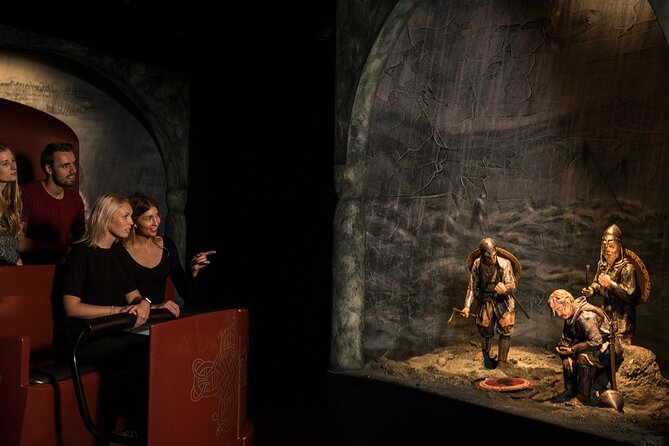
The central exhibition covers several sides of Viking society. You’ll learn about raids in the west, journeys across wide distances, and the shipbuilding skills that made those journeys possible.
The ships are important because they explain how the Vikings reached places that seem far apart on a modern map. Their success was not just a matter of courage or violence. It depended on practical knowledge, navigation, boat design, organization, and the ability to live and work in demanding conditions.
The displays also bring the story back to the farm. That is one of the museum’s useful qualities. The Viking Age was not only a time of raiders at sea. Most people spent their lives growing food, making goods, raising families, and managing the daily work of a farm.
You’ll also meet Norse mythology throughout the exhibition. The museum uses myth as part of the story, while also pointing toward the difference between legendary tales and evidence from archaeology. This gives you a better way to think about Viking culture. The myths mattered deeply to the people who told them, but they are not the same thing as a factual record.
More viking history tours in Stockholm:
- Stockholm: The Viking Museum Exhibition and Viking Ride
★ 4.5 · 667 reviews - Viking History, Runes & Countryside 9h Tour to Sigtuna & Uppsala
★ 4.5 · 283 reviews - Viking History and Swedish Countryside Tour to Sigtuna & Uppsala
★ 4.5 · 162 reviews
Films, projections, and objects in a compact space
The museum uses movies, projections, scenery, and sound effects to break up the reading. These features give the exhibition a more theatrical rhythm than a basic history display.
The replicas are useful, too. They let you get a sense of Viking objects and daily life without treating every item as something that must remain behind glass. You may find the hands-on elements appealing if you enjoy learning through objects and settings rather than text alone.
Still, keep your expectations in check. This is not a highly interactive science center. Several displays rely on information panels, and some of the museum can feel like an old-style exhibition with artifacts and text at its core. The interactive material adds variety, but it does not take over the visit.
That balance will suit adults and children who like stories, history, and atmosphere. It may feel slow for children who need frequent activities. Teenagers, in particular, may find parts of it a little cheesy, especially if they expect a fast-moving attraction.
Ragnfrid’s Saga, the museum’s main set piece
The museum’s signature feature is Ragnfrid’s Saga. This is an 11-minute ride that follows Ragnfrid, her husband Harald, and their journey from Frösala Farm into the wider Viking world.
The story begins at the farm, giving you a look at the domestic side of Viking life before moving toward more dangerous events. You witness plundering in the west and the slave trade in the east. Light, sound, scenery, and atmospheric settings carry the story along.
The ride is short, but it gives the museum a clear emotional center. Rather than reading only about distant events, you follow a family through a period of danger and change. The strongest moments come when the story turns tense, including an attack in the forest.
Not everyone will enjoy the ride. Its automatic vehicle and simple storyline can feel less impressive if you are expecting a major theme-park attraction. One critical reaction found it silly and unpleasant, while other people called it the highlight of the visit and praised the way the Viking family’s story came alive.
My advice is to treat it as a short historical presentation, not a thrill ride. The ride’s value comes from mood and storytelling. It helps connect the objects and facts to human choices, even if its technology feels modest.
Talking with the guides in Viking dress
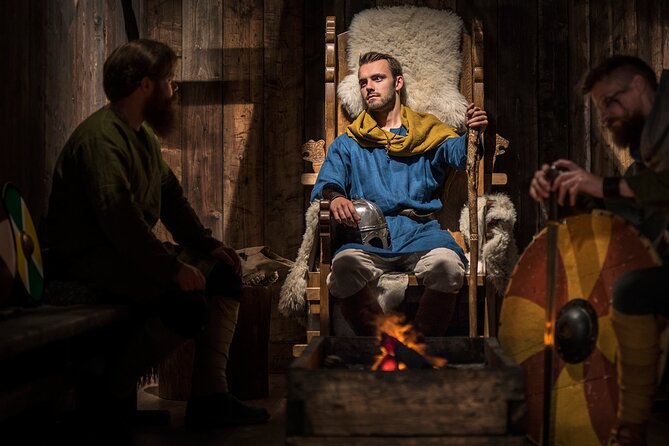
A particularly useful part of the visit is the presence of guides in Viking clothing. They can answer questions as you look around, so you are not limited to whatever happens to be printed on the panels.
This is valuable because Viking history raises plenty of obvious questions. How much of the popular image is true? What did people do on a farm? How were ships built? How did raids and trade affect ordinary families? A good question can turn a quick stop at an object into a short history lesson.
The attraction also offers multilingual support through an audio guide. English is available, and the experience is offered in English. Other languages may be supported through the audio system or scheduled guide presentations, but the exact timing of language-specific talks is something you should check when you arrive.
One useful tip is to ask about the free guide presentation in your preferred language. The timing can shape your visit, and it may give you more context than reading every panel alone.
A few more Stockholm trips to weigh up
- Stockholm: Skansen Open-Air Museum Admission Ticket
★ 4.5 · 3,427 reviews - Stockholm Pass: Save up to 50% – Includes Vasa Museum Ticket
★ 4.1 · 2,392 reviews - Stockholm: Nobel Prize Museum and Exhibition Entry Ticket
★ 4.3 · 994 reviews - Stockholm: Fotografiska Museum Entrance Ticket
★ 4.5 · 702 reviews
Planning one hour or two
The stated visit time is about one to two hours. You can finish the main experience in roughly an hour if you move steadily and include the ride. Allow closer to two hours if you read the panels, listen to the audio guide, speak with staff, and pause at the replicas and films.
The museum’s size makes it easy to add to a day in Stockholm. You do not need to surrender half a day, yet you still get enough material for a thoughtful stop. It is also near public transportation, which helps when you are planning a route around the city.
Because the ticket is mobile, you can keep admission on your phone. The attraction is often booked around 26 days ahead, but advance booking does not appear essential simply for entry. The practical reason to reserve is to have your visit arranged, especially if you are building a tight sightseeing schedule or want to plan around a particular guide presentation.
Confirmation is provided when you book. Most people can take part, and service animals are allowed.
Is $22.68 good value?
At $22.68, the museum sits in the range where expectations matter. You are paying for more than a room of objects. The admission includes the exhibition, films, projections, replicas, staff interaction, audio guide access, and Ragnfrid’s Saga.
I think the price works best for three types of visitors:
- You want an easy introduction to Viking culture rather than a specialist archaeological collection.
- You enjoy a mix of history and theatrical presentation.
- You are traveling with children who will respond to a short ride and visual scenes.
The value is weaker if you only want an extensive collection of artifacts. The museum contains archaeological objects, but it does not present a vast number of them. Some people find the historical content too limited for the cost, particularly when compared with spending more time at Stockholm’s Vasa Museum.
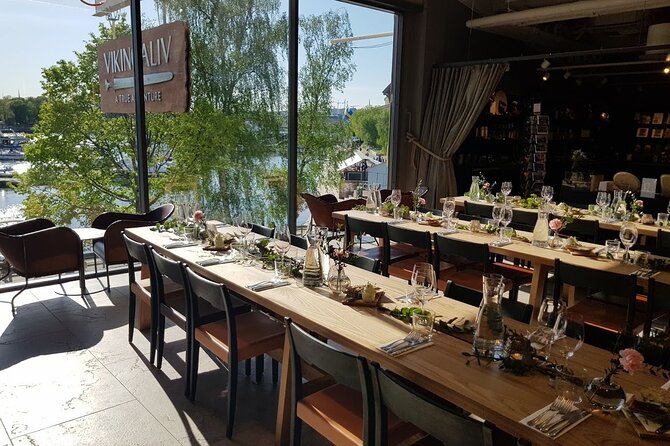
The café can improve the overall stop. It serves Swedish food, including reindeer meatballs, and gives you a place to sit after the exhibition. The gift shop also has Viking-themed items and souvenirs. These extras are not part of the ticket’s core value, but they can make the museum easier to fit into a relaxed outing.
Who will enjoy this museum most?
I would recommend it most to adults and families who want history presented in several ways. You can read, listen, watch, ask questions, and take a short ride. That variety keeps the visit from becoming a wall of text.
It is also a good choice if Viking history is new to you. The exhibition covers the main subjects clearly: raids, travel, ships, farms, mythology, and trade. You should leave with a broader picture than the usual popular image of Vikings as warriors alone.
Children may enjoy the replicas, clothing, scenery, and ride. Their reaction will depend on age and patience. If your children dislike reading, plan to focus on the visual parts and the ride rather than forcing every panel.
Teenagers are a less certain match. Some will enjoy the films and the dramatic sections. Others may see the displays as dated or too restrained. If your family has strong interest in Viking history, the museum is easier to recommend. If your teenagers mainly want spectacle, the Vasa Museum may hold their attention better.
History enthusiasts should see this as an introduction, not a final word. The museum’s strength is presentation and accessibility. It does not replace a large archaeological collection or a full day spent studying Viking artifacts.
Practical ways to make the visit better
Start by asking about the guide schedule and language options. A live presentation can give shape to the visit, while the audio guide lets you explore at your own pace afterward.
Do not skip the ordinary-life displays. The raid stories are dramatic, but the farm and shipbuilding sections help explain how Viking society worked. The contrast between daily labor and overseas violence is one of the exhibition’s better ideas.
Give yourself time for Ragnfrid’s Saga, even if the museum seems small. It is the part most likely to divide opinion, but it is also the clearest attempt to turn Viking history into a personal story.
If you have only one hour, follow this order:
- Ask about any scheduled presentation in your language.
- See the main displays on ships, raids, farms, and mythology.
- Take Ragnfrid’s Saga.
- Use the remaining time for the objects and replicas that interest you most.
If you have closer to two hours, listen to the audio guide and speak with the staff. You will get much more from the admission that way than by walking quickly from one display to the next.
The museum offers free cancellation if you cancel at least 24 hours before the scheduled start time. Any cancellation or change made inside that window is not refunded, and the cut-off follows Stockholm local time.
Should you book The Viking Museum?
Book it if you want a short, accessible Viking introduction with a mix of objects, film, sound, live guidance, and a story ride. The multilingual audio guide and staff in Viking dress are real advantages, especially if you like being able to ask questions instead of relying only on labels.
Think twice if your priority is a large collection of historic artifacts or highly advanced interactive exhibits. The museum is compact, some sections are text-heavy, and Ragnfrid’s Saga may seem dated rather than thrilling.
For most visitors, I would plan about 90 minutes and pair the museum with other Stockholm sights. Reserve ahead for convenience, not because admission is necessarily difficult to find. At $22.68, it is a fair choice for a well-paced introduction, but it rewards curiosity more than a quick photo stop.
FAQ
How much does admission to The Viking Museum cost?
Admission costs $22.68 per person.
How long does a visit take?
The expected visit lasts about one to two hours. You can spend less time with a quick visit or closer to two hours if you use the audio guide, read the displays, and speak with the guides.
Is the ticket available on a mobile phone?
Yes. The experience includes a mobile ticket.
Is the experience offered in English?
Yes. The experience is offered in English, and a multilingual audio guide is available.
Can I ask questions during the visit?
Yes. Guides in Viking clothing are available to answer questions as you explore.
What is Ragnfrid’s Saga?
Ragnfrid’s Saga is an 11-minute Viking ride. It follows Ragnfrid and her husband Harald from Frösala Farm through events involving raids and the slave trade.
What can I see at the museum?
You can see archaeological objects, Viking replicas, films, projections, scenery, and displays about raids, journeys, shipbuilding, farm life, and Norse mythology.
Is the museum near public transportation?
Yes. The museum is near public transportation.
Are service animals allowed?
Yes. Service animals are allowed.
Can most people participate?
Yes. Most people can participate in the experience.
Can I cancel for a full refund?
Yes, if you cancel at least 24 hours before the experience start time. Cancellations or changes made less than 24 hours before the start time are not refunded.
Just added around Stockholm
- World War II Stockholm Old Town Walking Tour and Army Museum★ 4.6 · 4 reviews
- Stockholm: Archipelago Guided Boat & Walking Tour of Vaxholm★ 3.1 · 23 reviews
- Stockholm: Underground Metro Art Ride with a Local Guide★ 4.6 · 39 reviews
- Vaxholm & Stockholm Archipelago: Guided Excursion, Day Trip★ 4.8 · 41 reviews
- Scandinavian Art, Architecture and Design Tour in Stockholm★ 4.5 · 11 reviews
- Wolf and Wildlife Tracking in Sweden★ 5.0 · 9 reviews
- Private Tour: Swedish History Day Trip to World Heritage Candidate Markim-Orkesta from Stockholm★ 5.0 · 8 reviews
- Walking Tour of Stockholm’s City Center★ 4.5 · 26 reviews
Viking History Tours, compared.

Viking History, Runes & Countryside 9h Tour to Sigtuna & Uppsala
Read our review →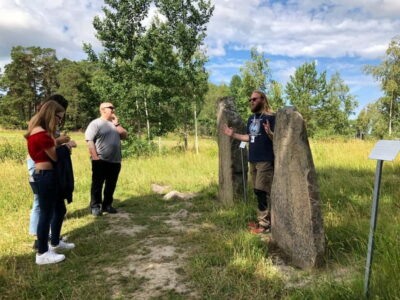
Stockholm Viking History Full Day Tour to Sigtuna + Uppsala
Read our review →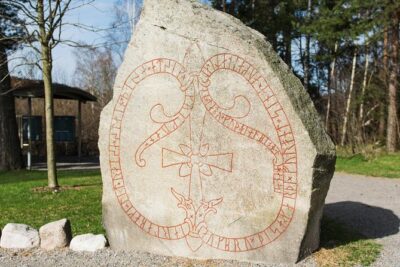
Viking History and Swedish Countryside Tour to Sigtuna & Uppsala
Read our review →

Viking History Small Group Tour from Stockholm: Half Day Including Sigtuna
Read our review →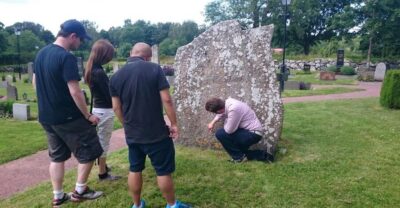
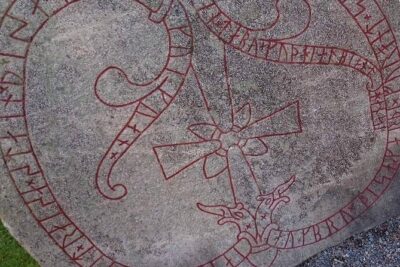
Private Full Day Viking History Tour from Stockholm Including Sigtuna and Uppsala
Read our review →Browse the lists this tour appears in