
Reviewed · MUSEUMS
Millesgården Museum: sculpture park and art galllery
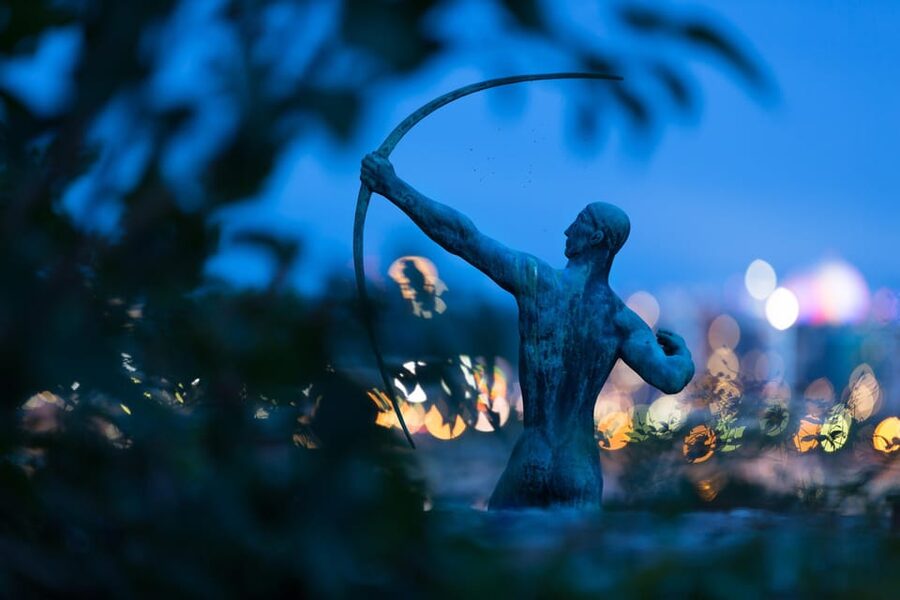
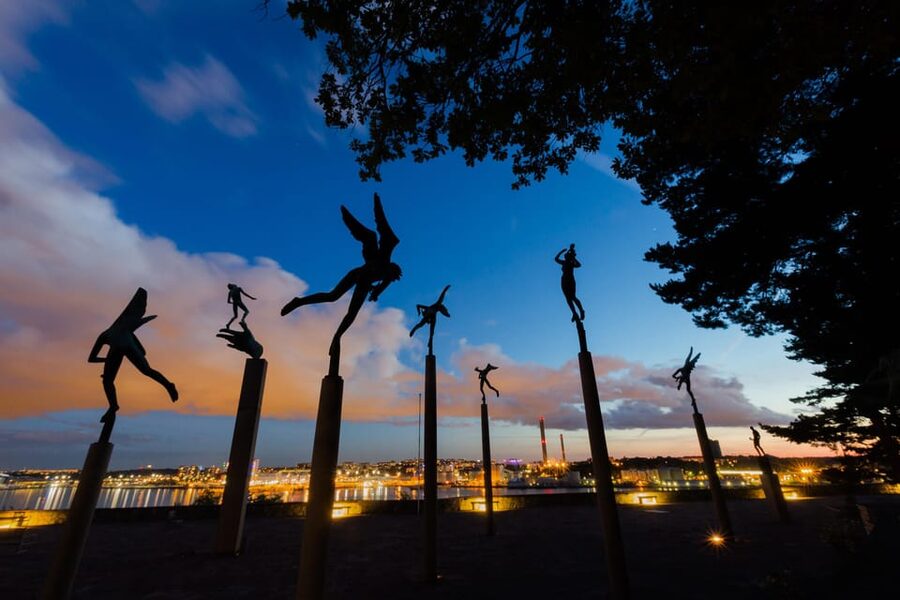
Carl Milles’ sculpture park is the star here: terraces, fountains, flowers, and about one hundred sculptures arranged above views toward Stockholm. I love the way the art is part of the setting rather than packed into rooms, and I like that the visit also includes Carl and Olga’s home, working studios, and Anne’s House.
The main consideration is timing. The park deserves a slow walk, while the home, gallery, café, and shop add several more stops. Also, the audio guide link may not be obvious at first, and a gallery exhibition change can make that part of the visit feel less complete.
In This Review
- Key points to know before you go
- Why Millesgården feels different from a standard museum
- Reaching Lidingö from central Stockholm
- Starting with the sculpture terraces
- Inside Carl and Olga Milles’ home
- Anne’s House and the Svenskt Tenn interiors
- The art gallery and museum shop
- Lunch and coffee at Millesgården Lanthandel
- Audio guide, language, and the pace of the visit
- What the $19 admission is really worth
- Who will enjoy Millesgården most
- Should you book Millesgården?
- FAQ
- How far is Millesgården from central Stockholm?
- Which public transport should I take from Ropsten?
- How long is the ticket valid?
- What is included in admission?
- Is an audio guide included?
- Is Millesgården wheelchair accessible?
- Can I pay with cash?
Key points to know before you go
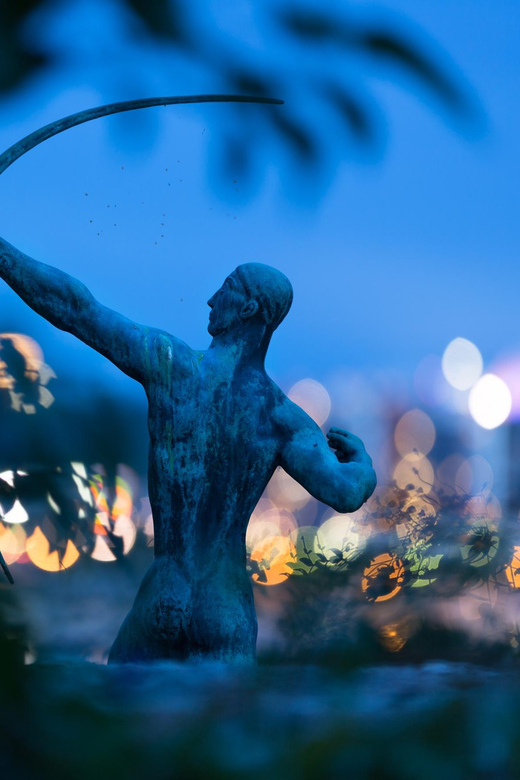
- About one hundred Carl Milles sculptures: Around ten are large fountain groups, with the rest spread through terraces and garden spaces.
- A real artist’s home and studios: See Carl’s Large Studio, the blue-tiled breakfast room, the Pompeii-inspired Gallery, and his collection of classical objects.
- Anne’s House has a distinct Svenskt Tenn style: Estrid Ericson and Josef Frank decorated the interior.
- Allow most of a day: You can combine the park, interiors, gallery, lunch, coffee, and museum shop without rushing.
- Easy from central Stockholm: Take the subway to Ropsten, then a bus or the Lidingöbanan tram to Torsvik or Baggeby.
- Practical details matter: The museum is cash-free, large bags are not allowed, and the audio guide is available in Swedish and English.
Why Millesgården feels different from a standard museum
Millesgården is not simply a gallery with a garden attached. It is the former home and working world of sculptor Carl Milles and his artist wife, Olga Milles. You move between outdoor sculpture terraces, fountains, studios, domestic rooms, and exhibition spaces, so the visit gives you several ways to understand the artist.
I find that combination especially useful if you are not already familiar with Carl Milles. A sculpture in a white gallery can feel formal and distant. Here, the same kind of work appears among flowers, water, open air, and views across Stockholm. You can look at the shape, then step back and see how the artist used height, placement, and movement around it.
The setting also gives the visit a calm rhythm. You are not pushed from room to room. You can pause beside a fountain, study a figure from different angles, or sit for a moment before heading indoors. The park has enough visual variety to keep an art lover interested, but it also works for anyone who mainly wants a pleasant cultural outing outside central Stockholm.
A few more Stockholm trips to weigh up
- Stockholm: Skansen Open-Air Museum Admission Ticket
★ 4.5 · 3,427 reviews - Stockholm Pass: Save up to 50% – Includes Vasa Museum Ticket
★ 4.1 · 2,392 reviews - Stockholm: Nobel Prize Museum and Exhibition Entry Ticket
★ 4.3 · 994 reviews
Reaching Lidingö from central Stockholm
Millesgården is in Lidingö, about 20 minutes from T-Centralen by public transport. The usual route is the subway to Ropsten, followed by bus 201, 202, 204, 206, 211, 212, or 221 to Torsviks Torg. From the square, follow the signs for roughly seven minutes.
You can also take the Lidingöbanan local tram from Ropsten to Torsvik or Baggeby. Millesgården sits between those stations, and either option involves about a seven-minute walk. Check current departures at sl.se before setting out, since transport schedules can change.
If you are cycling, a cycle path crosses the Lidingö bridge. Free parking is available at Herserudsvägen 32, just outside the main entrance. That makes the museum fairly easy to reach without a car, but you should still allow time for the final walk from public transport.
Starting with the sculpture terraces
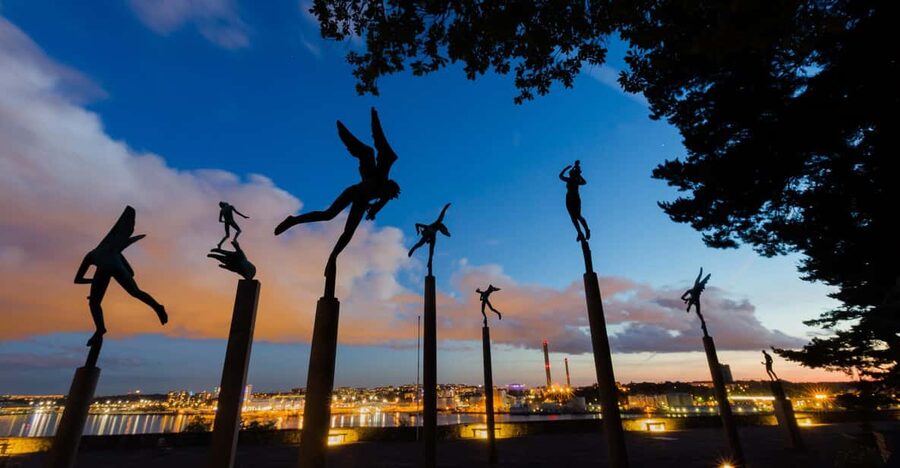
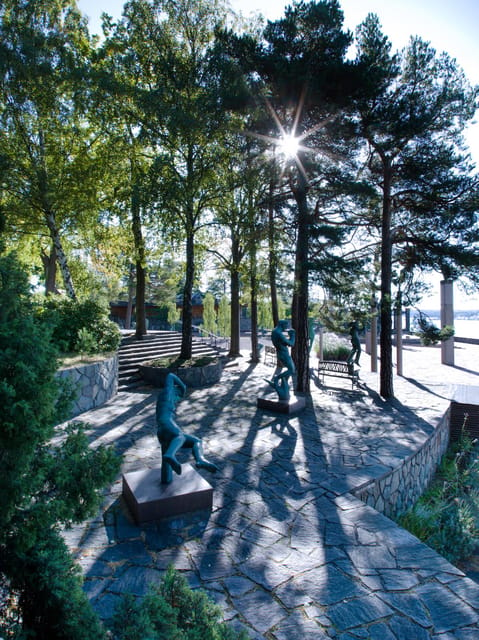
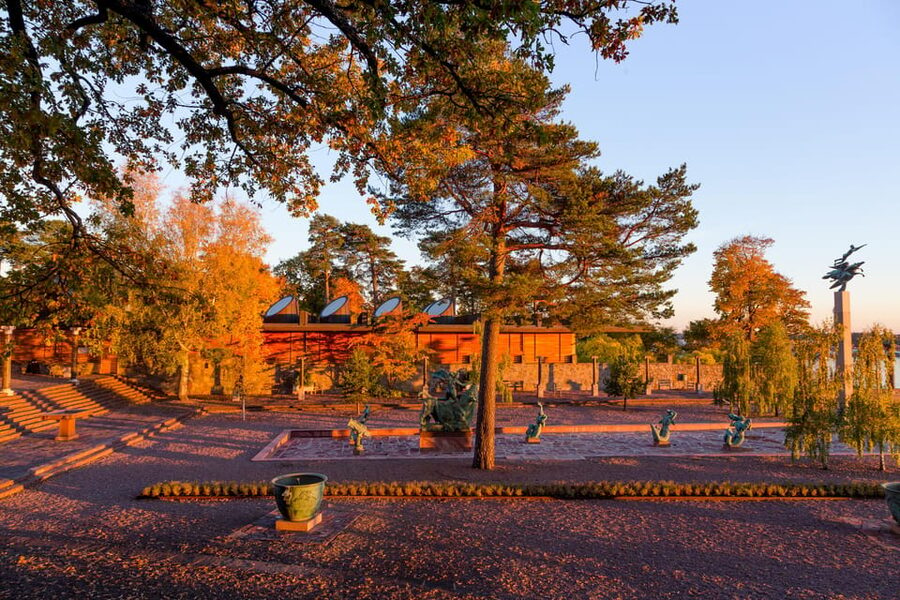
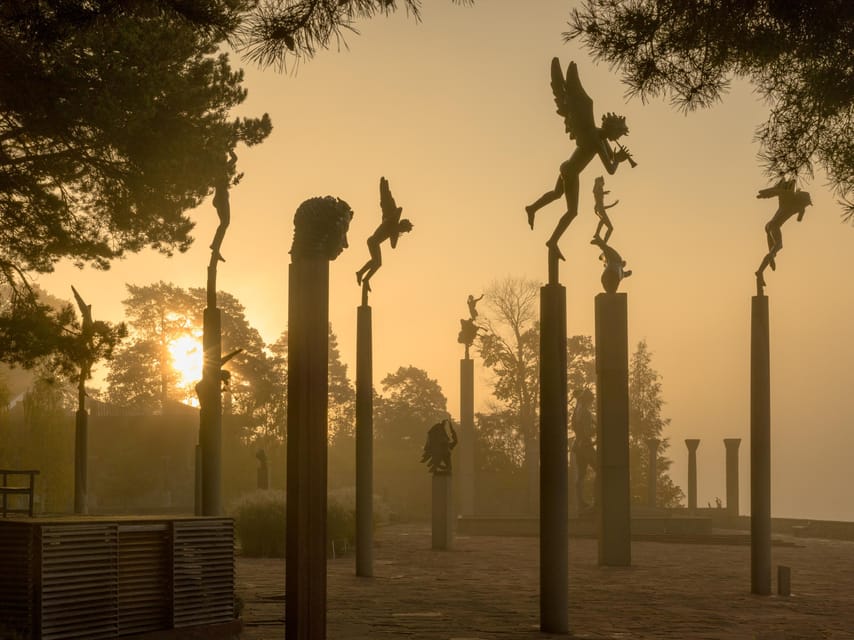
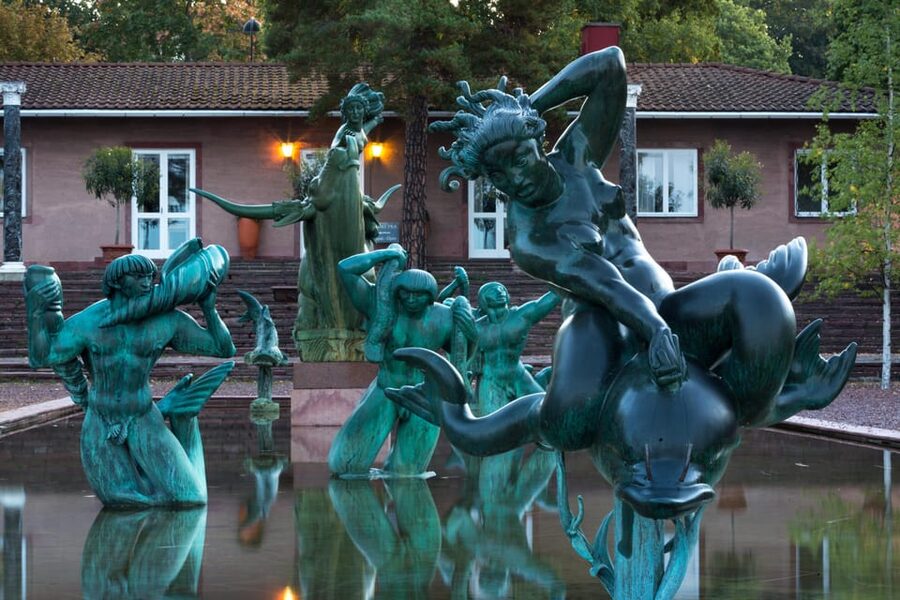
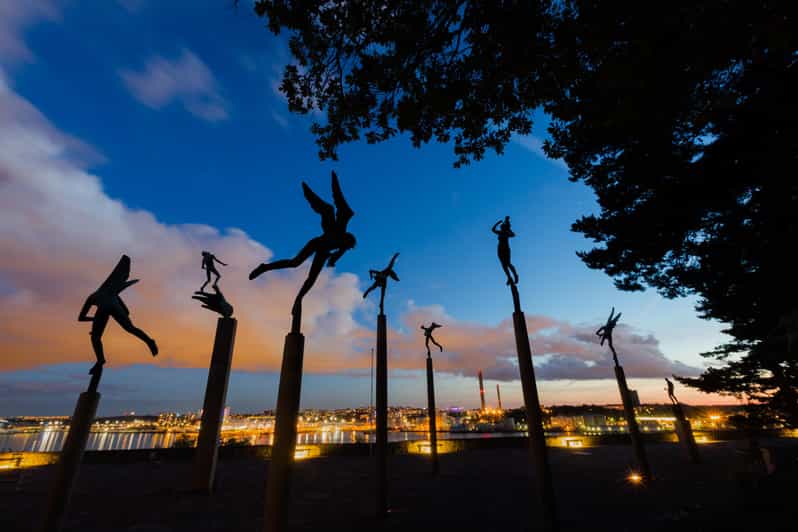
Begin outside if the weather is pleasant. The sculpture park is the part of Millesgården that gives the whole visit its character. Around one hundred works by Carl Milles are placed across the grounds, including roughly ten large fountain groups.
The terraces are not a flat lawn dotted with statues. The sculptures appear at different levels, with water and planting helping to frame them. That arrangement makes you look up, across, and down as you walk. It also creates changing views toward Stockholm, so the park feels different from one section to the next.
The fountains are particularly important. They give the sculptures movement and sound, while the flowers soften the stone and bronze forms. If you like photography, you will want to take your time rather than record the first few pieces and move on. Water, sky, flowers, and sculpture often work together in a single view.
I would plan on at least an hour for the park, and longer if you enjoy sculpture or want to sit in the garden. The terraces and paths may require attention for anyone using a wheelchair, although the museum is listed as wheelchair accessible. If mobility is a concern, ask at reception about the easiest route through the grounds.
Inside Carl and Olga Milles’ home
The Artist’s Home adds the personal context that an outdoor sculpture park cannot provide. You see rooms connected with Carl and Olga Milles, along with antiques and classical sculpture objects from Carl’s collection.
The Large Studio is a key stop. This is where Carl created his larger works, and its scale helps explain how much space monumental sculpture requires. After viewing the finished pieces outdoors, seeing the studio gives you a clearer sense of the work behind them.
The breakfast room, clad in blue Dutch tiles, offers a much more intimate contrast. It is a domestic room, but its strong design gives it a memorable visual identity. The Pompeii-inspired Gallery adds another change of mood, with a decorative style that feels far removed from a plain modern exhibition room.
Carl’s collection of classical sculptures and objects is also included. This matters because it shows the kinds of forms and traditions that shaped his artistic world. You are not only looking at his own work. You are also seeing some of the objects he chose to live with and study.
The home is best approached slowly. Do not treat it as a quick corridor between the park and the café. The rooms are where Millesgården shifts from a beautiful garden into a portrait of the people who made it.
Same city, a completely different kind of day:
- Stockholm: City Archipelago Sightseeing Cruise with Guide
★ 4.3 · 10,798 reviews - Stockholm: Archipelago Boat Tour
★ 4.4 · 3,110 reviews - Stockholm: Highlights Boat Tour
★ 4.3 · 2,542 reviews - Stockholm: Ghost Walk and Historical Tour
★ 4.7 · 2,206 reviews
Anne’s House and the Svenskt Tenn interiors
Anne’s House is another worthwhile interior stop, especially if you enjoy Swedish design. It was decorated by Estrid Ericson and Josef Frank of Svenskt Tenn, the well-known Stockholm design company.
This part of the visit gives you a different artistic language. Carl Milles’ outdoor work is monumental and sculptural, while Anne’s House focuses on interiors, furnishings, pattern, and domestic space. The contrast prevents the day from becoming a single-note study of sculpture.
Because the house was decorated by two major Svenskt Tenn names, it also helps place Millesgården within a wider Swedish design story. You do not need to be a design specialist to appreciate the change in scale and mood. After the terraces and large studios, Anne’s House brings you closer to the details of a lived-in interior.
I would visit it after the Artist’s Home and before the art gallery. That sequence moves naturally from Carl and Olga’s own rooms to a separate design-focused house, then on to temporary exhibitions.
The art gallery and museum shop
The Art Gallery hosts changing exhibitions, so its content will depend on the date of your visit. That can be a strength if you want something new alongside the permanent sculpture park and home. It can also be a limitation during installation periods.
One visit had an exhibition being changed, which meant the gallery portion was not fully available. If the gallery is a major reason for booking, check what is showing before you go. The park and Artist’s Home remain the core of the visit, but a partial gallery can affect how much value you get from the full admission.
Finish in the museum shop if you enjoy taking home a design item, book, or art-related souvenir. Since the museum is cash-free, use a credit or debit card at the shop and restaurant. The same rule applies if you stop for lunch or coffee.
Lunch and coffee at Millesgården Lanthandel
Millesgården Lanthandel provides a convenient break without leaving the grounds. You can stop for lunch or an afternoon coffee between the outdoor and indoor sections.
That pause is useful because Millesgården is more spread out than a single-room museum. A quick meal or coffee gives you time to reset before continuing to Anne’s House or the gallery. It also means you can treat the visit as a relaxed day outing rather than squeezing it into a short museum stop.
I would avoid planning the entire visit around a rushed meal. The park and home are the main attractions, and your schedule should leave room for them first. Use the café as a practical rest stop, not as a reason to cut the sculpture terraces short.
Audio guide, language, and the pace of the visit

An audio guide is included in Swedish and English. That is helpful if you want more background while walking through the park and buildings, rather than reading only brief labels.
Pay attention when you arrive and ask at reception where to access it. The audio link may be placed by the studio rather than clearly explained at the start. If you do not see instructions immediately, ask before beginning your visit. Finding it early can make the Artist’s Home and studios much easier to follow.
There is no named guide provided for this experience. If you have booked a guide, ask at reception when you arrive. Otherwise, the audio guide gives you a self-guided way to set your own pace.
The museum is open Tuesday through Sunday from 11:00 to 17:00 throughout the year. Since it is closed on Mondays, check the day before making plans. The stated validity is one day, with availability and start times checked at booking.
What the $19 admission is really worth
At $19 per person, Millesgården is not just a quick garden ticket. The admission includes the sculpture park, Artist’s Home, antiques collection, Anne’s House, and Art Gallery. You are paying for several connected parts of one artistic setting.
I think the price works best when you allow enough time to use the full ticket. If you only walk through the garden for 30 minutes, the cost may feel high compared with a simple public park. If you explore the studios, rooms, classical objects, Anne’s House, and gallery, then stop for coffee, the admission becomes a more reasonable day-out value.
The strongest value is the combination. Many museums give you either a historic home, a sculpture collection, or a garden. Millesgården brings all three together, with fountains and Stockholm views added to the mix.
Flexible booking also helps. You can cancel up to 24 hours in advance for a full refund, and the reserve-now, pay-later option lets you hold a place without paying at once. Those terms are useful when your Stockholm schedule is still changing.
Who will enjoy Millesgården most
I would recommend this visit to anyone who likes sculpture, gardens, historic homes, or Swedish design. It is also a good choice if you want a break from central Stockholm without giving up a strong cultural attraction.
Art lovers will appreciate the large number of Carl Milles works and the chance to see his studio. Design fans should give extra time to the blue-tiled breakfast room and Anne’s House. Couples, families, and solo visitors can all set their own pace because the visit is not tied to a fixed walking group.
You should think twice if you want a tightly scheduled, guide-led tour with constant commentary. Millesgården is better for independent exploration, and the audio guide may require a little effort to locate. It is also less suitable if you dislike gardens, fountains, or historic interiors, since those are central to the visit.
The 4.8 out of 5 score attached to the experience fits its strongest qualities: the setting is peaceful, the sculptures are impressive, and the park and home make a memorable whole. The weaker points are practical rather than artistic, mainly the unclear audio instructions and the possibility of a gallery changeover.
Should you book Millesgården?
Book it if you want a quiet, substantial half-day or full-day outing close to Stockholm. The sculpture terraces and fountains are the main reason to come, but the Artist’s Home, Large Studio, antiques, Anne’s House, and gallery make the $19 admission more worthwhile.
Go on a Tuesday through Sunday, use public transport via Ropsten, and start with the park if the weather is good. Ask about the audio guide at reception, carry a card rather than cash, and leave large bags at your accommodation since oversized luggage is not allowed.
I would not book this as a quick add-on between fixed central Stockholm appointments. Give it time, and Millesgården rewards you with art, design, water, flowers, and wide views in one carefully arranged setting.
FAQ
How far is Millesgården from central Stockholm?
Millesgården is about 20 minutes from T-Centralen by public transport. Take the subway to Ropsten, then a bus or the Lidingöbanan tram toward Lidingö.
Which public transport should I take from Ropsten?
You can take bus 201, 202, 204, 206, 211, 212, or 221 to Torsviks Torg. You can also take the Lidingöbanan to Torsvik or Baggeby.
How long is the ticket valid?
The admission is valid for one day. Check availability for starting times when booking.
What is included in admission?
Admission includes the Art Gallery, Artist’s Home, antiques collection, sculpture park, and Anne’s House.
Is an audio guide included?
Yes. An audio guide is included in Swedish and English. Ask at reception where to access it, since the instructions may not be obvious at first.
Is Millesgården wheelchair accessible?
Yes, the museum is wheelchair accessible. Ask reception about the most suitable route through the grounds if needed.
Can I pay with cash?
No. Millesgården is cash-free. You can pay by credit or debit card in the museum shop and restaurant.
Just added around Stockholm
- World War II Stockholm Old Town Walking Tour and Army Museum★ 4.6 · 4 reviews
- Stockholm: Archipelago Guided Boat & Walking Tour of Vaxholm★ 3.1 · 23 reviews
- Stockholm: Underground Metro Art Ride with a Local Guide★ 4.6 · 39 reviews
- Vaxholm & Stockholm Archipelago: Guided Excursion, Day Trip★ 4.8 · 41 reviews
- Wolf and Wildlife Tracking in Sweden★ 5.0 · 9 reviews
- Scandinavian Art, Architecture and Design Tour in Stockholm★ 4.5 · 11 reviews
- Walking Tour of Stockholm’s City Center★ 4.5 · 26 reviews
- Private Tour: Swedish History Day Trip to World Heritage Candidate Markim-Orkesta from Stockholm★ 5.0 · 8 reviews
Museums, compared.

Stockholm Pass: Save up to 50% – Includes Vasa Museum Ticket
Read our review →


Skip the Line: Disgusting Food Museum Entrance Ticket
Read our review →
Vasa Museum Guided Tour, Including Ticket & Guide
Read our review →
Browse the lists this tour appears in