
Reviewed · WALKING TOURS
Uppsala’s biggest attractions – 1h city walk in Uppsala city.
Uppsala’s past comes together in a compact walk that links the medieval cathedral, Sweden’s oldest university traditions, and the castle where a royal murder took place. You’ll hear how Uppsala tried to outdo the Danes, why a university builder went bankrupt, and how an entire city was cleared before a coronation that never happened there.
I like the mix of famous sights and odd details, especially Olof Rudbeck’s anatomical theater, the rune stones, and the stories of student life. I also like the guide-led format: Anette and Jonathan have both been praised for answering questions and bringing lesser-known Uppsala stories to life. The main drawback is pace. The walk is advertised at about one hour, yet the listed stops add up to roughly 75 minutes, and one account found that it involved more standing and pointing than walking.
In This Review
- Key points at a glance
- A short walk through Uppsala’s long story
- University House and rune stones
- Gustavianum and Rudbeck’s anatomical theater
- Uppsala Cathedral and medieval power
- St. Erik’s Square and the university city
- Uppsala Castle and the royal murder
- What the guide adds
- Is $91.75 good value for one hour?
- Who will enjoy this Uppsala walk?
- Should you book it?
- FAQ
- Where does the Uppsala city walk start?
- Where does the tour end?
- How long does the experience last?
- What sights are included in the route?
- Is admission included for Gustavianum?
- Is admission included for Uppsala Castle?
- What is the maximum group size?
- Is the tour suitable for people with service animals?
- Do I need a high level of fitness?
- Can I cancel for a full refund?
Key points at a glance
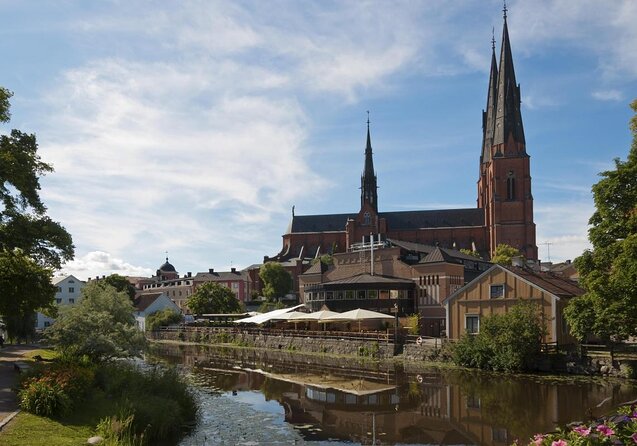
- Uppsala’s great trio: Connect the university, cathedral, and castle in one short outing.
- Stories beyond the standard sights: Hear about Celsius, Linné, Rudbeck, student scandals, plague, and royal intrigue.
- A useful first look at the city: The route begins and ends at Riddartorget, making it easy to fit into a day in Uppsala.
- Strong guide element: Anette and Jonathan have both been singled out for clear, engaging explanations and good answers to questions.
- Limited admission costs: Most listed stops are free to visit from the outside, while Gustavianum and Uppsala Castle admission is not included.
- Small maximum group: The tour accepts up to 20 people, which should make questions easier than on a large coach outing.
A short walk through Uppsala’s long story
Uppsala is a good city for a guided walk because its main sights sit close enough to form one connected story. In a single outing, you move from medieval church power to university life, then on to royal politics and scientific curiosity.
This is not a tour built around one period. The guide draws from the 12th century through about 1900, so you get a broad introduction rather than a detailed study of one century. That range is useful if you are visiting Uppsala for the first time and want to know which buildings deserve a longer look later.
The tone also appears to be informal and story-led. You are not just given dates for buildings. You hear about bankrupt builders, strikes, student prisons, essays sold by teachers, and the city’s spectacular failure to rebuild itself in time for a queen’s coronation. Those details help the stone buildings feel connected to real arguments, ambitions, and mistakes.
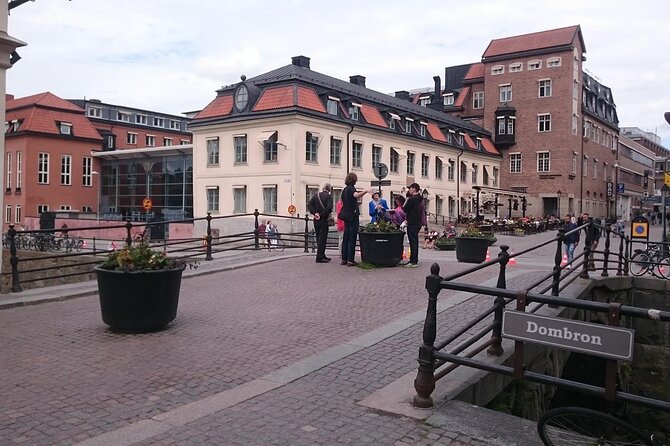
The walk begins at Riddartorget and returns there at the end. With a mobile ticket, you can keep the booking on your phone, and the meeting point is near public transportation. The group limit is 20 people, a useful middle ground: more personal than a large sightseeing group, but not as private or flexible as a custom tour.
A few more Sweden trips to weigh up
- Stockholm: Ghost Walk and Historical Tour
★ 4.7 · 2,206 reviews - Walking Tour of Stockholm Old Town
★ 5.0 · 1,175 reviews - The Original Stockholm Ghost Walk and Historical Tour – Gamla Stan
★ 4.5 · 1,165 reviews
University House and rune stones
The first stop focuses on the University House and the university park’s rune stones. Allow about 15 minutes here, though the precise pace may vary.
University House gives the guide a chance to explain how Uppsala wanted its university to look and feel. One of the memorable stories concerns the building’s decorations and the financial trouble they caused its builder. It is a small but revealing point: grand public buildings often carry a bill that somebody has to pay.
The rune stones add an older layer to the university setting. They remind you that Uppsala’s story began long before modern academic buildings and formal lecture halls. You may not get an extended archaeological explanation in this short stop, but their presence helps widen the frame beyond the university.
This part of the walk is especially useful if you want orientation. You begin to see how academic life, church power, and public space overlap in central Uppsala. The guide also introduces the university’s founding connection to rivalry with the Danes, a theme that returns later.
Gustavianum and Rudbeck’s anatomical theater
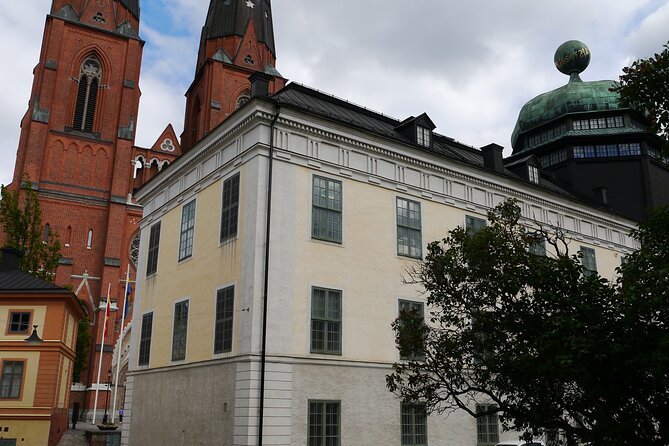
Next comes Gustavianum, the former university building now associated with Uppsala University Museum. The listed stop lasts about 10 minutes, and admission is not included in the tour price.
The main story here is Olof Rudbeck’s anatomical theater. Its design was considered brilliant for its time, though it had one glaring weakness: there was no proper ventilation. That contrast makes the subject memorable. The theater could display scientific ambition and architectural skill, while still overlooking a very practical problem.
You also hear about the university’s party hall and the way collections eventually forced their way through several buildings. The old Academia Carolina enters the story as another reminder that the university was not a single neat campus. It grew, shifted, and adapted as its collections and ambitions expanded.
This is where the guide brings in several of Uppsala’s major names. Celsius, Linné, and Rudbeck are discussed as part of the city’s intellectual story. The value here is not a full biography of each figure. Instead, you get a quick sense of how science, teaching, collecting, and university politics shaped Uppsala.
A practical point matters: the tour information lists Gustavianum admission as not included. You should not assume that the guided stop includes a full museum visit. The supplied details clearly promise explanations about the building and its history, but they do not promise an interior tour of every exhibition. If Gustavianum is a priority, plan to check its admission separately.
Uppsala Cathedral and medieval power
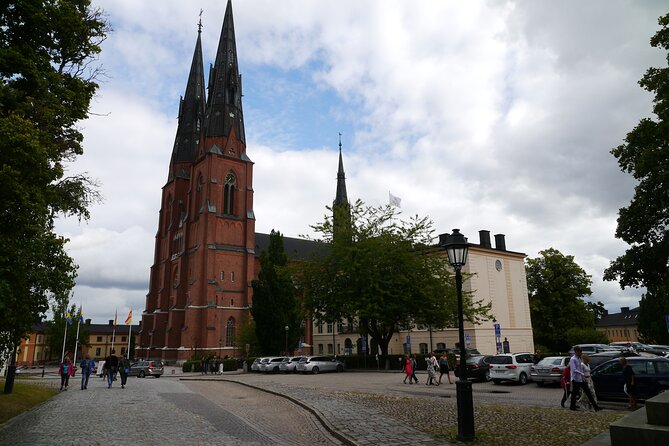
The cathedral receives the longest listed stop, about 20 minutes. Built from the 1270s to the 1430s, it is described as the largest cathedral in the Nordic countries.
Even if you already know something about European cathedrals, Uppsala’s story has its own local flavor. The guide discusses the cathedral, the university, and the medieval buildings around it, including the kanikhus associated with the cathedral clergy. You get a picture of a church district that functioned almost like a separate town within the wider city.
The construction stories are particularly good material for a short walk. Limestone workers were paid more than soldiers, which led to strikes and unrest. That detail puts wages and labor disputes inside what might otherwise feel like a remote medieval building project.
You also hear about scandals connected with construction and the university’s desire to create an institution better than the Danes. This gives the cathedral more context than simply being a large, old church. Uppsala’s religious and academic institutions were tied to status, money, and political competition.
The cathedral visit is listed as free, but the tour is still guided rather than self-directed. That matters because the building can be visually overwhelming. A guide helps you notice the surrounding medieval structures and understand why the cathedral became such an important part of Uppsala’s identity.
Same city, a completely different kind of day:
- Stockholm: City Archipelago Sightseeing Cruise with Guide
★ 4.3 · 10,798 reviews - Stockholm: Skansen Open-Air Museum Admission Ticket
★ 4.5 · 3,427 reviews - Stockholm: Archipelago Boat Tour
★ 4.4 · 3,110 reviews - Stockholm: Highlights Boat Tour
★ 4.3 · 2,542 reviews
St. Erik’s Square and the university city
At St. Erik’s Square and the Consistory House, the walk turns toward everyday city life and public administration. This section is listed at about 10 minutes.
You hear how the plague entered Uppsala, how meat was sold at Oxblodstorget, and how sheds connected with the cathedral were built into the wall around it. These details are less grand than the cathedral or castle, but they make the city easier to imagine as a working place.
The Consistory House had a prison, police function, and administration for students during the 1750s. That is a useful reminder that the university was not simply a collection of classrooms. It had its own rules and disciplinary system, and students could live inside a kind of city within the city.
The years 1709 to 1711 also enter the story. The stop links plague, university authority, and local commerce in a short stretch of street. If you prefer social history to royal portraits, this may be one of the most rewarding parts of the route.
There is also a practical limitation. One guide described the experience as involving a lot of standing still while buildings were pointed out. If you expect a brisk walking tour with constant movement, adjust your expectations. The route is better understood as a series of outdoor explanations connected by short walks.
Uppsala Castle and the royal murder
The final listed stop is Uppsala Castle, with about 20 minutes devoted to the site. The tour takes you into the courtyard and gives you a view over the Botanical Garden, described as one of Europe’s oldest botanical gardens.
The strongest story here is the murder at Uppsala Castle. The supplied information does not give the full details of the crime, so the guide’s telling will be the part that supplies the drama. Still, the setting is well chosen. A castle courtyard and a view over a historic garden make a fitting final chapter for a walk about power, science, and public ambition.
Admission to Uppsala Castle is not included. The information specifically mentions standing in the courtyard, so you should not assume that the tour price covers all castle interiors or exhibitions. The view over the Botanical Garden is included in the outdoor experience, while separate entry arrangements may apply if you want to explore more.
This last stop also gives the route a change of mood. After medieval church building and academic disputes, you finish with royal politics and a strong visual outlook. It is a good place to pause and decide which locations you want to revisit on your own.
What the guide adds
The quality of this experience depends heavily on the guide. The walk covers a lot of ground in a short time, and the guide has to connect the cathedral, university, castle, and smaller streets into one readable story.
Anette has been praised for her ability to answer questions and for using amusing stories from Uppsala’s past. Jonathan has also been praised for explaining facts that even people from Uppsala did not know. That is a useful sign for both first-time visitors and residents who want a fresh look at their city.
The guide names may change, so you should not book solely expecting one particular person. What you can reasonably look for is an authorized Uppsala guide who can handle questions and explain the links between buildings rather than treating each stop as an isolated fact.
The one clear criticism is that the story can feel a little jumpy. That is understandable given the range of periods and the short duration. You get the best result if you treat this as an introduction, not a complete course in Uppsala history.
Is $91.75 good value for one hour?
At $91.75 per person, this is an expensive one-hour city walk. The price includes all fees and taxes, but not gratuities, and it does not include admission for Gustavianum or Uppsala Castle.
The value depends on what you want from the visit. If you want a quick, private-feeling introduction led by an authorized local guide, the cost may be worthwhile, especially if the guide is able to respond to your questions and make connections that a guidebook would miss. The group maximum of 20 keeps the experience from becoming a large crowd.
If you are mainly looking for a low-cost way to see the buildings from outside, the price is harder to justify. Much of the route takes place in public spaces, and the tour does not include the separate admissions listed for two attractions. You could visit several central sights independently for less, though you would give up the stories and local interpretation.
The duration also deserves attention. The tour is advertised as approximately one hour, while the stop times listed total around 75 minutes. This could reflect rounded timings or a schedule that varies, but I would leave a little flexibility around the walk rather than booking a tight connection immediately afterward.
Who will enjoy this Uppsala walk?
I would recommend it to you if you are new to Uppsala and want a fast orientation before exploring the cathedral, university museum, or castle in greater detail. It also suits anyone who enjoys anecdotes about institutions, scandals, strange building decisions, and the people behind famous names.
It is a good choice for history-minded residents, too. Jonathan’s explanations reportedly included facts unfamiliar even to people from Uppsala, which suggests the walk is not limited to basic tourist information.
You should think twice if you want a fast-paced exercise walk, a full museum visit, or a detailed interior tour of the cathedral and castle. The route includes walking, but some of the experience is stationary explanation. You also need moderate physical fitness, and the tour is not designed around a fully private pace.
Service animals are allowed, and the route is near public transportation. Confirmation arrives when you book. Free cancellation is available if you cancel at least 24 hours before the local start time. Changes or cancellations inside that window are not accepted for a refund, and the experience requires a minimum number of participants.
Should you book it?
Book this walk if you value a guide’s stories more than a long list of admissions. The best reasons are the unusual details: the unventilated anatomical theater, the student prison, the limestone pay dispute, the university’s rivalry with Denmark, and the coronation plan that forced Uppsala to demolish much of itself before the rebuilding could catch up.
At $91.75, it is not a bargain sightseeing stroll. It makes the most sense for a first visit, a short stay, or anyone who wants a local guide to connect Uppsala’s biggest sights quickly. If you prefer to move constantly or explore interiors, use the walk as an introduction and budget extra time and admission fees for the places that catch your interest.
FAQ
Where does the Uppsala city walk start?
The tour starts at Riddartorget in Uppsala, Sweden.
Where does the tour end?
The activity ends back at the meeting point at Riddartorget.
How long does the experience last?
The tour is listed as approximately one hour. The individual stop times provided add up to roughly 75 minutes, so allow some flexibility.
What sights are included in the route?
The route covers Uppsala University Main Building, the university park’s rune stones, Gustavianum, Uppsala Cathedral, St. Erik’s Square, the Consistory House, and Uppsala Castle.
Is admission included for Gustavianum?
No. Admission to Gustavianum is not included in the tour price.
Is admission included for Uppsala Castle?
No. Admission to Uppsala Castle is not included.
What is the maximum group size?
The tour accepts a maximum of 20 people.
Is the tour suitable for people with service animals?
Yes. Service animals are allowed.
Do I need a high level of fitness?
The tour requires a moderate level of physical fitness.
Can I cancel for a full refund?
Yes, if you cancel at least 24 hours before the experience’s local start time. Cancellations or changes made less than 24 hours before the start are not accepted for a refund.
Just added around Sweden
- World War II Stockholm Old Town Walking Tour and Army Museum★ 4.6 · 4 reviews
- West Sweden: Sea Kayak Delight in Nature Reserves★ 5.0 · 6 reviews
- Wilderness Tour with Snowmobile & Ice Fishing★ 4.9 · 28 reviews
- Stockholm: Archipelago Guided Boat & Walking Tour of Vaxholm★ 3.1 · 23 reviews
- Stockholm: Underground Metro Art Ride with a Local Guide★ 4.6 · 39 reviews
- Vaxholm & Stockholm Archipelago: Guided Excursion, Day Trip★ 4.8 · 41 reviews
- Uppsala Must See 2h city walk – 2h tour of all big attractions!★ 5.0 · 4 reviews
- Self-Guided Audio Walking Tour Through Kurt Wallander’s Ystad★ 3.5 · 12 reviews
Walking Tours, compared.

The Original Stockholm Ghost Walk and Historical Tour – Gamla Stan
Read our review →
Best of Stockholm Walking Tour-3 Hours, Small Group max 10 people
Read our review →


Old Town Guided Walking Tour (English / Deutsch)
Read our review →Browse the lists this tour appears in