
Reviewed · MUSEUMS
Cube of Art Uppsala Museum of Interactive Art
Cube of Art turns a dark, specially built room into a responsive art show. Laser and lidar sensors track your movements, so walking, touching, and drawing can change the colors, forms, and sounds around you. You are not simply looking at digital art. You are helping make it happen.
I like two things right away: children and adults can take part together, and the technology gives you a reason to experiment instead of standing quietly in front of a screen. A second strength is the sense of novelty. This is a short, playful break from traditional museums, especially useful on a rainy day in Uppsala.
The main caution is scale. The room is not huge, and the experience can feel less comfortable once more than eight people are inside. The one-hour session may also feel short if you enjoy exploring every effect more than once.
In This Review
- Key points before you book
- What happens inside Cube of Art
- The black cube and its digital art
- How the interaction works
- Why families tend to get the most from it
- A good rainy-day plan in Uppsala
- Is $21.68 a fair price?
- Going with a teenager or adult group
- Timing, tickets, and planning details
- What I like most, and what I would improve
- Who should book Cube of Art?
- FAQ
- Where is Cube of Art located?
- How long does the experience last?
- What are the opening hours?
- How much does admission cost?
- Is hotel transportation included?
- Can I use a mobile ticket?
- Can I cancel for a full refund?
Key points before you book

- Movement changes the artwork: Your steps and gestures can affect shapes, colors, and sound through lidar tracking.
- A seven-meter black cube: The purpose-built room gives the digital effects a dramatic setting, though it is not described by every account as fully enclosed at the top.
- A strong family activity: Very young children, teenagers, and parents can all take part without needing art or technology experience.
- Drawing is part of the fun: You can draw on the wall and see the system respond, although the recognition may be limited to certain animals and objects.
- About one hour inside: Two passes through the exhibition may be enough for many people, while keen participants may want more time.
- Wednesday through Sunday hours: The museum is open from 10 a.m. to 6 p.m. during the stated operating period, and mobile tickets are accepted.
What happens inside Cube of Art
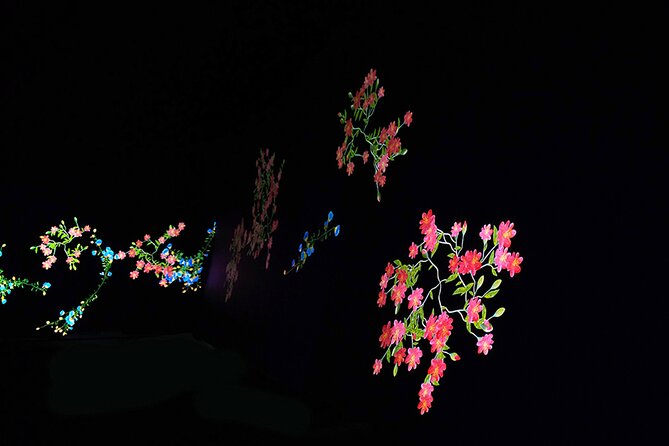
Cube of Art is a single-stop experience rather than a museum with several galleries. You enter a purpose-built black cube in Uppsala, with a ceiling height of seven meters, and spend roughly an hour interacting with digital works.
The room uses laser and lidar technology. Lidar sensors detect where you are and how you move, allowing the art to respond as you walk through the space. Depending on the activity, your movement can alter shapes, colors, or sounds.
That difference matters. At a standard art museum, you are usually asked to keep your distance and avoid touching anything. Here, touching and movement are part of the point. You can wave, walk, draw, and test what happens when you change your position.
The experience is designed around experimentation. You do not need to understand the software or know anything about digital art before arriving. Start by moving slowly, then try a larger gesture. If the effect does not respond immediately, change your position and try again.
A few more Sweden trips to weigh up
- Stockholm: Skansen Open-Air Museum Admission Ticket
★ 4.5 · 3,427 reviews - Stockholm Pass: Save up to 50% – Includes Vasa Museum Ticket
★ 4.1 · 2,392 reviews - Stockholm: Nobel Prize Museum and Exhibition Entry Ticket
★ 4.3 · 994 reviews
The black cube and its digital art
The room itself is the main stage. The seven-meter ceiling gives the projections and changing forms room to spread upward, while the black surroundings help the light effects take center stage.
Cube of Art presents work by both established artists and younger artists who experiment with digital art and interactive technology. That mix gives the experience a clear purpose beyond simple screen entertainment. It is meant to show how art and science can work together.
Still, you should set your expectations correctly. This is not a large museum with many separate installations, long explanations, or a full afternoon of art viewing. The appeal comes from direct participation, not from reading wall text or studying a large collection.
The room may feel magical when only a few people are inside. With two to five people, there is more space to move and watch the effects develop. Once the number rises above eight, personal space can become an issue, especially if several people are drawing or moving at once.
One practical point is worth noting. The experience is called a cube and has a seven-meter ceiling, but the available description does not promise a fully sealed room. A detailed account specifically noted that there was no roof, so you should not assume an all-around projection chamber enclosed on every side.
How the interaction works
The most interesting feature is the way the art responds to your body. Lidar sensors can detect movement in the room and help the digital images adapt to where you are standing or walking.
You might begin by watching someone else test the system. That rarely lasts long. The activities are simple enough that people usually begin interacting quickly, making this a good choice for a group that wants to do something together rather than split up and observe silently.
Drawing is another central activity. You can draw on the wall and influence what appears around you. The system may recognize certain animals and objects, though its ability to identify drawings is not unlimited.
That limitation is important for children who expect an advanced drawing tool. A simple picture may work better than a detailed scene, and the result may not match what you intended. I would treat this part as a playful experiment, not as a precise artificial intelligence drawing competition.
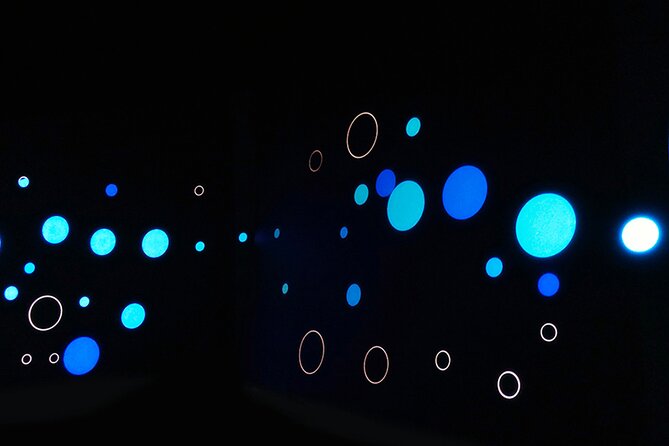
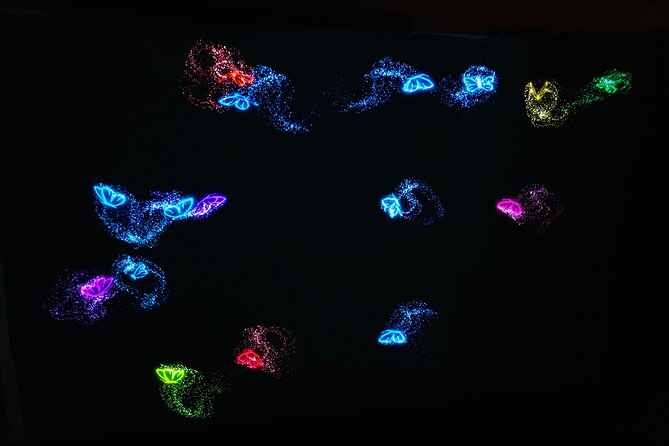
The colors and effects may also feel more restrained than you expect. Some people will enjoy the clean digital look, while others may wish the butterflies, circles, and other elements spread more wildly across the walls. The room creates a visual show, but it may not always deliver a flood of color from every direction.
Why families tend to get the most from it
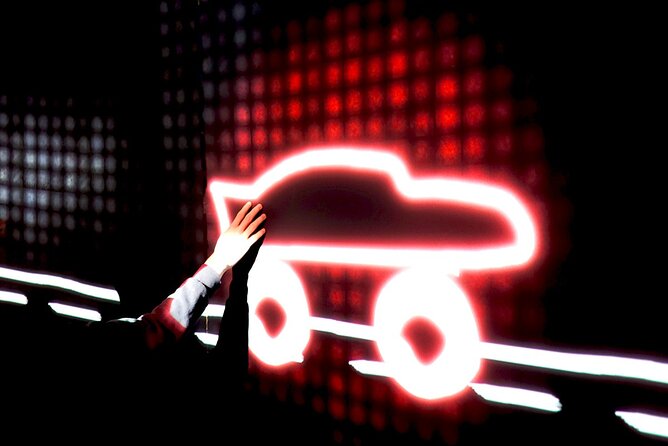
Cube of Art is especially well suited to families because there is no single correct way to take part. A two-year-old can enjoy movement on the floor, while a teenager may spend more time testing the wall drawing or figuring out how the system reacts.
Very young children can take part without needing to read instructions or understand the artistic theory behind the installation. Parents can join in rather than simply supervise, which makes the activity feel like shared play.
The experience has also worked well for children as young as four and for babies and toddlers accompanied by adults. That does not mean every child will react in the same way, but the low barrier to participation is one of its strongest points.
For families, I would plan on staying for the full session rather than rushing through. The activity can feel surprisingly quick once everyone starts experimenting. One hour may feel closer to fifteen minutes if your children are fully engaged.
There is a trade-off. A small child may want to keep going after the session ends, while an older child may feel ready to leave after seeing the main effects twice. A second pass through the exhibition is often enough for a teenager, but younger children may happily repeat the same actions.
Same city, a completely different kind of day:
- Stockholm: City Archipelago Sightseeing Cruise with Guide
★ 4.3 · 10,798 reviews - Stockholm: Archipelago Boat Tour
★ 4.4 · 3,110 reviews - Stockholm: Highlights Boat Tour
★ 4.3 · 2,542 reviews - Stockholm: Ghost Walk and Historical Tour
★ 4.7 · 2,206 reviews
A good rainy-day plan in Uppsala
The museum makes practical sense when the weather is poor. You get an indoor activity that does not require a long attention span, a museum background, or a full day set aside for sightseeing.
It also gives you something different from the usual historic sights. Uppsala is known for traditional cultural attractions, but Cube of Art offers a modern counterpoint where science, software, and art meet in one room.
I would not choose it as your only cultural stop in town. It works better as a one-hour addition to a day of sightseeing, or as a break when children have had enough of churches, museums, or walking.
Because the opening schedule is Wednesday through Sunday, check the day before you plan to go. The stated hours are 10 a.m. to 6 p.m. during the operating period listed for this experience. You should also allow time around the one-hour visit if you are connecting it with another reservation.
Is $21.68 a fair price?
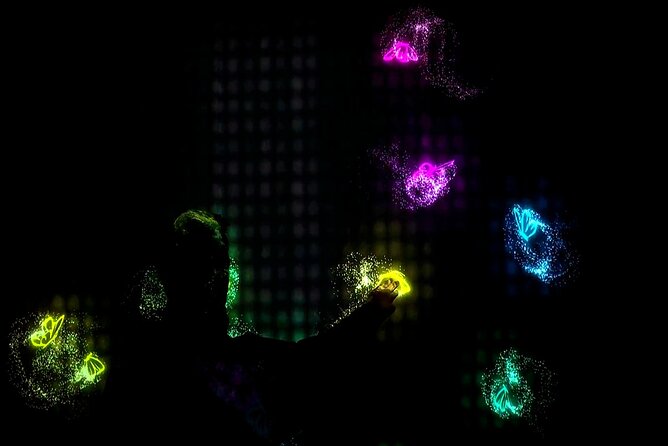
At $21.68 per person, Cube of Art is not a throwaway stop, especially for a family buying several admissions. The value depends on what you want from a museum visit.
If you are looking for a large collection, several rooms, or hours of traditional art viewing, the price may feel high for a one-hour activity. The installation is compact, and the number of things to do is limited by the size of the room.
I see better value if you want a shared activity that keeps a group involved. The price covers admission and all fees and taxes, so the main cost is clear from the start. You are paying for access to a specially designed space and its interactive technology, not for transport, food, or a guided city tour.
Families should think about the age and attention span of the children before booking several tickets. A toddler who enjoys movement and lights may get more from the hour than a child who wants a large play area with many separate activities.
For adults, the value is stronger if you are curious about digital art or want a fresh team activity. It is a pleasant change from passive sightseeing, but it is not intended to replace a full museum afternoon.
Going with a teenager or adult group
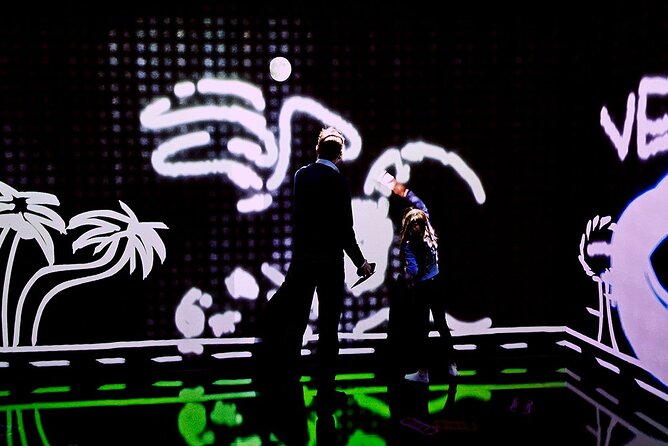
Cube of Art is not only for small children. Teenagers can enjoy the sense of control, especially when they try to work out which gestures produce the strongest changes.
The format also suits adults who want something unusual. You can approach the art seriously, treating it as a demonstration of interactive technology, or simply enjoy the childish pleasure of making lights and shapes react to you. The best approach is to do both.
It works for team outings because everyone can participate almost at once. The activities are intuitive, so a group does not need a long briefing before getting started. People can test the system together, compare results, and create a shared memory without needing to compete.
Space becomes more important with adults. Tall people, energetic groups, and several people drawing at the same time may find the room crowded. If you prefer a quiet art experience, choose a less busy session if that option is available, although the supplied information does not specify how many people each time slot accepts.
Timing, tickets, and planning details
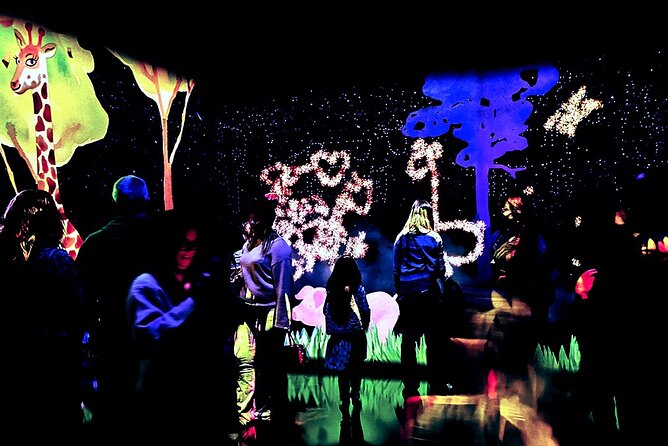
Your confirmation arrives when you book, and the experience uses a mobile ticket. The museum is near public transportation, which helps if you are building a day in Uppsala without a car.
Hotel pickup and drop-off are not included. You need to make your own way to the museum, so check the location and allow enough time before the start of your session.
The activity is booked an average of 17 days ahead. That does not guarantee that every date sells out, but it is a useful sign that you should not leave a preferred weekend until the last minute.
Free cancellation is available if you cancel at least 24 hours before the local start time. Changes or cancellations inside that 24-hour period are not refunded. The experience also requires a minimum number of participants, and if the provider cancels because that number is not reached, you are offered another date or experience, or a full refund.
Most people can participate. The available information does not provide detailed accessibility specifications, so if you have specific mobility, sensory, or other access needs, contact Cube of Art before booking.
What I like most, and what I would improve
I like that the experience asks you to create an effect rather than simply watch one. That makes it easy for a parent and child, a teenager and grandparent, or a work group to find a shared activity.
I also like the sense of discovery. The technology is not hidden behind a technical explanation. You learn by trying something, seeing how the room reacts, and adjusting your next move.
The strongest family benefit is flexibility. Children can move and explore, while adults can pay attention to the digital art and the technology behind it. It is also a useful option for a rainy day because the visit is short and contained.
The weaknesses are equally clear. The room may feel small when it is busy, and the drawing recognition can be limited. If you want intense color covering every surface, you may find the visual effects less dramatic than hoped.
The open-top issue may also matter to anyone expecting a fully enclosed cube. I would think of the room as a purpose-built interactive art space with a cube-like design, not automatically as a sealed projection chamber.
Who should book Cube of Art?
I would book this for families with young children, parents looking for a creative hour, teenagers who like technology, and adults planning a playful team activity. It is also a good choice if you want a modern art experience that does not demand prior knowledge.
I would pause if your main goal is a large museum, a long visit, or a quiet collection of finished artworks. The price is easier to justify when you value participation and shared fun more than the amount of exhibition space.
For the best chance of enjoying it, choose a time when the room is not crowded, arrive ready to experiment, and keep your expectations focused on playful digital art. At $21.68, it is a reasonable one-hour addition to a Uppsala itinerary, particularly for families on a wet day. Book it if you want to move, draw, and see technology answer back. Skip it if you prefer traditional museum viewing or need several hours of content.
FAQ
Where is Cube of Art located?
Cube of Art is located in Uppsala, Sweden.
How long does the experience last?
The visit lasts approximately one hour.
What are the opening hours?
During the stated operating period, Cube of Art is open Wednesday through Sunday from 10 a.m. to 6 p.m.
How much does admission cost?
The listed price is $21.68 per person. All fees and taxes are included.
Is hotel transportation included?
No. Hotel pickup and drop-off are not included. The museum is near public transportation.
Can I use a mobile ticket?
Yes. The experience includes a mobile ticket, and booking confirmation is received at the time of booking.
Can I cancel for a full refund?
Yes, if you cancel at least 24 hours before the experience start time. Cancellations or changes made less than 24 hours before the start time are not refunded or accepted.
Just added around Sweden
- World War II Stockholm Old Town Walking Tour and Army Museum★ 4.6 · 4 reviews
- West Sweden: Sea Kayak Delight in Nature Reserves★ 5.0 · 6 reviews
- Wilderness Tour with Snowmobile & Ice Fishing★ 4.9 · 28 reviews
- Stockholm: Archipelago Guided Boat & Walking Tour of Vaxholm★ 3.1 · 23 reviews
- Stockholm: Underground Metro Art Ride with a Local Guide★ 4.6 · 39 reviews
- Vaxholm & Stockholm Archipelago: Guided Excursion, Day Trip★ 4.8 · 41 reviews
- Uppsala Must See 2h city walk – 2h tour of all big attractions!★ 5.0 · 4 reviews
- Self-Guided Audio Walking Tour Through Kurt Wallander’s Ystad★ 3.5 · 12 reviews
Museums, compared.


Stockholm Pass: Save up to 50% – Includes Vasa Museum Ticket
Read our review →



Skip the Line: Disgusting Food Museum Entrance Ticket
Read our review →
Vasa Museum Guided Tour, Including Ticket & Guide
Read our review →
Browse the lists this tour appears in