
Reviewed · UPPSALA TOURS
Guided tour 90min at Old Uppsala mounds and old Uppsala church
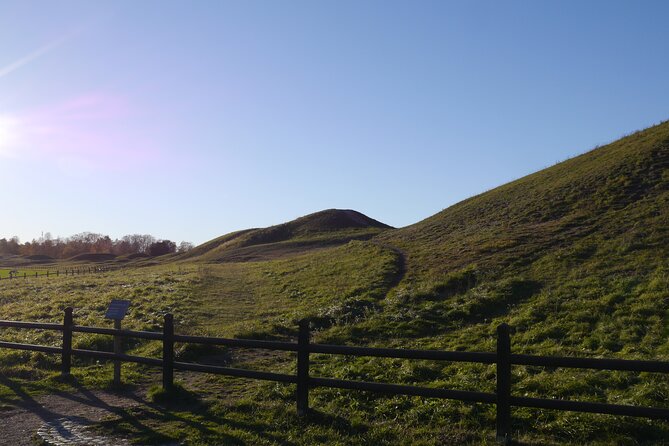
Gamla Uppsala is not just a cluster of grassy hills outside modern Uppsala. These are royal burial mounds, raised beside the site of old halls, workshops, farms, and an early cathedral. A good guide helps you read the ground and picture the settlement that once gathered here.
I like the focus on recent excavations and the small group limit of 15. I also like the chance to visit Old Uppsala Church, with medieval statues, 15th-century frescoes, and a 12th-century sacrificial log. The main caution is simple: the church may be closed, and one poorly delivered tour reportedly became a stationary talk rather than the promised walk around the mounds.
In This Review
- Key points at a glance
- Why Gamla Uppsala deserves an evening visit
- Reading the three great mounds
- The long halls hidden beneath the grass
- Old Uppsala Church and Sweden’s early cathedral story
- A guide can make or break the archaeology
- Is $106.73 a fair price?
- Who will get the most from this tour?
- What to notice as you walk
- Should you book the Gamla Uppsala tour?
- FAQ
- Where does the tour begin?
- What time does the tour start?
- How long does the experience last?
- Where does the tour end?
- What does the tour cover?
- Is entry to the mounds and church included?
- Is the church visit guaranteed?
- How many people can join the tour?
- How many people are needed for the tour to run?
- Can I cancel for a full refund?
Key points at a glance
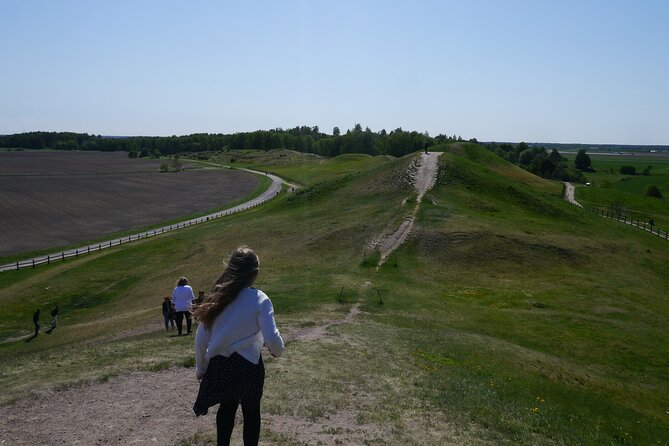
- Royal burial mounds: Walk around Gamla Uppsala’s famous kungshögar and hear why they mattered.
- Vendel Period focus: Learn about the 500s through 800s, before and during the Viking age.
- Archaeology in the ground: Hear about longhouse plateaus, farms, workshops, and finds from Sri Lanka.
- Old Uppsala Church: See medieval art and early cathedral history if the church is open.
- Jonathan Olsson: He is singled out for bringing Vendel and Viking period history to life.
- Small-group format: The tour lasts about 90 minutes and accepts no more than 15 people.
Why Gamla Uppsala deserves an evening visit
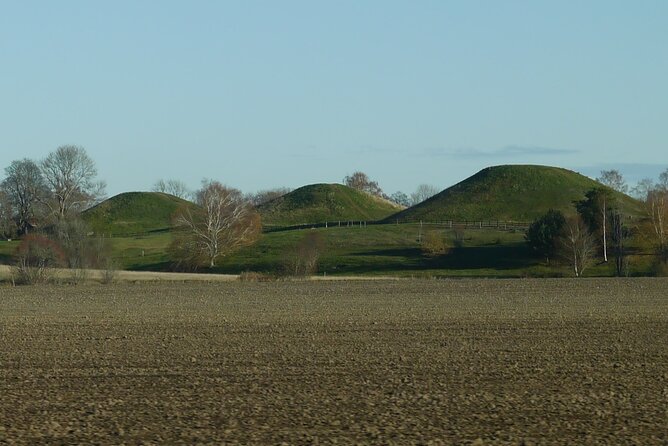
The most useful thing about this tour is its setting. Gamla Uppsala gives you history in the open air, where the large mounds and low plateaus still shape the view. You are not only looking at objects behind glass. You are standing near the places where power, religion, farming, craft, and long-distance trade once met.
The site reaches back to the Vendel Period, commonly placed before the better-known Viking age. The tour connects this earlier era with the later Viking world, helping you see that Scandinavian history did not begin with Viking raids. It grew from established farms, elite halls, religious customs, and trading links.
I like that the guide explains dates and functions rather than offering only dramatic stories. You hear how nearby farms supported the central place, what the excavations found, and how archaeologists work out when objects were made. That approach gives the mounds more meaning than a quick photo stop.
The 5:30 pm start also suits a day in Uppsala. You can spend the earlier part of the day in the modern city, then head to Gamla Uppsala for a focused visit. The experience returns to the meeting point at Disavägen 13, so you are not left figuring out where the walk ends.
A few more Sweden trips to weigh up
- Stockholm: City Archipelago Sightseeing Cruise with Guide
★ 4.3 · 10,798 reviews - Stockholm Archipelago Cruise with Guide
★ 4.0 · 1,125 reviews - Gothenburg: Archipelago cruise with guide
★ 4.3 · 1,002 reviews
Reading the three great mounds
The first part takes about 50 minutes and centers on the burial mounds. These are known in Swedish as Gamla Uppsala kungshögar, or the royal mounds. Their size tells you that this was no ordinary rural cemetery.
Your guide places the mounds in the wider setting of Gamla Uppsala. You learn about the people connected with the burial ground, the farms around it, and the role of the settlement. The point is not simply that important people were buried here. It is that the burials required labor, planning, and a society able to gather resources on a large scale.
The grassy shapes can look deceptively simple. That is where a guide adds real value. On your own, you can walk around them and admire their size, but you may not know which questions to ask. The tour explains what excavators found, how the finds are dated, and what they suggest about life in this period.
The walk is also a chance to think about what is missing. Wooden halls, fences, tools, textiles, and organic materials often disappear over time, while metal, stone, and fired materials survive more easily. Your guide can help connect those surviving traces to the larger community that once used the site.
One practical point matters here: the experience is advertised as a walk around the mounds. A past departure reportedly fell short of that, turning into a fixed conversation rather than a full site walk. I would confirm at the start that the group will move around the mound area and discuss the visible features along the way.
The long halls hidden beneath the grass
Near the church are several raised areas that mark the locations of large long halls. These halls date from the 500s through the 800s, making them older than many people expect when they hear the word Viking.
The plateaus are easy to overlook because they do not look like impressive ruins. There are no complete walls to photograph. Instead, the guide helps you understand the shapes as archaeological evidence. These were places where people gathered, worked, and likely displayed status.
The associated finds make the site especially unusual. Excavators found signs of workshops where gold, silver, and precious stones were handled. The mention of garnets from Sri Lanka is a striking reminder that this community had links far beyond Scandinavia.
That detail changes your view of the mounds. Gamla Uppsala was not an isolated northern outpost. It belonged to networks that carried materials, ideas, and prestige across great distances. You do not need a long lecture on trade routes to appreciate the point. A stone from Sri Lanka found in a Swedish archaeological context says plenty by itself.
I like this part because it gives you a practical way to understand status in the Vendel Period. Luxury objects were not just pretty possessions. They were evidence of access, contacts, skilled workers, and leaders who could command valuable materials.
Old Uppsala Church and Sweden’s early cathedral story
The second part lasts about 40 minutes and focuses on Gamla Uppsala Kyrka. The church visit is conditional, so you should treat the interior as a welcome possibility rather than a guarantee.
If it is open, you can see medieval statues, 15th-century frescoes, and a 12th-century sacrificial log. Those details give the church a strong visual and human connection to the past. The frescoes and statues show how medieval worshippers encountered biblical stories and religious figures. The old wooden object points to the complicated transition between older customs and Christian practice.
The church also carries major institutional importance. It was the earliest cathedral in Sweden apart from Lund, which was in Danish territory at the time. It was one of Sweden’s earliest episcopal seats after Sigtuna, already functioning in the 1130s.
That background helps you look beyond the building itself. The church was not placed in an empty field. It was built at a site that already had political and religious weight. The tour explains finds beneath the old cathedral and links the church to the earlier settlement around it.
This is one of the best reasons to book the experience rather than simply visit the mounds alone. The church, halls, workshops, and burial mounds are separate pieces. A guide can show you how they fit together.
The drawback is the opening-hours uncertainty. If the church is closed, you will still hear about its history and the discoveries beneath it, but you will miss the interior art and objects. If seeing the frescoes is your main goal, contact Sweden History Tours before booking to confirm what is possible for your date.
Same city, a completely different kind of day:
- Stockholm: Skansen Open-Air Museum Admission Ticket
★ 4.5 · 3,427 reviews - Stockholm: Archipelago Boat Tour
★ 4.4 · 3,110 reviews - Stockholm: Highlights Boat Tour
★ 4.3 · 2,542 reviews - Stockholm Pass: Save up to 50% – Includes Vasa Museum Ticket
★ 4.1 · 2,392 reviews
A guide can make or break the archaeology
The strongest response to this experience centers on the guide. Jonathan Olsson is praised for his command of the Vendel and Viking periods and for making the past feel clear and memorable. That is exactly the skill this site needs.
Gamla Uppsala is not difficult to visit, but it is easy to misunderstand. The mounds, plateaus, church, and museum area do not automatically tell you how they relate. A guide who knows the excavation dates, finds, and site functions can turn separate points into one readable story.
You should also keep the guide quality issue in mind. One past tour did not include the expected walk around the mounds, and the church was closed. The operator acknowledged the problem and indicated that the guide was new. That response is useful, but it does not erase the practical lesson: ask what the tour will cover on the day.
If you are assigned Jonathan Olsson, you can expect a guide with particular strength in the Vendel and Viking eras. If another guide leads the tour, make sure the route includes both the mound area and the church surroundings. A 90-minute guided walk is good value only when the guide uses the site itself, not just a single talking point.
Is $106.73 a fair price?
At $106.73 per person, this is not a casual budget stop. The price makes the most sense if you are genuinely interested in early Swedish archaeology and want personal explanation rather than a quick look at the site.
The group maximum of 15 keeps the experience smaller than a large coach tour. That matters at the mounds, where you may want to hear the guide while also looking across the different plateaus and burial areas. A small group also makes it easier to ask about dating, excavation methods, or the unusual imported garnets.
All fees and taxes are included. Gratuities are not included, so plan for that separately if you feel the guide has done a strong job. There is no separate admission charge listed for the mounds or church portion.
Value depends on how you use the visit. If you have already spent time in the adjacent museum and mainly want to stroll the mounds, you may find the price high. One past experience added little beyond the museum information. But if the guide walks the site properly, explains the recent excavations, and connects the mounds to the halls and church, the personal context can justify the cost.
For history-minded visitors coming from Stockholm, the tour can also work as one part of a Uppsala day. One person described the train ride from Stockholm as easy and enjoyable, with the city’s university, cathedral, and museum making good additions. The tour itself begins at Disavägen 13, so allow time to reach that meeting point before the 5:30 pm start.
Who will get the most from this tour?
I would recommend it most strongly to you if you enjoy archaeology, early medieval Sweden, religious history, or the Viking period but want to understand what came before the famous raids. It also suits people who prefer a guide’s explanation to reading signs and museum labels.
Local Uppsala residents can benefit too. The site contains enough detail that even people familiar with the city may learn something new about the old cathedral, the long halls, and the archaeological work around the mounds.
Families with older children may find the burial ground and imported stones more engaging than a conventional indoor history talk. Still, the activity requires a moderate level of physical fitness, and you should be ready to walk around an outdoor archaeological site for much of the 90 minutes.
This is less suitable if you need a guaranteed church interior, dislike uncertain opening arrangements, or want a broad tour of all Uppsala sights. The focus is narrow and specific: Gamla Uppsala, its burial mounds, its early settlement, and its church.
At least two people must book for the tour to run. The maximum is 15, so the experience is neither a private walk by default nor a large group production. Free cancellation is available until 24 hours before the start time. After that point, the amount paid is not refunded, and changes are not accepted.
What to notice as you walk
Try to pay attention to the relationship between the mounds and the flatter areas near the church. The mounds represent burial and ceremony, while the plateaus point toward the living and working parts of the settlement.
Listen for dates. The 500s through 800s cover several generations, and the site changed over that time. A find from one period does not automatically describe the entire settlement. Dating helps you see Gamla Uppsala as a place with a long sequence of use, not one frozen Viking age scene.
Ask about the farms. Their role is important because major halls and elite burials required food, labor, and supplies. The surrounding farms help explain how the central place functioned day to day.
Also ask about the finds beneath the church. That question links the Christian cathedral to the older center and gives the visit a stronger sense of continuity. If the church is open, take time with the frescoes and statues rather than treating the interior as a quick add-on.
Should you book the Gamla Uppsala tour?
Book it if you want a focused explanation of one of Sweden’s most important early sites and you value a guide who can connect burial mounds, long halls, workshops, international trade, and the first cathedral. Jonathan Olsson appears to be a particularly strong choice for the subject.
Before paying, confirm two things: that the guide will walk around the mounds and that Old Uppsala Church is expected to be open during your visit. If both parts happen, the 90-minute format gives you a compact but useful introduction to Gamla Uppsala.
Skip it if you only want a scenic walk or if the church interior is essential and cannot be confirmed. At this price, the tour needs active guiding and full use of the site to feel worthwhile. With the right guide, it offers something a museum visit alone cannot: a clear explanation of how the entire old center fit together.
FAQ
Where does the tour begin?
The meeting point is Disavägen 13, 754 40 Uppsala, Sweden.
What time does the tour start?
The tour starts at 5:30 pm.
How long does the experience last?
The guided experience lasts approximately 1 hour and 30 minutes.
Where does the tour end?
The activity ends back at the meeting point.
What does the tour cover?
It covers the Gamla Uppsala burial mounds, the surrounding archaeological area, the longhouse plateaus, excavations and finds, and Old Uppsala Church if it is open.
Is entry to the mounds and church included?
All fees and taxes are included, and no separate admission charge is listed for these stops.
Is the church visit guaranteed?
No. The church visit depends on whether Old Uppsala Church is open.
How many people can join the tour?
The maximum group size is 15 people.
How many people are needed for the tour to run?
At least two people must book for the tour to operate.
Can I cancel for a full refund?
Yes. You can cancel at least 24 hours before the local start time for a full refund. Cancellations or changes made less than 24 hours before the start are not accepted for a refund.
Just added around Sweden
- World War II Stockholm Old Town Walking Tour and Army Museum★ 4.6 · 4 reviews
- West Sweden: Sea Kayak Delight in Nature Reserves★ 5.0 · 6 reviews
- Wilderness Tour with Snowmobile & Ice Fishing★ 4.9 · 28 reviews
- Stockholm: Archipelago Guided Boat & Walking Tour of Vaxholm★ 3.1 · 23 reviews
- Stockholm: Underground Metro Art Ride with a Local Guide★ 4.6 · 39 reviews
- Vaxholm & Stockholm Archipelago: Guided Excursion, Day Trip★ 4.8 · 41 reviews
- Uppsala Must See 2h city walk – 2h tour of all big attractions!★ 5.0 · 4 reviews
- Self-Guided Audio Walking Tour Through Kurt Wallander’s Ystad★ 3.5 · 12 reviews
Uppsala Tours, compared.
Stockholm Viking History Full Day Tour to Sigtuna + Uppsala
Read our review →
Best of Uppsala: Private Walking Tour with a Local
Read our review →
Uppsala bloody history 1h- racial biology, 18th century plague, 19th century prostitution etc.
Read our review →
Uppsala Must See 2h city walk – 2h tour of all big attractions!
Read our review →
Browse the lists this tour appears in